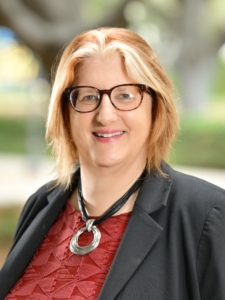
Alexandra Minna Stern
· DeanVerifiedUniversity of California, Los Angeles · History
Active 1958–2024
About
The Sterilization and Social Justice Lab was an interdisciplinary research team studying the history of eugenic sterilization in the United States. The multi-institutional team included historians, epidemiologists, and digital humanists. The lab explored patterns and experiences of eugenics and sterilization in the 20th century using mixed methods from the social sciences, humanities, and public health. The project included research focused on California, Iowa, Michigan, North Carolina, and Utah. The lab connected this history to reproductive, disability, and racial justice, and reflected on the relevance of the past to social justice today. The Sterilization and Social Justice Lab is currently inactive and does not employ regular staff.
Research signals
Five dimensions sourced from public faculty / publication signals. Sign in to compare against your own profile and see your match score.
Research topics
- Sociology
- Political Science
- Law
- Gender studies
- Literature
- Psychology
- Social psychology
- Economics
- Media studies
- Demography
- Anthropology
Selected publications
Journal of Family History · 2024-10-21
articleOpen accessSenior authorThe World War II mass incarceration of 120,000 Japanese Americans disrupted families, enacted intergenerational trauma, and characterized Japanese Americans as inherent racial threats. This federal exercise in biopolitical management intersected with state-sponsored eugenic sterilization in California institutions. Linking War Relocation Authority and California Department of Institutions records, we document 32 Japanese American sterilization survivors during the wartime incarceration period (1942-1946). We show how federal and state authority converged to deprive Japanese Americans of civil rights and reproductive liberty. We add original research and analysis to the intertwined histories of Japanese American incarceration, eugenics, and family in the United States.
Frontiers in Endocrinology · 2024-10-08 · 5 citations
articleOpen accessBackground The cervicovaginal epithelial barrier is crucial for defending the female reproductive tract against sexually transmitted infections. Hormones, specifically estradiol and progesterone, along with their respective receptor expressions, play an important role in modulating this barrier. However, the influence of estradiol and progesterone on gene and protein expression in the ectocervical mucosa of naturally cycling women is not well understood. Methods Mucosal and blood samples were collected from Kenyan female sex workers at high risk of sexually transmitted infections. All samples were obtained at two time points, separated by two weeks, aiming for the follicular and luteal phases of the menstrual cycle. Ectocervical tissue biopsies were analyzed by RNA-sequencing and in situ immunofluorescence staining, cervicovaginal lavage samples (CVL) were evaluated using protein profiling, and plasma samples were analyzed for hormone levels. Results Unsupervised clustering of RNA-sequencing data was performed using Weighted gene co-expression network analysis (WGCNA). In the follicular phase, estradiol levels positively correlated with a gene module representing epithelial structure and function, and negatively correlated with a gene module representing cell cycle regulation. These correlations were confirmed using regression analysis including adjustment for bacterial vaginosis status. Using WGCNA, no gene module correlated with progesterone levels in the follicular phase. In the luteal phase, no gene module correlated with either estradiol or progesterone levels. Protein profiling on CVL revealed that higher levels of estradiol during the follicular phase correlated with increased expression of epithelial barrier integrity markers, including DSG1. This contrasted to the limited correlations of protein expression with estradiol levels in the luteal phase. In situ imaging analysis confirmed that higher estradiol levels during the follicular phase correlated with increased DSG1 expression. Conclusion We demonstrate that estradiol levels positively correlate with specific markers of ectocervical epithelial structure and function, particularly DSG1, during the follicular phase of the menstrual cycle. Neither progesterone levels during the follicular phase nor estradiol and progesterone levels during the luteal phase correlated with any specific sets of gene markers. These findings align with the expression of estradiol and progesterone receptors in the ectocervical epithelium during these menstrual phases.
Social Forces · 2023 · 19 citations
Senior authorCorresponding- Sociology
- Political Science
- Demography
< 0.001) across the entire study period. Sterilization rates for Asian-born men were not significantly higher than those of US-born men [IRR 0.95 (95% CI 0.83, 1.10). However, an inflection point model incorporating the year of sterilization found higher sterilization rates for Asian-born men than for US-born men prior to 1933 [IRR 1.31 (95% CI 1.09, 1.59)]. This original quantitative analysis contributes to the literature demonstrating the health impact of discrimination on Asian-Americans and the disproportionate sterilization of racial minorities under state eugenics programs.
Frontiers in Public Health · 2023-07-06 · 1 citations
articleOpen accessSenior authorBackground: Addressing contemporary anti-Asian racism and its impacts on health requires understanding its historical roots, including discriminatory restrictions on immigration, citizenship, and land ownership. Archival secondary data such as historical census records provide opportunities to quantitatively analyze structural dynamics that affect the health of Asian immigrants and Asian Americans. Census data overcome weaknesses of other data sources, such as small sample size and aggregation of Asian subgroups. This article explores the strengths and limitations of early twentieth-century census data for understanding Asian Americans and structural racism. Methods: We used California census data from three decennial census spanning 1920-1940 to compare two criteria for identifying Asian Americans: census racial categories and Asian surname lists (Chinese, Indian, Japanese, Korean, and Filipino) that have been validated in contemporary population data. This paper examines the sensitivity and specificity of surname classification compared to census-designated "color or race" at the population level. Results: Surname criteria were found to be highly specific, with each of the five surname lists having a specificity of over 99% for all three census years. The Chinese surname list had the highest sensitivity (ranging from 0.60-0.67 across census years), followed by the Indian (0.54-0.61) and Japanese (0.51-0.62) surname lists. Sensitivity was much lower for Korean (0.40-0.45) and Filipino (0.10-0.21) surnames. With the exception of Indian surnames, the sensitivity values of surname criteria were lower for the 1920-1940 census data than those reported for the 1990 census. The extent of the difference in sensitivity and trends across census years vary by subgroup. Discussion: Surname criteria may have lower sensitivity in detecting Asian subgroups in historical data as opposed to contemporary data as enumeration procedures for Asians have changed across time. We examine how the conflation of race, ethnicity, and nationality in the census could contribute to low sensitivity of surname classification compared to census-designated "color or race." These results can guide decisions when operationalizing race in the context of specific research questions, thus promoting historical quantitative study of Asian American experiences. Furthermore, these results stress the need to situate measures of race and racism in their specific historical context.
2023-04-12 · 2 citations
book-chapter1st authorCorrespondingThe growth of the far right in the United States has been fueled by overlapping trends including the consolidation and growth of militia groups, the popularity of conspiracy theories like Q’Anon and Pizzagate, and the availability of social media platforms for recruitment, networking, and production of shared repertoire of memes and ideas. It also has been influenced by attempts to build a U.S. version of identitarianism that would make xenophobia, doctrines of white superiority, and traditional patriarchy attractive to a wider range of potential adherents. The rise of the “alt-right” in the 2010s was linked to the formation of several identitarian organizations, the most prominent of which was Identity Evropa (IE; later renamed the American Identity Movement). Yet this group existed for less than five years, dissolving unceremoniously in late 2020. This chapter explores why European-style identitarianism floundered on organizational terms in the United States, even as white identity politics gained significant traction. I examine the founding, ideologies, and activities of IE, and argue that the particularities of the far-right landscape in the United States complicated and stymied identitarianism as a bonafide movement. Despite its organizational limits, the dissemination of identitarian ideas worked to enlarge the conditions of possibility for the radicalization of white Americans who express anxieties about the country’s changing racial demographics.
16. Making Better Babies: Public Health and Race Betterment in Indiana, 1920–1935
American Public Health Association eBooks · 2022-01-01 · 4 citations
book-chapter1st authorCorrespondingGender and Far-right Nationalism: Historical and International Dimensions. Introduction
Journal of Modern European History · 2022 · 19 citations
Senior authorCorresponding- Sociology
- Political Science
- Sociology
This special issue explores the entangled history of contemporary far-right nationalism and gender. Seven case studies apply a distinct historical perspective and analyse gender as a meta-language for xenophobia, racism, and anti-Semitism since the 19th century, while solidifying patriarchy as a foundation of the contemporary as well as historical far right. Topics include family motifs in the propaganda of Alternative for Germany that draws on rhetoric and images used by the National Socialist Regime, the salience of ‘Mother India’ to Hindu Nationalism since the middle of the 20th century, the anti-Semitic subtext of anti-gender discourse in contemporary Poland that seeks to undo any attempts to integrate ‘liberal’ gender norms into official Catholicism since the 1960s, the amalgamation of anti-Semitism and homophobia in the American far-right since the 1970s, the historical roots of identitarian gender concepts in Austria, a historical take on the relationship between ‘metapolitics’ and gender, and an intellectual history of how today's neo-fascism engages in perpetual historical reflexivity. The special issue – while attentive to the transnational and transatlantic dimensions of the contemporary far-right – is both integrative and organized in distinct case studies. Methods used are archival research and analysis, critical review of discursive and political strategies, media content analysis, and mapping of national and transnational networks. Several authors underscore the crucial role of social media platforms and memes in the making and messaging of contemporary far-right nationalism, others rely on more ‘traditional’ media such as journal articles, political speeches and texts. Taken together, the papers in this volume highlight several overlapping themes relevant to the historical study of far-right nationalism and gender and its contemporary transformations: (1) essentialism, (2) racism, and (3) and memes and discourses.
Journal of Modern European History · 2022-07-18 · 17 citations
article1st authorCorrespondingThis article explores gender and the far-right in the United States with specific attention to female actors and gendered ideologies in the realms of culture and media. By focusing on several female extremists, I show how traditional and rigid ideas of home, marriage, family and community bolster the xenophobia and racism of white nationalism in the United States. This article includes a historical overview of the concept of metapolitics and emphasizes its centrality to the mainstreaming of the contemporary far-right. I suggest that the internet and social media have become the far-right's premier metapolitical spaces, which can help to explain both the normalization of white nationalism and the unique role of female extremists. Several case studies of far-right women elucidate how gender norms are performed online, and how they reinforce anxious narratives of white erasure and victimhood, while fomenting antagonism towards feminism, globalism and multiculturalism. This article explores how female actors are galvanizing white nationalism in the United States, as they build on earlier eras of far-right activism and amplify the far-right via social media.
Bulletin of the history of medicine · 2022-12-01 · 4 citations
articleSenior authorVictor C. Vaughan (1851-1929) was a noted medical educator, microbiologist, and active proponent for the idea of eugenics. Vaughan spent his career at the University of Michigan, where he served as Medical School Dean for many years. He lectured widely on the importance of "race betterment" and actively supported passage of state legislation that led to over 3,000 sterilizations in the state of Michigan. After his death, Vaughan's name was applied to student organizations, endowed chairs, buildings, and more. This paper considers how the use of Vaughan's name not only reflected Vaughan's support of eugenics but also gendered and racialized ideas about what it means to be a physician. We conclude that the use of any name from the past carries meanings about what our values are in the present and that, if there was ever a moment to celebrate the life of Victor Vaughan, that moment has passed.
A Reusable Past: The Meaning of the Third Reich in Recent U.S. Discourse
Central European History · 2022-12-01
articleOpen accessIt does not require great powers of observation to note the pervasiveness of Nazi Germany in contemporary U.S. cultural and political discourse. For better or worse, the discursive landscape is saturated with depictions of and references to Hitler, the Holocaust, and the Gestapo—an obsession visible everywhere, from the progressive left to the far right, from TV shows to Twitter feeds to video games. The allure of using the Third Reich as a rhetorical weapon may seem obvious enough in a hyperpartisan political climate, but the resonance of that historical period clearly extends well beyond politics. Indeed, National Socialism now functions as an all-purpose conceptual barometer that can be applied to conversations about all sorts of subjects. Over the past few years, scholars have sought to shape such discussions with an unusually heavy outpouring of projects that explore correlations between Nazi Germany and the United States. What they rarely address, however, is why Americans are so prone to invoking the Third Reich as a framework for thinking about life in their own country to begin with. No less important to consider are the implications of how that trend has taken on such a wide-ranging salience and sense of urgency lately. With these questions in mind, Bradley Nichols (History, University of Missouri) convened an interdisciplinary roundtable, composed not only of historians, but also scholars of U.S. politics and culture. He invited Jens-Uwe Guettel (History, Penn State University), Sabine Hake (Germanic Studies, University of Texas), Emanuela Kucik (English and Africana Studies, Muhlenberg College), Alexandra Minna Stern (English, University of California, Los Angeles), and S. Jonathan Wiesen (History, University of Alabama at Birmingham) to share their insights and reflect on the issues at stake. 1. The recent upsurge of scholarly interest in the relationship between Nazi Germany and the United States has mirrored a heightened level of popular curiosity in the topic. How do we explain the timing of this conjuncture? What, if anything, sets it apart from the long-standing current of fascination with parallels linking the two countries? Is there something unique going on here that transcends other overlaps in focus between academia and the public (past or present)?
Recent grants
Demographic Patterns of Eugenic Sterilization in California
NIH · $408k · 2016–2019
Frequent coauthors
- 61 shared
Howard Markel
- 20 shared
Martín S. Cetron
- 14 shared
J. Alexander Navarro
University of Utah Hospital
- 13 shared
Nicole L. Novak
University of Iowa
- 12 shared
Arnold S. Monto
University of Michigan–Ann Arbor
- 11 shared
Natalie Lira
University of Illinois Urbana-Champaign
- 10 shared
Adam Burgener
- 10 shared
Sioḃán D. Harlow
University of Michigan–Ann Arbor
Education
- 2002
Ph.D., American Culture
University of Michigan
- 1996
B.A., American Culture
University of Michigan
Awards & honors
- Choice 2013 Outstanding Academic Title in Health Sciences
- Resume-aware match score
- Save to shortlist
- AI-drafted outreach
See your match with Alexandra Minna Stern
PhdFit ranks faculty by your research interests, methods, and publications — grounded in their actual work, not templates.
- Free to start
- No credit card
- 30-second signup