Resume-aware faculty matching

Find professors who actually fit you

Upload your resume. Four AI agents analyze your background, rank the faculty who fit, inspect their recent research, and help you draft outreach — grounded in their actual work, not templates.

Free to startNo credit cardCancel anytime
Top matches Balanced preset
Dr. Sarah Chen
Stanford · Interpretability · NLP
91
Dr. Marcus Holloway
MIT · Robotics · RL
84
Dr. Aisha Okonkwo
CMU · Fairness · HCI
82
Nova · Professor Researcher · re-ranking top 20…
Alexis
                
                                       Lothian

Alexis Lothian

· Associate Professor, The Harriet Tubman Department of Women, Gender, and Sexuality StudiesVerified

University of Maryland, College Park · The Harriet Tubman Department of Women, Gender, and Sexuality Studies

Active 2006–2025

h-index10
Citations512
Papers312 last 5y
Funding
See your match with Alexis Lothian — sign in to PhdFit.Sign in

About

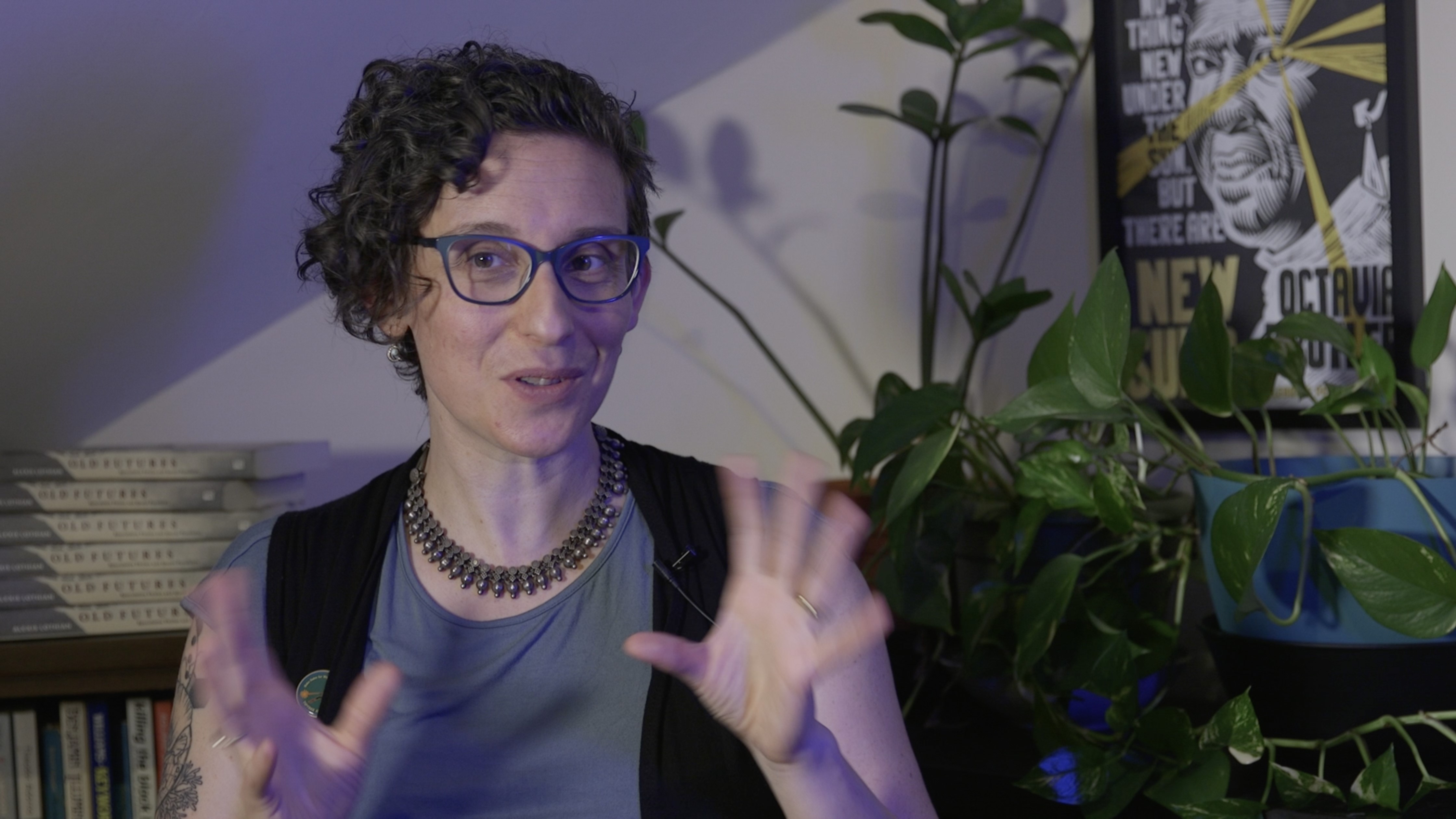
Alexis Lothian is an interdisciplinary scholar specializing in queer and feminist media and cultural studies. Her research centers on speculative fiction, digital media, and online fandom, with a focus on their intersections with gender, race, and disability justice. She authored the book 'Old Futures: Speculative Fiction and Queer Possibility,' published in 2018 by NYU Press, which explores alternative futures envisioned by feminists, queers, and people of color in Britain and America, analyzing how these narratives challenge dominant historical and political discourses. Lothian also creates video remixes related to her work, including 'This is a Low: Old Futures in the Age of Brexit.' Currently, she is working on two book projects: a co-authored book on slash fan fiction and the politics of fantasy, and a monograph examining the development of critical and social justice-oriented fan cultures in the late 2000s and early 2010s. Her extensive publications address the relationship between feminist and queer knowledge production and media fans' creative practices, emphasizing digital infrastructure, racial justice, and critical fandom. As an associate professor at The Harriet Tubman Department of Women, Gender, and Sexuality Studies, she contributes to academic discourse on digital humanities, media studies, and social justice through her research, teaching, and editorial work.

Research signals

Five dimensions sourced from public faculty / publication signals. Sign in to compare against your own profile and see your match score.

Research topics

  • Sociology
  • Political Science
  • Gender studies
  • Art
  • Aesthetics
  • Computer Science
  • Psychoanalysis
  • Philosophy
  • Law
  • World Wide Web
  • Psychology
  • Media studies
  • Theology
  • Art history
  • History

Selected publications

  • Vidding and Identity

    2025-03-10

    book-chapter

    Identity has frequently been at the heart of scholarly discussions of fans’ transformative works. Fanvidding, or the art of using “music in order to comment on or analyze a set of preexisting visuals, to stage a reading, or occasionally to use the footage to tell new stories” (Coppa 2008), has a long history, and more than any other form of fan production, it has been shaped by technological shifts and emerging platforms. Despite this shift in the visibility and variety of contemporary fanvids, at their core they remain an important space of media production for marginalized voices and representations. In this conversation, vidding scholars Francesca Coppa, Alexis Lothian, and Tisha Turk discuss the ways in which vidding offers a unique space to consider questions of identity. This conversation has been revised slightly from the version published in the first edition in 2018.

  • Bourgeois Novel, Realism — Science Fiction, Post-modernism — Visionary Fiction, Cataclysm

    2025-03-07

    book-chapter1st authorCorresponding
  • Captain America, Genderqueer Socialist: The Utopian Politics of Queer Fan Fiction

    Utopian Studies · 2025-06-01

    article1st authorCorresponding

    ABSTRACT As a practice of literalizing narrative desire, fan fiction can be a rich source of utopian imagination. Participants in fandom and academic spaces alike discuss the capacity for fan fiction’s content to live up to the utopian potential of its form and distribution: how might a cultural formation based on the fantasy fulfillment of desire hold space for the complex and contradictory relationships between pleasure and power? To unpack some contradictions and possibilities inherent in fan fiction’s queer utopian work, this article develops a case study of Known Associates (thingswithwings, 2016), a long, complex, and influential work of fan fiction. The story reimagines the Marvel Comics Universe character Steve Rogers, also known as Captain America—who is transported from World War II to the present––as a queer femme socialist sympathetic to Black social movements of the early twentieth century. Known Associates develops an eroticized articulation of American feminist, queer, trans, and left social movement history. To the queerly utopian fantasy that Captain America might have always been a radical, queer, gender-nonconforming figure, Known Associates grafts a longing for the possibility that the national institutions of the U.S., founded on slavery and settler colonialism though they are, might be imagined and lived otherwise.

  • Bourgeois Novel, Realism — Science Fiction, Post-modernism — Visionary Fiction, Cataclysm

    2025-03-10

    book-chapter1st authorCorresponding

    Combating the informatics of domination demands other ways to tell stories and imagine worlds. “A Cyborg Manifesto” calls up such possibilities in its invocation of Octavia E. Butler. This essay turns to N. K. Jemison’s Broken Earth Trilogy to explore how Black, queer, and decolonial imaginaries render the binary oppositions between realism and science fiction, modernism and postmodernism incomprehensible. “Visionary fiction, cataclysm” is the third term the essay invokes to think through these cultural formations and their capacity to rewrite the bourgeois science fiction realisms of the 2020s and beyond.

  • 2. Bourgeois Novel, Realism — Science Fiction, Post-modernism — Visionary Fiction, Cataclysm

    2025-03-09

    book-chapter1st authorCorresponding
  • An archive of whose own? White feminism and racial justice in fan fiction’s digital infrastructure

    Transformative Works and Cultures · 2021 · 117 citations

    Senior authorCorresponding
    • Sociology
    • Political Science
    • Sociology

    In summer 2020, when the language of racial reckoning entered US and transnational public spheres following the murder of George Floyd, the contradictions of fandom's long-standing claims to progressive politics became sharply visible. An open letter with specific demands asking the fan fiction platform Archive of Our Own (AO3) to address the issue of racist content in the archive circulated widely. After offering a brief history of critiques of fannish racism, we turn to the specifics of AO3, the political commitments embedded in its systems, and how attention to racial justice could transform them. Drawing on fan fiction genres, we offer three potential models for thinking through these possibilities: a fix-it that would extend AO3's existing metadata structures; a canon divergence that would alter the makeup of the content on AO3; and an alternative universe that draws from abolitionist organizing to imagine the broadest structural changes of all.

  • Bibliography

    New York University Press eBooks · 2020-12-31

    book-chapter1st authorCorresponding
  • Notes

    New York University Press eBooks · 2020-12-31

    book-chapter1st authorCorresponding
  • Acknowledgments

    New York University Press eBooks · 2020-12-31

    book-chapter1st authorCorresponding
  • 14. Sex, utopia, and the queer temporalities of fannish love

    New York University Press eBooks · 2020

    1st authorCorresponding
    • Sociology
    • Sociology
    • Gender studies

Frequent coauthors

Education

  • Ph.D.

    University of Southern California

Awards & honors

  • Motherboard of the Otherwise Award
  • Resume-aware match score
  • Save to shortlist
  • AI-drafted outreach

See your match with Alexis Lothian

PhdFit ranks faculty by your research interests, methods, and publications — grounded in their actual work, not templates.

  • Free to start
  • No credit card
  • 30-second signup