Resume-aware faculty matching

Find professors who actually fit you

Upload your resume. Four AI agents analyze your background, rank the faculty who fit, inspect their recent research, and help you draft outreach — grounded in their actual work, not templates.

Free to startNo credit cardCancel anytime
Top matches Balanced preset
Dr. Sarah Chen
Stanford · Interpretability · NLP
91
Dr. Marcus Holloway
MIT · Robotics · RL
84
Dr. Aisha Okonkwo
CMU · Fairness · HCI
82
Nova · Professor Researcher · re-ranking top 20…
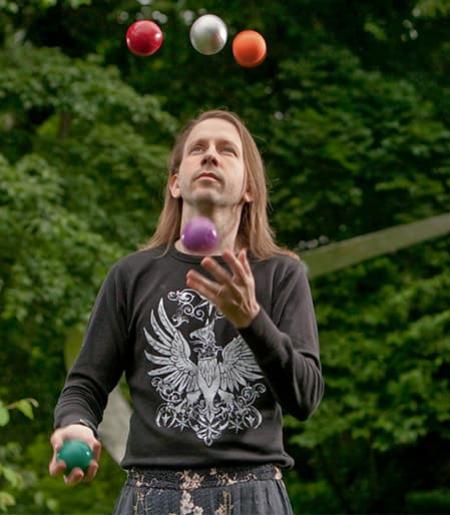
Allen Knutson

Allen Knutson

· Professor

Cornell University · Mathematics

Active 1983–2026

h-index28
Citations5.1k
Papers24315 last 5y
Funding$557k
See your match with Allen Knutson — sign in to PhdFit.Sign in

About

Allen Knutson is a professor in the Department of Mathematics at Cornell University, affiliated with the College of Arts and Sciences. He earned his Ph.D. in 1996 from the Massachusetts Institute of Technology. His academic interests include algebra, combinatorics, discrete geometry, and geometry. His research focuses on algebraic varieties that carry large groups of symmetries, such as toric varieties, flag manifolds, Schubert varieties, and quiver cycles. He studies these complex structures by decomposing them into simpler pieces, often through degeneration, which allows their analysis to be approached through combinatorial methods rather than purely geometric ones.

Research signals

Five dimensions sourced from public faculty / publication signals. Sign in to compare against your own profile and see your match score.

Research topics

  • Agronomy
  • Mathematics
  • Biology
  • Computer Science
  • Statistics
  • Ecology
  • Mathematical analysis
  • Pure mathematics
  • Chemistry
  • Toxicology
  • Horticulture
  • Botany

Selected publications

  • Schubert puzzles and integrability II: multiplying motivic Segre classes

    Communications of the American Mathematical Society · 2026-01-05 · 1 citations

    preprintOpen access1st authorCorresponding

    In <italic>Schubert Puzzles and Integrability I</italic> we proved several “puzzle rules” for computing products of Schubert classes in <inline-formula content-type="math/mathml"> <mml:math xmlns:mml="http://www.w3.org/1998/Math/MathML" alttext="upper K"> <mml:semantics> <mml:mi>K</mml:mi> <mml:annotation encoding="application/x-tex">K</mml:annotation> </mml:semantics> </mml:math> </inline-formula> -theory (and sometimes equivariant <inline-formula content-type="math/mathml"> <mml:math xmlns:mml="http://www.w3.org/1998/Math/MathML" alttext="upper K"> <mml:semantics> <mml:mi>K</mml:mi> <mml:annotation encoding="application/x-tex">K</mml:annotation> </mml:semantics> </mml:math> </inline-formula> -theory) of <inline-formula content-type="math/mathml"> <mml:math xmlns:mml="http://www.w3.org/1998/Math/MathML" alttext="d"> <mml:semantics> <mml:mi>d</mml:mi> <mml:annotation encoding="application/x-tex">d</mml:annotation> </mml:semantics> </mml:math> </inline-formula> -step flag varieties. The principal tool was “quantum integrability”, in several variants of the Yang–Baxter equation; this let us recognize the Schubert structure constants as <inline-formula content-type="math/mathml"> <mml:math xmlns:mml="http://www.w3.org/1998/Math/MathML" alttext="q right-arrow 0"> <mml:semantics> <mml:mrow> <mml:mi>q</mml:mi> <mml:mo stretchy="false"> → </mml:mo> <mml:mn>0</mml:mn> </mml:mrow> <mml:annotation encoding="application/x-tex">q\to 0</mml:annotation> </mml:semantics> </mml:math> </inline-formula> limits of certain matrix entries in products of <inline-formula content-type="math/mathml"> <mml:math xmlns:mml="http://www.w3.org/1998/Math/MathML" alttext="upper R"> <mml:semantics> <mml:mi>R</mml:mi> <mml:annotation encoding="application/x-tex">R</mml:annotation> </mml:semantics> </mml:math> </inline-formula> - (and other) matrices of <inline-formula content-type="math/mathml"> <mml:math xmlns:mml="http://www.w3.org/1998/Math/MathML" alttext="script upper U Subscript q Baseline left-parenthesis German g left-bracket z Superscript plus-or-minus Baseline right-bracket right-parenthesis"> <mml:semantics> <mml:mrow> <mml:msub> <mml:mrow class="MJX-TeXAtom-ORD"> <mml:mrow class="MJX-TeXAtom-ORD"> <mml:mi class="MJX-tex-caligraphic" mathvariant="script">U</mml:mi> </mml:mrow> </mml:mrow> <mml:mi>q</mml:mi> </mml:msub> <mml:mo stretchy="false">(</mml:mo> <mml:mrow class="MJX-TeXAtom-ORD"> <mml:mi mathvariant="fraktur">g</mml:mi> </mml:mrow> <mml:mo stretchy="false">[</mml:mo> <mml:msup> <mml:mi>z</mml:mi> <mml:mo> ± </mml:mo> </mml:msup> <mml:mo stretchy="false">]</mml:mo> <mml:mo stretchy="false">)</mml:mo> </mml:mrow> <mml:annotation encoding="application/x-tex">{\mathcal U}_q(\mathfrak {g}[z^\pm ])</mml:annotation> </mml:semantics> </mml:math> </inline-formula> -representations. In the present work we give direct cohomological interpretations of those same matrix entries but at finite <inline-formula content-type="math/mathml"> <mml:math xmlns:mml="http://www.w3.org/1998/Math/MathML" alttext="q"> <mml:semantics> <mml:mi>q</mml:mi> <mml:annotation encoding="application/x-tex">q</mml:annotation> </mml:semantics> </mml:math> </inline-formula> : they compute products of “motivic Segre classes”, closely related to <inline-formula content-type="math/mathml"> <mml:math xmlns:mml="http://www.w3.org/1998/Math/MathML" alttext="upper K"> <mml:semantics> <mml:mi>K</mml:mi> <mml:annotation encoding="application/x-tex">K</mml:annotation> </mml:semantics> </mml:math> </inline-formula> -theoretic Maulik–Okounkov stable classes living on the <italic>cotangent bundles</italic> of the flag varieties. Without <inline-formula content-type="math/mathml"> <mml:math xmlns:mml="http://www.w3.org/1998/Math/MathML" alttext="q right-arrow 0"> <mml:semantics> <mml:mrow> <mml:mi>q</mml:mi> <mml:mo stretchy="false"> → </mml:mo> <mml:mn>0</mml:mn> </mml:mrow> <mml:annotation encoding="application/x-tex">q\to 0</mml:annotation> </mml:semantics> </mml:math> </inline-formula> , we avoid some divergences that blocked fuller understanding of <inline-formula content-type="math/mathml"> <mml:math xmlns:mml="http://www.w3.org/1998/Math/MathML" alttext="d equals 3 comma 4"> <mml:semantics> <mml:mrow> <mml:mi>d</mml:mi> <mml:mo>=</mml:mo> <mml:mn>3</mml:mn> <mml:mo>,</mml:mo> <mml:mn>4</mml:mn> </mml:mrow> <mml:annotation encoding="application/x-tex">d=3,4</mml:annotation> </mml:semantics> </mml:math> </inline-formula> . The puzzle computations are then explained (in cohomology only in this work, not <inline-formula content-type="math/mathml"> <mml:math xmlns:mml="http://www.w3.org/1998/Math/MathML" alttext="upper K"> <mml:semantics> <mml:mi>K</mml:mi> <mml:annotation encoding="application/x-tex">K</mml:annotation> </mml:semantics> </mml:math> </inline-formula> -theory) in terms of Lagrangian convolutions between Nakajima quiver varieties. More specifically, the conormal bundle to the diagonal inclusion of a flag variety factors through a quiver variety that is not a cotangent bundle, and it is on <italic>that</italic> intermediate quiver variety that the <inline-formula content-type="math/mathml"> <mml:math xmlns:mml="http://www.w3.org/1998/Math/MathML" alttext="upper R"> <mml:semantics> <mml:mi>R</mml:mi> <mml:annotation encoding="application/x-tex">R</mml:annotation> </mml:semantics> </mml:math> </inline-formula> -matrix calculation occurs.

  • Schubert puzzles and integrability I: Invariant trilinear forms

    Communications of the American Mathematical Society · 2026-01-05

    articleOpen access1st authorCorresponding

    The <italic>puzzle rules</italic> for computing Schubert calculus on <inline-formula content-type="math/mathml"> <mml:math xmlns:mml="http://www.w3.org/1998/Math/MathML" alttext="d"> <mml:semantics> <mml:mi>d</mml:mi> <mml:annotation encoding="application/x-tex">d</mml:annotation> </mml:semantics> </mml:math> </inline-formula> -step flag manifolds, proven in [Allen Knutson and Terence Tao, <italic>Puzzles and (equivariant) cohomology of Grassmannians</italic> , Duke Math. J. 119 (2003), pp. 221–260] for <inline-formula content-type="math/mathml"> <mml:math xmlns:mml="http://www.w3.org/1998/Math/MathML" alttext="1"> <mml:semantics> <mml:mn>1</mml:mn> <mml:annotation encoding="application/x-tex">1</mml:annotation> </mml:semantics> </mml:math> </inline-formula> -step, by Anders Skovsted Buch, Andrew Kresch, Kevin Purbhoo, and Harry Tamvakis [J. Algebraic Combin. 44 (2016), pp. 973–1007] for <inline-formula content-type="math/mathml"> <mml:math xmlns:mml="http://www.w3.org/1998/Math/MathML" alttext="2"> <mml:semantics> <mml:mn>2</mml:mn> <mml:annotation encoding="application/x-tex">2</mml:annotation> </mml:semantics> </mml:math> </inline-formula> -step, and conjectured by Izzet Coskun and Ravi Vakil [ <italic>Geometric positivity in the cohomology of homogeneous spaces and generalized Schubert calculus</italic> , Amer. Math. Soc., Providence, RI, 2009, pp. 77–124] for <inline-formula content-type="math/mathml"> <mml:math xmlns:mml="http://www.w3.org/1998/Math/MathML" alttext="3"> <mml:semantics> <mml:mn>3</mml:mn> <mml:annotation encoding="application/x-tex">3</mml:annotation> </mml:semantics> </mml:math> </inline-formula> -step, lead to vector configurations (one vector for each puzzle edge label) that we recognize as the weights of some minuscule representations. The <inline-formula content-type="math/mathml"> <mml:math xmlns:mml="http://www.w3.org/1998/Math/MathML" alttext="upper R"> <mml:semantics> <mml:mi>R</mml:mi> <mml:annotation encoding="application/x-tex">R</mml:annotation> </mml:semantics> </mml:math> </inline-formula> -matrices of those representations (which, for <inline-formula content-type="math/mathml"> <mml:math xmlns:mml="http://www.w3.org/1998/Math/MathML" alttext="2"> <mml:semantics> <mml:mn>2</mml:mn> <mml:annotation encoding="application/x-tex">2</mml:annotation> </mml:semantics> </mml:math> </inline-formula> -step flag manifolds, involve triality of <inline-formula content-type="math/mathml"> <mml:math xmlns:mml="http://www.w3.org/1998/Math/MathML" alttext="upper D 4"> <mml:semantics> <mml:msub> <mml:mi>D</mml:mi> <mml:mn>4</mml:mn> </mml:msub> <mml:annotation encoding="application/x-tex">D_4</mml:annotation> </mml:semantics> </mml:math> </inline-formula> ) degenerate to give us puzzle formulæ for two previously unsolved Schubert calculus problems: <inline-formula content-type="math/mathml"> <mml:math xmlns:mml="http://www.w3.org/1998/Math/MathML" alttext="upper K Subscript upper T Baseline left-parenthesis 2"> <mml:semantics> <mml:mrow> <mml:msub> <mml:mi>K</mml:mi> <mml:mi>T</mml:mi> </mml:msub> <mml:mo stretchy="false">(</mml:mo> <mml:mn>2</mml:mn> </mml:mrow> <mml:annotation encoding="application/x-tex">K_T(2</mml:annotation> </mml:semantics> </mml:math> </inline-formula> -step flag manifolds <inline-formula content-type="math/mathml"> <mml:math xmlns:mml="http://www.w3.org/1998/Math/MathML" alttext="right-parenthesis"> <mml:semantics> <mml:mo stretchy="false">)</mml:mo> <mml:annotation encoding="application/x-tex">)</mml:annotation> </mml:semantics> </mml:math> </inline-formula> and <inline-formula content-type="math/mathml"> <mml:math xmlns:mml="http://www.w3.org/1998/Math/MathML" alttext="upper K left-parenthesis 3"> <mml:semantics> <mml:mrow> <mml:mi>K</mml:mi> <mml:mo stretchy="false">(</mml:mo> <mml:mn>3</mml:mn> </mml:mrow> <mml:annotation encoding="application/x-tex">K(3</mml:annotation> </mml:semantics> </mml:math> </inline-formula> -step flag manifolds <inline-formula content-type="math/mathml"> <mml:math xmlns:mml="http://www.w3.org/1998/Math/MathML" alttext="right-parenthesis"> <mml:semantics> <mml:mo stretchy="false">)</mml:mo> <mml:annotation encoding="application/x-tex">)</mml:annotation> </mml:semantics> </mml:math> </inline-formula> . The <inline-formula content-type="math/mathml"> <mml:math xmlns:mml="http://www.w3.org/1998/Math/MathML" alttext="upper K left-parenthesis 3"> <mml:semantics> <mml:mrow> <mml:mi>K</mml:mi> <mml:mo stretchy="false">(</mml:mo> <mml:mn>3</mml:mn> </mml:mrow> <mml:annotation encoding="application/x-tex">K(3</mml:annotation> </mml:semantics> </mml:math> </inline-formula> -step flag manifolds <inline-formula content-type="math/mathml"> <mml:math xmlns:mml="http://www.w3.org/1998/Math/MathML" alttext="right-parenthesis"> <mml:semantics> <mml:mo stretchy="false">)</mml:mo> <mml:annotation encoding="application/x-tex">)</mml:annotation> </mml:semantics> </mml:math> </inline-formula> formula, which involves 151 new puzzle pieces, implies Buch’s correction to the first author’s 1999 conjecture for <inline-formula content-type="math/mathml"> <mml:math xmlns:mml="http://www.w3.org/1998/Math/MathML" alttext="upper H Superscript asterisk Baseline left-parenthesis 3"> <mml:semantics> <mml:mrow> <mml:msup> <mml:mi>H</mml:mi> <mml:mo> ∗ </mml:mo> </mml:msup> <mml:mo stretchy="false">(</mml:mo> <mml:mn>3</mml:mn> </mml:mrow> <mml:annotation encoding="application/x-tex">H^*(3</mml:annotation> </mml:semantics> </mml:math> </inline-formula> -step flag manifolds <inline-formula content-type="math/mathml"> <mml:math xmlns:mml="http://www.w3.org/1998/Math/MathML" alttext="right-parenthesis"> <mml:semantics> <mml:mo stretchy="false">)</mml:mo> <mml:annotation encoding="application/x-tex">)</mml:annotation> </mml:semantics> </mml:math> </inline-formula> .

  • Hybrid pipe dreams for the lower-upper scheme

    ArXiv.org · 2025-09-02

    preprintOpen access1st authorCorresponding

    In [KU23] were introduced hybrid pipe dreams interpolating between classic and bumpless pipe dreams, each hybridization giving a different formula for double Schubert polynomials. A bijective proof was given (following [GH23]) of the independence of hybridization, but only for nonequivariant Schubert polynomials. In this paper we further generalize to hybrid generic pipe dreams, replacing the bijective proof of hybridization-independence with a Yang-Baxter-based proof that allows one to maintain equivariance. An additional YB-based proof establishes a divided-difference type recurrence for these generic pipe dream polynomials. These polynomials compute something richer than double Schubert polynomials, namely the equivariant classes of the lower-upper varieties introduced in [Knu05]. We give two proofs of this: the easier being a proof that the recurrence relation holds on those classes, the more difficult being a degeneration of the lower-upper variety to a union of quadratic complete intersections (plus, possibly, some embedded components) whose individual classes match those of the generic pipe dreams. One new feature of the generic situation is a definition of the "flux" through an edge of the matrix; the notion of pipe dream itself can then be derived from the equalities among the fluxes.

  • Stable map quotients (and orbifold log resolutions) of Richardson varieties

    ArXiv.org · 2025-05-15

    preprintOpen access1st authorCorresponding

    Let $X_λ^μ:= X_λ\cap X^μ\subseteq G/P$ be a Richardson variety in a generalized partial flag manifold. We use equivariant stable map spaces to define a canonical resolution $\widetilde{X_λ^μ}$ of singularities, albeit obtaining an orbifold not a manifold. The ``nodal curves'' boundary is an (orbifold) simple normal crossings divisor, and is conjecturally anticanonical. Its dual simplicial complex is the order complex of the open Bruhat interval $(λ,μ) \subseteq W/W_P$, shown in [Björner-Wachs '82] to be a sphere or ball. In the case of $G/P$ a Grassmannian, the resolution $\widetilde{X_λ^μ}$ is a GKM space, whose $T$-fixed points are indexed by rim-hook tableaux.

  • Generic pipe dreams, lower-upper varieties, and Schwartz-MacPherson classes

    arXiv (Cornell University) · 2024-11-17

    preprintOpen access1st authorCorresponding

    We recall the lower-upper varieties from [Knutson '05] and give a formula for their equivariant cohomology classes, as a sum over generic pipe dreams. We recover as limits the classic and bumpless pipe dream formulae for double Schubert polynomials. As a byproduct, we obtain a formula for the degree of the $n$th commuting variety as a sum of powers of 2. Generic pipe dreams also appear in the Segre-Schwarz-MacPherson analogue of the AJS/Billey formula, and when computing the Chern-Schwarz-MacPherson class of the orbit $B_- w B_+ \subseteq Mat_{k\times n}$ or of a double Bruhat cell $B_-u B_+ \cap B_+ v B_-$.

  • The commutant of divided difference operators, Klyachko's genus, and the comaj statistic

    arXiv (Cornell University) · 2024-08-04

    preprintOpen accessSenior author

    In [Hamaker-Pechenik-Speyer-Weigandt, Nenashev, Pechenik-Weigandt] are studied certain operators on polynomials and power series that commute with all divided difference operators $\partial_i$. We introduce a second set of "martial" operators {\martial_i} that generate the full commutant, and show how a Hopf-algebraic approach naturally reproduces the operators $ξ^ν$ from [Nenashev]. We then pause to study Klyachko's homomorphism $H^*(Fl(n)) \to H^*($the permutahedral toric variety$)$, and extract the part of it relevant to Schubert calculus, the "affine-linear genus''. This genus is then re-obtained using Leibniz combinations of the {\martial_i}. We use Nadeau-Tewari's $q$-analogue of Klyachko's genus to study the equidistribution of $\ell$ and comaj on $[n]\choose k$, generalizing known results on $S_n$.

  • Schubert puzzles and integrability III: separated descents

    arXiv (Cornell University) · 2023-06-24 · 2 citations

    preprintOpen access1st authorCorresponding

    In paper I of this series we gave positive formulae for expanding the product $\mathfrak S^π\mathfrak S^ρ$ of two Schubert polynomials, in the case that both $π,ρ$ had shared descent set of size $\leq 3$. Here we introduce and give positive formulae for two new classes of Schubert product problems: separated descent in which $π$'s last descent occurs at (or before) $ρ$'s first, and almost separated descent in which $π$'s last two descents occur at (or before) $ρ$'s first two respectively. In both cases our puzzle formulae extend to $K$-theory (multiplying Grothendieck polynomials), and in the separated descent case, to equivariant $K$-theory. The two formulae arise (via quantum integrability) from fusion of minuscule quantized loop algebra representations in types $A$, $D$ respectively.

  • Schubert calculus and quiver varieties

    EMS Press eBooks · 2023-12-15 · 7 citations

    book-chapterOpen access1st authorCorresponding

    The Littlewood–Richardson rule (1934) is a combinatorial (and, in particular, manifestly positive) way to compute the structure constants of two a priori unrelated rings-with-basis: the representation ring of $\operatorname{GL}\_{k}({\mathbb{C}})$, and the cohomology ring of the Grassmannian $\operatorname{Gr}(k,{\mathbb{C}}^{n})$. We recall a wealth of generalizations of the latter ring (changing the space, the cohomology theory, or the basis), all of which have non-manifestly-positive rules for computation, nowadays called their Schubert calculus. Until this century very few of these structure constants had combinatorial rules for their calculation, although many of the structure constants have been proven (ineffectively) to be nonnegative. In recent years the formal similarity of one of these rules (the Knutson–Tao “puzzle” rule for equivariant cohomology) to quantum integrable systems has been traced to the geometry of quiver varieties, a class among which one finds the cotangent bundles to Grassmannians. This allowed for the discovery and proof of rules for many heretofore unsolved Schubert calculus problems, and new connections to representation theory.

  • A Bruhat Atlas for the Mehta–van der Kallen Stratification of T∗GLn/B

    Transformation Groups · 2022-10-26

    article1st author
  • Schubert Polynomials, Pipe Dreams, Equivariant Classes, and a Co-transition Formula

    Cambridge University Press eBooks · 2022 · 12 citations

    1st authorCorresponding
    • Computer Science
    • Pure mathematics
    • Computer Science

    A summary is not available for this content so a preview has been provided. Please use the Get access link above for information on how to access this content.

Recent grants

Frequent coauthors

  • Paul Zinn-Justin

    49 shared
  • Ezra Miller

    29 shared
  • David S. Metzler

    University of Florida

    16 shared
  • Don Barkauskas

    Children's Oncology Group

    16 shared
  • Lisa C. Jeffrey

    16 shared
  • Jonathan Weitsman

    Northeastern University

    16 shared
  • Rahul Pandharipande

    16 shared
  • David Martínez

    Universidad del Rosario

    16 shared
  • Resume-aware match score
  • Save to shortlist
  • AI-drafted outreach

See your match with Allen Knutson

PhdFit ranks faculty by your research interests, methods, and publications — grounded in their actual work, not templates.

  • Free to start
  • No credit card
  • 30-second signup