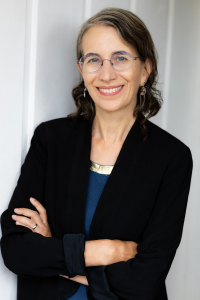
Andrea S Goldman
University of California, Los Angeles · History
Active 2001–2024
About
Andrea S Goldman is an Associate Professor in the UCLA Department of History, with a research focus on China, cultural history, and the history of gender and sexuality. Her academic work explores these areas through a historical lens, contributing to the understanding of Chinese history and cultural dynamics. She is part of the faculty dedicated to advancing scholarship in these fields and engages in teaching and mentoring students in related topics.
Research topics
- Political Science
- Computer Science
- Aesthetics
- Visual arts
- Art
- History
- Geography
- Law
- Literature
- Art history
- Advertising
- Business
- Archaeology
- Classics
Selected publications
Journal of Chinese History · 2024-10-02
article1st authorCorrespondingColumbia University Press eBooks · 2023
- Computer Science
- Computer Science
Deleted Journal · 2022
1st authorCorresponding- Political Science
- History
- Art
This essay uses nighttime theatricals and lighting as indices to understand the transition from early modernity to modernity in China. It draws upon textual and visual evidence of nighttime performance in China before the modern era to explore the ways in which the association of theatrical spectacle with night varied by class, locale, and gender; it further plots nighttime versus daytime performance along the continuum from ritual to entertainment opera. Theater in the countryside tended toward ritual performance at night for mixed-gender villagers, whereas in urban centers it was mostly about entertainment held during daylight hours for elite male audiences, at least before the advent of gas and electric lighting. Whether performed by day or night, theater in early modern China expiated nightmares and indulged daydreams, and—as it entered the modern era—more than ever fostered a world of perpetual sleeplessness.
Monumenta Serica · 2022 · 1 citations
1st authorCorresponding- Computer Science
- History
- Classics
3. Musical Genre, Opera Hierarchy, and Court Patronage
Stanford University Press eBooks · 2020
1st authorCorresponding- Political Science
- Art
- Visual arts
4. Social Melodrama and the Sexing of Political Complaint
Stanford University Press eBooks · 2020-09-09
book-chapter1st authorCorrespondingThe Journal of Asian Studies · 2020-11-01
article1st authorCorrespondingAn abstract is not available for this content so a preview has been provided. Please use the Get access link above for information on how to access this content.
1. Opera Aficionados and Guides to Boy Actresses
Stanford University Press eBooks · 2020-09-09
book-chapter1st authorCorresponding2. Metropolitan Opera, Border Crossings, and the State
Stanford University Press eBooks · 2020-09-09
book-chapter1st authorCorrespondingOpera, Society, and Politics in Modern China by Hsiao-t’i Li
Twentieth-Century China · 2020-01-01
article1st authorCorrespondingReviewed by: Opera, Society, and Politics in Modern China by Hsiao-t’i Li Andrea S. Goldman Hsiao-t’i Li. Opera, Society, and Politics in Modern China. Harvard-Yenching Institute Monograph Series. Cambridge, MA: Harvard University Asia Center, 2019. 365 pp. $49.95 (cloth). Hsiao-t’i Li’s Opera, Society, and Politics in Modern China explores his long-abiding interest in opera as a vehicle for enlightenment and indoctrination in twentieth-century China. Li’s monograph, building upon his prior Chinese-language scholarship on the didactic uses of opera by late Qing reformist elites, traces this history from the first decade of the twentieth century through the 1960s. Li examines two models of opera: a market-oriented model centered on the Xin wutai (新舞台 New Stage) in Shanghai and an elite-sponsored one associated with the Yisushe (易俗社 Society to Transform Customs) in Xi’an. The commercial model comes to be eclipsed by escalating demands for art to hew to politics from the 1930s through the 1960s, while the paternalistic one—mobilized with increasing effectiveness by the Chinese Communist Party (CCP)—survives into the 1980s. If that observation is not entirely unexpected, more illuminating is Li’s insight that the producers of Beijing opera in Shanghai and the playwright-managers of Qin Tunes in Xi’an were equally committed to a kind of civilizing mission. Li’s tale of opera in two cities begins in chapter 1 with a synthesis of the standard Chinese opera history in sinophone scholarship. Chapter 2 narrates the conflicted attitudes toward opera among early twentieth-century intellectuals, especially the New Culture radicals. Many of them embraced opera as a medium for disseminating reform, even as they rejected the existing performance repertoire. Chapters 3 and 4 turn to Shanghai’s New Stage, categorizing the operas and enumerating the staging innovations introduced under the management of the reform-minded Xia brothers, Xia Yuerun (夏月潤 1878–1931) and Xia Yueshan (夏月珊 1868–1924). The New Stage packaged modern concepts in novelty and entertainment. Chapter 5 shifts to the 1912 founding of the Yisushe, charting the endeavors of local elites who spearheaded reformed Qin Tunes in Xi’an and its hinterland. The Yisushe, by seeding new ideas into conventional storylines, became more effective at mobilizing folk opera for social reform than the New Culture intellectuals. The final chapter sketches the spread of both prototypes of opera reform across China, even as war and politics narrowed the range of content. Li’s lens on the politics of opera is a welcome addition to the historical literature on modern China. The chapter on Qin Tunes makes a singular contribution to the anglophone scholarship (especially given that opera in Shanghai has garnered much wider attention). Taken together, the Shanghai and Xi’an case studies reveal that the CCP’s use of opera as propaganda was more heir to the conservative, paternalistic model than to the progressive, commercial one. But Li wants the parts to tell us something about the whole, thereby offering a comprehensive narrative of opera and politics in modern China. Ultimately, his case-study approach and the incommensurability of his pre- and post-1949 sources do not fully capture the complexity of modern Chinese opera across space or time. Li’s tale of two cities is structured by implicit contrasts: Shanghai versus Xi’an; coastal versus interior; progressive versus conservative; commercial orientation versus Confucian paternalism. Commercialism and paternalism, however, were not the only two modes of opera reform. Beijing, for instance, featured an actor-driven model of reform. The Zhengyue yuhuahui (正樂育化會 Association for Education and Transformation [End Page E-20] through the Rectification of Music), founded shortly before the Yisushe and launched by opera star Tian Jiyun (田際雲 1865–1925), also sought to reform opera by, among other initiatives, shielding actors from sex work and cleaning up bawdy scripts. Indeed, it was one of Tian’s new plays that made a sensation at the New Stage in 1910 (136). As the work of Joshua Goldstein has shown, actors, operas, and styles circulated from city to city, especially along the Beijing–Tianjin–Shanghai circuit.1 A focus on intersecting networks rather than contrasting nodes might have done more to capture the social...
Frequent coauthors
- 1 shared
K. Bae
- 1 shared
Jon Kief
University of California, Los Angeles
- 1 shared
Jimmy X. Tang
University of California, Los Angeles
- 1 shared
Ji‐Young Lee
University of Connecticut
- 1 shared
Stephanie Kim
University of California, Los Angeles
- 1 shared
Christopher Lovins
University of California, Los Angeles
- 1 shared
Arthur Weststejin
University of California, Los Angeles
- 1 shared
Sung-Deuk Oak
University of California, Los Angeles
Labs
UCLA Department of HistoryPI
Awards & honors
- Association for Asian Studies Joseph A. Levenson Award for t…
- 2014 Association for Asian Studies Joseph A. Levenson Pre-19…
- Resume-aware match score
- Save to shortlist
- AI-drafted outreach
See your match with Andrea S Goldman
PhdFit ranks faculty by your research interests, methods, and publications — grounded in their actual work, not templates.
- Free to start
- No credit card
- 30-second signup