Resume-aware faculty matching

Find professors who actually fit you

Upload your resume. Four AI agents analyze your background, rank the faculty who fit, inspect their recent research, and help you draft outreach — grounded in their actual work, not templates.

Free to startNo credit cardCancel anytime
Top matches Balanced preset
Dr. Sarah Chen
Stanford · Interpretability · NLP
91
Dr. Marcus Holloway
MIT · Robotics · RL
84
Dr. Aisha Okonkwo
CMU · Fairness · HCI
82
Nova · Professor Researcher · re-ranking top 20…
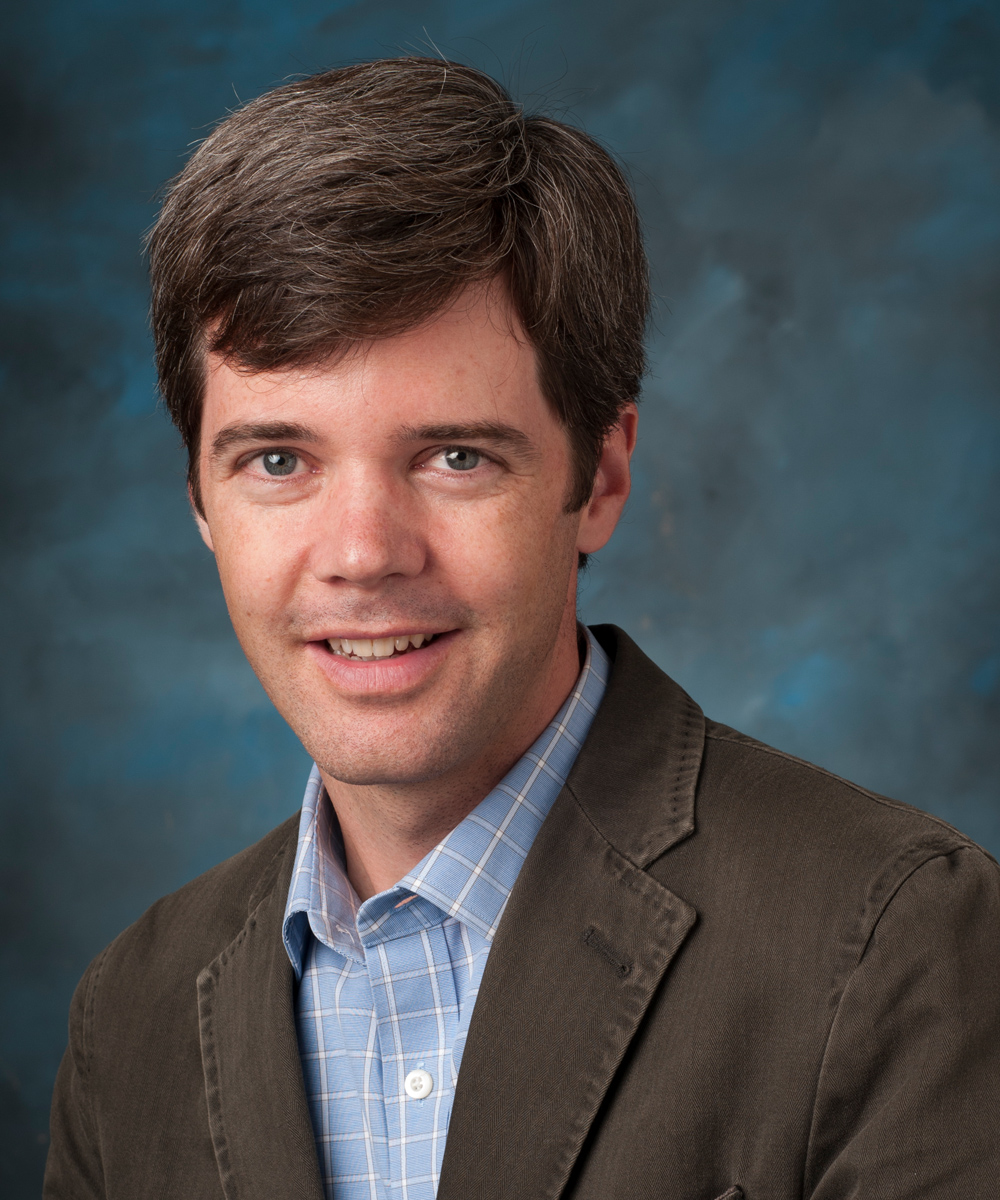
Andrew Devereux

Andrew Devereux

· Associate ProfessorVerified

University of California, San Diego · History

Active 2010–2024

h-index3
Citations41
Papers3425 last 5y
Funding
See your match with Andrew Devereux — sign in to PhdFit.Sign in

About

Andrew Devereux is an associate professor in the Department of History at UC San Diego, specializing in the history of the medieval and early modern Mediterranean. He earned his Ph.D. in 2011 from Johns Hopkins University, with doctoral research supported by grants from the IIE-Fulbright and the Spanish Ministry of Culture and Education. Following his Ph.D., he was an Ahmanson-Getty postdoctoral fellow at UCLA and a Kluge Fellow at the Library of Congress. He has also served as an assistant professor at Loyola Marymount University from 2012 to 2018. His scholarly work has been recognized with grants from the Folger Institute and the National Endowment for the Humanities, and he has published in several academic journals and contributed chapters to edited volumes. His first book, The Other Side of Empire, examines Spanish rationales for empire through processes of Mediterranean expansion in the early sixteenth century, and his forthcoming book explores legal and moral arguments used by Spaniards to justify acts of war and conquest in the Mediterranean. Devereux approaches Mediterranean history from a global perspective, analyzing the region's connections to Europe, West Africa, Central Asia, and maritime systems of the Atlantic and Indian oceans. He is a founding member and current president of the Spain-North Africa Project and serves on the advisory board of the Mediterranean Seminar.

Research topics

  • Political Science
  • Law
  • History
  • Sociology
  • Philosophy
  • Theology
  • Ancient history
  • Art
  • Religious studies
  • Literature

Selected publications

  • : <i>Jurists and Jurisprudence in Medieval Italy: Texts and Contexts</i>

    Renaissance Quarterly · 2024-06-01

    article1st authorCorresponding

    Jurists and Jurisprudence in Medieval Italy: Texts and Contexts. Julius Kirshner and Osvaldo Cavallar. Toronto Studies in Medieval Law 4. Toronto: University of Toronto Press, 2020. xxvi + 866 pp. $131. - Volume 77 Issue 2

  • Global Conquests, Global Infidels: The <i>Junta</i> of Burgos (1512) Seen Through Integrated Mediterranean and Atlantic Contexts

    Mediterranean Studies · 2024-08-01

    article1st authorCorresponding

    ABSTRACT Traditional scholarship has been marked by a sharp division between historians working on two apparently discrete maritime systems in the early modern era—the Mediterranean and the Atlantic. In recent years, though, scholars have begun to recognize the extent to which these spheres were in fact imbricated, in the movement of peoples and commodities as well as in the intangibles of ideology and legal doctrines, some of which had very concrete effects on the lives and status of millions of individuals. This article examines several legal questions pertaining to the status of recently conquered peoples by bringing together sources that address the legal status of new subjects of the Spanish monarchy, including the Laws of Burgos (1512), the Amendments of Valladolid (1513), along with several treatises by jurist Juan López de Palacios Rubios, theologian Matías de Paz, and Bartolomé de las Casas. This microhistorical analysis of the questions examined at the Junta of Burgos sheds light on the ways in which our understanding of the legal doctrines of empire is immensely enriched and clarified when we integrate the Mediterranean and Atlantic angles of early modern Spanish commitments.

  • :<i>The Globe on Paper: Writing Histories of the World in Renaissance Europe and the Americas</i>

    The Journal of Modern History · 2023-12-01

    article1st authorCorresponding
  • Infidels and Empires in a New World Order: Early Modern Spanish Contributions to International Legal Thought

    Journal of Church and State · 2021 · 2 citations

    1st authorCorresponding
    • Sociology
    • Political Science
    • Law

    David Lantigua’s Infidels and Empires in a New World Order is an ambitious study that reconsiders the Spanish debates over the Amerindians and the justice (or injustice) of the Spanish conquests in the Americas, interpreting these theological and juridical arguments in the context of the incremental development of international law as it pertains to human rights, political citizenship, and sovereign states. Lantigua seeks to offer a less Eurocentric reading of the development of international law and to de-center the Peace of Westphalia (1648), suggesting that it behooves us to look to the peripheral edges of European imperialism (in this case, the Spanish Americas) to locate important contributions to the evolution of international law. Infidels and Empires traces a thread from medieval Christian legal doctrines on infidels and their capacity to possess dominium up through the early modern European construction of the category of “savage peoples” to whom the principles of political equality did not apply as they did to Europeans. Along this continuum, the idolatrous infidel was gradually replaced by the unindustrious savage. On this stage, the opposing views of Bartolomé de las Casas and Juan Ginés de Sepúlveda are front and center, but Lantigua employs these figures productively as entry points into superb analysis of the intellectual contributions of figures as diverse as John Mair, Cajetan, Francisco de Vitoria, John Locke, and others.

  • Apostasy, usurpation, and biblical genealogies: The question of sovereignty in Iberian encounters in the tropics (15th-16th centuries).

    Pedralbes Revista d Història Moderna · 2021-04-13

    articleOpen access1st authorCorresponding

    Aquest article examina diversos escenaris de trobada entre ibèrics i locals no abrahàmics, concretament a Amèrica, les Illes Canàries i l’Àfrica occidental. Basat en escrits dels segles XV i XVI, aquest treball analitza les diferents visions dels ibèrics d’època moderna sobre la capacitat dels no cristians de mantenir el dominium; sobre la comprensió dels ibèrics de l’abast geogràfic del cristianisme primerenc i les implicacions que té per a les reivindicacions polítiques en època moderna, i sobre les lectures dels ibèrics relatives a genealogies bíbliques i el pes que comportaven els arguments legals sobre sobirania i esclavitud.

  • S<scp>asha</scp> D. P<scp>ack</scp>. <i>The Deepest Border: The Strait of Gibraltar and the Making of the Modern Hispano-African Borderland</i>.

    The American Historical Review · 2021-03-01

    article1st authorCorresponding

    In 1867, the Quaker City called at the port of Gibraltar, carrying American passengers on an excursion to the Holy Land, eager, following their transatlantic crossing, to disembark and explore the city. Among the passengers was Samuel Clemens, who, in Innocents Abroad, described both Gibraltar and its sibling Tangier as exotic, cosmopolitan spaces. Clemens reserved his strongest orientalist language for Tangier, which he described as “a foreign land if ever there was one, and the true spirit of it can never be found in any book save The Arabian Nights” (quoted on 40). One element that seems to have contributed to Clemens’s orientalizing depiction was the ethnoreligious diversity of the cities anchoring what Sasha D. Pack terms the “trans-Gibraltar” borderland. Indeed, Pack suggests that this cosmopolitanism was in part a product of the borderland dynamic that defined this zone in the late nineteenth century. In his second monograph, The Deepest Border: The Strait of Gibraltar and the Making of the Modern Hispano-African Borderland, Pack focuses on a cluster of cities, including Tangier, Gibraltar, Tétouan, Ceuta, and Melilla, all located on the Strait of Gibraltar and the narrow Sea of Alborán, separating southern Spain from North Africa. Tracing political, military, economic, and social developments across the long century from 1850 to 1970, Pack employs the conceptual framework of borderlands history to analyze a series of shifts that led from the region being one of fluid and exploitable borders to a zone characterized by hardened, less porous boundaries. Pack’s objective in this study is to examine “the development of a multilateral regional order in the Hispano-African borderland over a long historical period” (6).

  • Bibliography

    Cornell University Press eBooks · 2020-06-15

    book-chapter1st authorCorresponding
  • Conclusion

    Cornell University Press eBooks · 2020-06-15

    book-chapter1st authorCorresponding

    This chapter explains that in the study of empire in the Old World, the Spanish political thought on just war, conquest, and the treatment of newly subject people developed a crucible in which Mediterranean dynastic rivalries were paramount. It assesses the circumstances of conquests in geographies ranging from the wooded Pyrenees to the bustling port of Naples to the arid hinterlands of Tripoli, where the legal and moral arguments undergirding the rise of the early modern empires were forged. It also analyzes different circumstances of the Atlantic world that shows the inevitable continuities linking Mediterranean imperium to its Atlantic successor and demonstrates the incommensurability of Mediterranean dynamics with those of the Gentile-inhabited Atlantic. The chapter sheds light on aspects of Spanish history that have been neglected for centuries. It is not intended only to signify merely a “recovery” of Spain's Mediterranean interests and aspirations during the early sixteenth century, but as stimulant for research and dialogue on the legal and moral arguments surrounding just war, conquest, and empire in a variety of settings.

  • The Mediterranean in the Spanish Imaginary During the Age of Exploration

    Cornell University Press eBooks · 2020-06-15

    book-chapter1st authorCorresponding

    This chapter explores the ways that late medieval Spaniards thought about the Mediterranean and the lands surrounding its shores. The chapter mentions the geographers' belief that the three constituent parts of the earth, namely Asia, Africa, and Europe, met in the Mediterranean and that the lordship of the world could only be attained through control of the inner sea. It also points out that the early expansion of primitive Christianity suggest that the Mediterranean possessed a latent religious unity. Aware of the history of the early Church in North Africa and western Asia, jurists devised arguments to the effect that Christian conquests in those regions were in fact acts of recuperation or defense. It then describes the nuances of fifteenth-century Spaniards' perspectives on Mediterranean space by demonstrating that the proximate western Mediterranean was familiar and known, while the more distant eastern Mediterranean was more exotic and often depicted as the site of fabulous wonders.

  • Note on Terminology

    Cornell University Press eBooks · 2020-06-15

    book-chapterOpen access1st authorCorresponding

Frequent coauthors

  • Zacharias Krafft

    Ithaca College

    25 shared
  • Heinrich Bünting

    Ithaca College

    25 shared
  • Abigail Krasner Balbale

    6 shared
  • Yuen-Gen Liang

    Academia Sinica

    6 shared
  • Camilo Gómez-Rivas

    5 shared
  • Alex E. Felice

    University of Malta

    2 shared
  • Joseph Borg

    University of Malta

    2 shared
  • A. Al Aqeel

    1 shared

Awards & honors

  • IIE-Fulbright grant
  • Spanish Ministry of Culture and Education grant
  • Ahmanson-Getty postdoctoral fellowship at UCLA (2011-2012)
  • Kluge Fellowship at the John W. Kluge Center at the Library…
  • Grants from the Folger Institute
  • Resume-aware match score
  • Save to shortlist
  • AI-drafted outreach

See your match with Andrew Devereux

PhdFit ranks faculty by your research interests, methods, and publications — grounded in their actual work, not templates.

  • Free to start
  • No credit card
  • 30-second signup