About
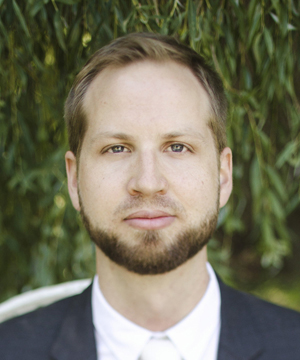
Andrew deWaard is an associate professor in the Department of Communication at UC San Diego. His research focuses on the cultural industries, the political economy of media, financial capital, and media authorship. He analyzes the relationship between culture and commerce, emphasizing media systems, social processes such as capitalism, financialization, racialization, and digitalization, and the roles of various agents including institutions, corporations, workers, authors, and artists. His primary methodology is the critical political economy of media, influenced by media studies, cultural studies, critical theory, heterodox economics, and digital humanities. deWaard has authored the book Derivative Media: How Wall Street Devours Culture, which examines how financial sector practices dismantle creative capacity in cultural industries and shape mediascapes through profit-extraction techniques. He is also the co-author of The Cinema of Steven Soderbergh, analyzing the filmmaker's diverse oeuvre. Additionally, he co-founded The Cultural Capital Project and the Media And Consolidation Research Organization (MACRO) Lab, which study independent music in the streaming age and media ownership consolidation, respectively. His work critically explores how wealth, finance, ownership, and power influence media industries and cultural objects, and he advocates for policies and alternatives to foster a more diverse and equitable media system.
Research topics
- Political Science
- Sociology
- Finance
- Business
- Economics
- Acoustics
- Anthropology
- Public relations
- Economy
- Geography
- Public administration
- Economic growth
- Market economy
- Law
Selected publications
“Fin-dies,” Filmanthropy, and the Financialization of Indie Film
2025-07-07
book-chapter1st authorCorrespondingAbstract Between 1996 and 2020, film companies funded by wealthy benefactors saturated the mid-level indie film market. These “billionaire boutique” films (alternatively termed, “fin-dies”) featured the talents of a veritable who’s who of modern Hollywood: aging legends Martin Scorsese, Clint Eastwood, and Terrence Malick; acclaimed indie auteurs Alfonso Cuarón, Wes Anderson, and the Coen Brothers; television innovators David Chase, Sam Esmail, and Cary Joji Fukunaga; documentarians Joshua Oppenheimer, Charles Ferguson, and Laura Poitras; international visionaries Bong Joon-ho, Yorgos Lanthimos, and Park Chan-Wook; and emerging indie filmmakers Lulu Wang, Greta Gerwig, and Ari Aster. The easy dialectics of twentieth-century Hollywood—independent vs. studio, margin vs. mainstream—are consequently no longer so clear cut. In what reads like a true crime story, this chapter reveals the ways in which financialization, intergenerational wealth, tax evasion, capital extraction, reputation laundering, and corrupt philanthropy have become the essential characteristics of the industrial landscape of contemporary independent American film.
Derivative Television and Securitized Sitcoms
2024-09-03
book-chapterOpen access1st authorCorrespondingLuminos is University of California Press’ Open Access publishing program for monographs. With the same high standards for selection, peer review, production and marketing as our traditional program, Luminos is a transformative model, built as a partnership where costs and benefits are shared.
The Financialization of Hollywood
2024-09-03
book-chapterOpen access1st authorCorrespondingLuminos is University of California Press’ Open Access publishing program for monographs. With the same high standards for selection, peer review, production and marketing as our traditional program, Luminos is a transformative model, built as a partnership where costs and benefits are shared.
A Brief, Illustrated History of the Current U.S. Political Economy
2024-09-03
book-chapterOpen access1st authorCorrespondingLuminos is University of California Press’ Open Access publishing program for monographs. With the same high standards for selection, peer review, production and marketing as our traditional program, Luminos is a transformative model, built as a partnership where costs and benefits are shared.
Derivative Media and the Tools of Financialization
2024-09-03
book-chapterOpen access1st authorCorrespondingLuminos is University of California Press’ Open Access publishing program for monographs. With the same high standards for selection, peer review, production and marketing as our traditional program, Luminos is a transformative model, built as a partnership where costs and benefits are shared.
2024-08-06 · 9 citations
bookOpen access1st authorCorrespondingA free ebook version of this title is available through Luminos, University of California Press's Open Access publishing program. Visit www.luminosoa.org to learn more. Sequels, reboots, franchises, and songs that remake old songs—does it feel like everything new in popular culture is just derivative of something old? Contrary to popular belief, the reason is not audiences or marketing, but Wall Street. In this book, Andrew deWaard shows how the financial sector is dismantling the creative capacity of cultural industries by upwardly redistributing wealth, consolidating corporate media, harming creative labor, and restricting our collective media culture. Moreover, financialization is transforming the very character of our mediascapes for branded transactions. Our media are increasingly shaped by the profit-extraction techniques of hedge funds, asset managers, venture capitalists, private equity firms, and derivatives traders. Illustrated with examples drawn from popular culture, Derivative Media offers readers the critical financial literacy necessary to understand the destructive financialization of film, television, and popular music—and provides a plan to reverse this dire threat to culture.
Derivative Music and Speculative Hip Hop
2024-09-03
book-chapterOpen access1st authorCorrespondingLuminos is University of California Press’ Open Access publishing program for monographs. With the same high standards for selection, peer review, production and marketing as our traditional program, Luminos is a transformative model, built as a partnership where costs and benefits are shared.
2024-09-03
book-chapterOpen access1st authorCorrespondingLuminos is University of California Press’ Open Access publishing program for monographs. With the same high standards for selection, peer review, production and marketing as our traditional program, Luminos is a transformative model, built as a partnership where costs and benefits are shared.
Derivative Media: How Wall Street Devours Culture
2024-03-05 · 3 citations
bookOpen access1st authorCorrespondingSequels, reboots, franchises, and songs that remake old songs—does it feel like everything new in popular culture is just derivative of something old? Contrary to popular belief, the reason is not audiences or marketing, but Wall Street. In this book, Andrew deWaard shows how the financial sector is dismantling the creative capacity of cultural industries by upwardly redistributing wealth, consolidating corporate media, harming creative labor, and restricting our collective media culture. Moreover, financialization is transforming the very character of our mediascapes for branded transactions. Our media are increasingly shaped by the profit-extraction techniques of hedge funds, asset managers, venture capitalists, private equity firms, and derivatives traders. Illustrated with examples drawn from popular culture, Derivative Media offers readers the critical financial literacy necessary to understand the destructive financialization of film, television, and popular music—and provides a plan to reverse this dire threat to culture.
Derivative Film and Brandscape Blockbusters
2024-09-03
book-chapterOpen access1st authorCorrespondingLuminos is University of California Press’ Open Access publishing program for monographs. With the same high standards for selection, peer review, production and marketing as our traditional program, Luminos is a transformative model, built as a partnership where costs and benefits are shared.
Frequent coauthors
- 9 shared
Celestino Deleyto
Chapman University
- 9 shared
Seung-Hoon Jeong
Myongji University
- 9 shared
Andrés Leal
Chapman University
- 9 shared
Wendy Bednarz
New York University
- 9 shared
Dominic James
Chapman University
- 9 shared
Graeme Harper
Creative Technology (Singapore)
- 9 shared
Bill Marks
New York University
- 9 shared
Maja Manojlovic
Chapman University
Labs
Media and Consolidation Research and Organization LabPI
A scholarly community, research lab, and online resource about media ownership for instructors, students, journalists, regulators, and citizens.
Education
- 2017
PhD in Cinema and Media Studies, Theater, Film, and Television
University of California Los Angeles
Awards & honors
- Collegium of University Teaching Fellowship, 2016
- Kemp R. Niver Award in Film History, 2015
- University of California Humanities Research Institute Resea…
- Georgia Frontiere Scholarship In Memory Of The Humanitarian…
- Otis Ferguson Memorial Award in Critical Writing, 2013
- Resume-aware match score
- Save to shortlist
- AI-drafted outreach
See your match with Andrew deWaard
PhdFit ranks faculty by your research interests, methods, and publications — grounded in their actual work, not templates.
- Free to start
- No credit card
- 30-second signup