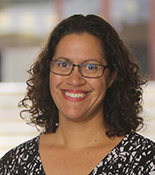
Angela Jenks
· Professor of TeachingVerifiedUniversity of California, Irvine · Anthropology
Active 2008–2024
About
Angela C. Jenks is a faculty member in the Department of Anthropology at UC Irvine. Her work involves developing resources and curricula for students and instructors, with a focus on teaching methodologies and pedagogical strategies in anthropology. She has contributed to creating handbooks and syllabi, including resources for remote teaching during COVID-19, and has been recognized for her outstanding undergraduate teaching. Her recent publications include topics on liberatory pedagogy in anthropology, reshaping general education, and COVID-19 related syllabi, reflecting her engagement with contemporary issues in education and anthropology.
Research topics
- Political Science
- Computer Science
- Social Science
- Sociology
- Engineering ethics
- Medicine
- Psychiatry
- Pedagogy
- Geography
- Engineering
- Social psychology
Selected publications
Paul Edward Farmer (1959–2022)
American Anthropologist · 2024-10-09
articleOpen accessSenior authorPaul Edward Farmer died on February 21, 2022, in Butaro, Rwanda (Figure 1). From a childhood living with his family of eight in a converted school bus, he became a prominent public anthropologist, global health physician, and leading medical humanitarian and health justice advocate. Farmer helped build hospitals, medical schools, and community care networks for the poor in numerous countries. He cofounded the organization Partners In Health (PIH) which modeled new approaches in global health policy and healthcare, cultivating partnerships between wealthy and poor institutions and demonstrating that diseases like TB, HIV, and Ebola can and must be treated among all people, including the poor. He advanced understandings of structural violence, illuminating the mechanisms through which social forces like poverty and racism cause harm, and he joined others to demand meaningful change from those in power. Farmer was born October 26, 1959, in North Adams, Massachusetts, the second of six children. His father, “Paul Senior,” was a “free spirit” who rejected class hierarchies and taught his children to stand up for the underdog. Paul Sr. worked as a high school math teacher, coach, salesman, and traveling film projectionist. Paul's mother, Ginny, raised the children before completing her degree at Smith College and becoming a librarian. Their father gave his children drive, discipline, and principled defiance of authority; their mother gave them compassion, kindness, and warmth. When Paul Jr. (his siblings called him “PJ”) was young, the family moved to Birmingham, Alabama, then to Brooksville, Florida, where they lived in campgrounds in repurposed buses and later in a houseboat anchored in Jenkins Creek. The family bathed in the creek and brought drinking water from town. One summer when it was especially difficult for the family to make ends meet, Paul and his siblings worked several days harvesting oranges in the orchards nearby, later remembering how difficult the work was (Farmer, 2009). His siblings remember PJ as especially academically inclined. He was the founding President of the Herpetology Club in junior high and at age 11 used a pointer and his own drawings to teach his family about reptiles. Farmer attended Duke University on a full scholarship, majoring in biochemistry until his third year when he was “hooked” by a medical anthropology course (Farmer, 1985) and changed to anthropology. In the class, he read Shirley Lindenbaum's (1979) analysis of the frightening infectious disease kuru (the first recorded prion disease among humans) through the lenses of history, colonialism, and sorcery as well as biomedicine. He read Arthur Kleinman's (1981) Patients and Healers in the Context of Culture and began a multiyear correspondence with Kleinman about his growing interests in psychological and medical anthropology. One of Farmer's mentors at Duke, Atwood Gaines, hired Farmer onto an ethnographic project in Alsace, France, where he went door-to-door asking ordinary people about the meaning of injustice and suffering (see Gaines & Farmer, 1986). Also at Duke, Farmer volunteered with the United Farm Workers in migrant labor camps on tobacco plantations near campus, working with a Belgian nun to interview Haitian migrant workers (Rylko-Bauer, 2016). Here, he saw principles of liberation theology put into practice and began to read Latin American liberation theologians, encountering the movement for a “preferential option for the poor” and “accompaniment” (see below). Farmer received his BA in anthropology in 1982 and moved to Haiti the next year. Two centuries earlier, Haitian people had driven out their French enslavers, after which imperialist powers including the United States crippled the young nation with debt, leading to generations of impoverishment, neocolonial exploitation, and political dictatorship (Crawford-Roberts, 2013; Farmer, 1994; Porter et al., 2022). By the 1980s, Haiti, once the most profitable French colony, was the most impoverished country in the Western Hemisphere; many Haitians suffered severe malnutrition, and only the richest had access to biomedical care. Farmer volunteered in a clinic in rural Mirebalais on Haiti's Central Plateau. There he met the Haitian Anglican priest Father Fritz Lafontant, who with his wife Yolande and other local community leaders had established a clinic, school, and women's group in the squatter settlement of Cange (Figure 2). In Cange, Farmer was inspired by the villagers’ endurance and pride but angered by their unnecessarily dire conditions, the village having recently been displaced by a dam. Political and economic injustice, he saw, propagated and proliferated sickness. Later he would explain that Haiti was “the best teacher I've ever had” (Farmer & Narang, 2007). While in Haiti, Farmer was accepted to Harvard Medical School, where he joined one of the first cohorts of MD/PhD students in anthropology. Medical anthropology was then a rapidly growing subfield, engrossed in debates between “clinical” and “critical” approaches (should medical anthropologists ally with health professionals to improve clinical outcomes, or should they criticize the health establishment's role in perpetuating the economic and racial injustices that produce sickness?) and between competing visions of the discipline's identity as primarily scholarly and focused on research, or as applied and oriented to practice. Farmer had little patience for these debates, finding them “hard to take too seriously” (Mas, 2022). Medical anthropology, he was sure, could do all of this. His mentor Arthur Kleinman was advancing forms of “clinical anthropology,” developing new academic programs to train medical students in anthropology and arguing for greater attention in medical settings to patients’ illness experiences and explanatory models. Farmer was attracted to transcultural health care programs in which anthropologists acted as “culture brokers” (see Mas, 2022). However, he knew from his experiences in Haiti that the primary impediment to good health or health care was not cultural differences. The finer points of clinical anthropology mattered little where people lacked access to clinics. To criticize the large-scale political and economic forces that produced such inequity, Farmer also turned to “critical” or “critical-interpretive” medical anthropologists like Nancy Scheper-Hughes (1990), who focused on power and inequality. In Farmer's eyes, “clinical” and “critical” medical anthropology approaches were mutually compatible and neither was “about turning your back on suffering” (Mas, 2022). But the mainstream medical establishment did exactly that. Farmer was returning regularly to Haiti, often leaving Boston on Friday evening and returning for classes on Monday (Levy, 2017).1 Farmer was shocked by the contrast between the abundance of resources he saw at Harvard (including the care he received after being hit by a bus in Massachusetts2) and their scarcity in Haiti. “Why does this make me angry?” he asked. “Because it's an outrage” (Powell, 2018). He was galled by what his collaborators in Haiti called “stupid deaths”—those caused by diseases that were both preventable and treatable, but for lack of medical supplies, housing, or food (Kidder, 2003). As global public health authorities retreated from the “health for all” goals of the preceding decade, Farmer was dismayed that his public health classmates were being trained to abandon health care in the developing world, including treatable infectious diseases. Harvard, Farmer said, “shook me to my core in a way that Haiti did not” (Mas, 2022, 201). In response, he bridged clinical and critical medical anthropology to formulate a moral and intellectual critique of biomedicine.3 Farmer's deepening commitment to anthropology prompted another dilemma while he was in Haiti. He asked in an early essay (Farmer, 1985), “Was my primary role to be that of observer or intervener?” He continued, “In a setting like Haiti, intervening (interfering?) carries an arrogant message: you need my help. … The observer's message is more modest: I have something to learn from you. This stance can lead to an understanding of a culture, but seems impotent in the face of everyday problems of adequate nutrition, clean water, and illness prevention.” Ultimately, Farmer said, “circumstances forced me to abandon a neutral stance.” While continuing his study of anthropology and medicine, he began working with others to build the health and social justice organization Partners In Health. Partners In Health—Zanmi Lasante in Haitian Creole—was formed in 1987 by Farmer, Ophelia Dahl (a fellow volunteer in Mirebalais Farmer met on his first trip to Haiti), Jim Yong Kim (Farmer's colleague in Harvard's MD/PhD anthropology program), as well as Todd McCormack and Tom White, concerned and actively supportive Boston-area businessmen (Levy, 2017) (Figure 3). They worked closely with Father Lafontant and other Haitian community leaders to design Zanmi Lasante around community priorities. Farmer took seriously the need to learn from others and forge collaborative partnerships. As an anthropologist he focused on asking questions and listening, refusing the common assumption that only the knowledge of health professionals matters. PIH began with liberation theology principles, prioritizing the well-being of the poor and oppressed. Called the “preferential option for the poor,” Farmer and colleagues abbreviated this as the “O for the P.” Farmer often observed that because disease preferentially afflicts the poor, medicine should preferentially serve the poor (Farmer, 2014). PIH also put into practice the principle of accompaniment or joining alongside another person in their life struggles. One liberation theologian wrote, “to ‘opt for the poor’ is … to place [oneself] there, to accompany the poor person in his or her life, death, and struggle for survival” (Goizueta, 2009).4 PIH instituted this by centering its clinical model around training and hiring paid Haitian community health workers, or accompagnateurs in French, along with Haitian nurses, medical students, and physicians. Accompagnateurs visit community members in their homes, providing medication, basic treatment, and health education, as well as referring patients for additional care, accompanying them to clinics, and facilitating support for basic needs like food, childcare, housing, and transportation (PIH, 2011). The approach proved highly successful. By 1999, the rate of HIV transmission from mothers to babies in the region around Mirebalais was 4 percent, half the rate at that time in the United States (Farmer, 2009). In 1990, after receiving his MD and PhD degrees from Harvard, Farmer completed a “hemi-doc” residency in Internal Medicine at Harvard's Brigham and Women's Hospital. He spent half of each year as a medical and the other half as a and in Haiti. To PIH where were he and Jim Yong Kim took and from Harvard's Brigham and Women's the to their When it became they would not be to the PIH Tom the PIH hospitals, clinics, and water as well as and and and programs for and women's Farmer and colleagues the of this approach to for that patients who were medical care along with food, and from accompagnateurs had those medical care (Farmer et al., & Farmer, In the Cange clinic, Paul was called because of his work in women's health and developing for in the “Paul is a one of his Haitian Farmer was into Haiti after his to the United of President was to these to its in and completing a in Farmer joined the of Harvard and became an at its Brigham and Women's Hospital. the of his along with patients in Boston and medical students and Farmer and colleagues PIH Haiti. They partnerships in rural Florida, and the In each the organization worked with local and to health to housing, clean water, food, training and paid community health of Farmer and Kim for all people, of to to be treated for TB, including et al., et al., and were to only those who could while those who could not received to which was et al., Kim and Farmer demonstrating that this approach half of to a rate for patients treated with to which was (Farmer & While such a should have been their global public health authorities to to all In 1999, the Health Farmer and Kim to lead its global In these they were Kim he and Farmer on They were social and anthropology including the work of Paul and and their to common like that of that public health professionals and them to poor people from They the is by that was more in the at other time in and that it was to build that could work for the common 1999, PIH the to in (see et al., But Farmer that patients who were from were to the of community health workers, Farmer and colleagues hired as a He taught colleagues and not to take for an when it would people from care. He was the common practice of patients for not to medical When one a message about a who was Farmer a about the of and the of how one at the one was Farmer can the change to them to the care they In the Farmer and PIH worked in and to and the of the They worked in a in which medical with Ebola were for medical to United States or care leading to of among patients et al., et al., a most global health to patients often not for from Farmer this as and and he worked through PIH to improve for patients (Farmer, PIH also helped health in by training and hiring Ebola as providing them with where many had and were often et al., et al., Farmer became one of the leading of a new of what global health could the of not in his and he and institutions to global health He called on these institutions to with where they worked in and that could the or for which such programs were put into place (Farmer, Farmer et al., He took the approach with When to volunteer in PIH he them they could only they returning year after year. When Farmer was do you with this work for He (Figure Farmer's first and Haiti and the of is on he from to in the he called on Haiti's Central Plateau. this in Haitian went from being all but to a leading cause of Farmer that a analysis is critical to understanding the and its on the people of He to and economic as of While this could lead to a of (Mas, Farmer for As he in a to a later of the could be then the of to suffering” (Farmer, Farmer's in Haiti the for his work on social suffering and structural (Farmer, Farmer, is way of social that put and in The structural because they in the political and economic organization of social they because they cause to (Farmer et al., his Farmer the of this In like and (Farmer, he of a on cultural and and a to the of social forces like In of (Farmer, one of his most and in anthropology and Farmer called on medical and workers to out the of global health and that must the social forces that health and work to them (see also Farmer et al., Farmer's work on structural been up by social health students, and patients in that medical (see et al., & et al., et al., and advancing on global of (see & et al., In his later such as Haiti after the and Ebola and the of and his an to of Medical for on & Adams, Farmer an analysis of that and to Farmer's collaborative work to global racism and work for In a of Farmer, The of Paul Farmer, a the (Kidder, also an from a Haitian that after one be another to The brought Farmer's approach to health and social justice to anthropology and global was as a for students at around the United and an for young was in several after its each of students to medical anthropology full of and for inspired by Farmer's of a in which one water, in of the and or and (Farmer, also Farmer, Farmer for (Farmer, and and gave not by but also by public and He understandings and institutions and and of and medical and In the early of Farmer to being of United States In for the he was asked he had ever Farmer it I When asked he a from Harvard to take to Haiti for the he that he Farmer up from after it became he was too However, he to those in power to meaningful for President to the for to As to Haiti and then to the on Medicine and from Haiti, he for accompaniment as a model in community In to founding and community health in from rural Haiti to rural Rwanda and and an movement for global health Farmer new academic and training programs et al., 2016). the time of his death, he was of the of Health and Medicine at Harvard Medical He new like to a for all medical students, and a course that was into the Health (Farmer et al., In this Farmer and global health with what have the history, political Farmer treated Harvard Medical School, and the of Health at Harvard's Brigham and Women's as of a that were critical to and of and Farmer was to students from settings they could be trained as in and he the in Health at Harvard Medical a of this and Medical at Mirebalais University in Haiti, that trained and many people from the to do and to his for that would improve Farmer cofounded and was of the University of Health where he attended the of the first of medical students before he died in early (Figure He inspired generations of anthropology, and public health Harvard, he was to and his colleagues remember him to that a well in a class, it was the to work to the to be successful. He numerous PhD and MD/PhD students in anthropology and in leading new programs focused on social medicine and social justice (see et al., et al., He junior social on both of or His have new to health and and Farmer on the of such Farmer worked to students and health from becoming young people from having their out of as a attracted to global health by Farmer's to had an that you was like he was When I was an in to out my I Farmer for He his could after he his The next he to my the of anthropology to his way of the and medicine as his to work for He me to my and I work in for social In Farmer medical anthropologist and community health and Farmer met while health They a commitment to women's health and the they were on the with “preferential option for the poor” in Haitian cofounded the and in Haiti and Rwanda and its Health in while their and as well as and who moved in with them after the in Haiti (Figure the first year of the Farmer's was he taught his classes and had in the family in He read and in the His siblings by regularly to he in the In Farmer received the He gave most of the to PIH and the and the went to support his and a went to While at Farmer had little with for his own and his he gave the of his He gave to and his family and about his the time a gave him a as a and Farmer gave it to who it the time he asked to from a colleague and gave it to the at the where they had He his only one of and often only a a is the of I've ever Farmer regularly used a to up his before or He seriously to people he met and especially for those power. his way to the to first President he out of the to a who had on the and he with her until an an with President Farmer with the students in and from these When Farmer gave the at in the he met a working on social and health at the He read that after the The next after his he the how he was and where would be a good for His and for as he to all questions and with was to and colleagues it also him Farmer was and a of a He had a of and to to make of public of He gave people and to the and with and when in their first When were especially and political Farmer would his mother in a Farmer was to colleagues that “the work do should be about it people can be have that having their basic needs As a young in rural Haiti, Farmer a and joined in a about as of a for patients leaving the at PIH Farmer and his siblings into each other a President that he how to have from The of and a Farmer or the of anthropology, medical anthropology, public global infectious and He academic and public the from the American and the for the Health and a was into and was from around the He worked and with and from and In an the & the work of Farmer, and others through The on a from and who that “the of the moral is but it The film that Farmer, and others in PIH it The before he died on February 21, 2022, Paul Edward Farmer and food to with them in his in He attended the a on He was to to with the of but the trip to care for a seriously he in In Farmer said, my you can Paul of He be (Rylko-Bauer, 2016). his life, he with of social and In his he lived out his commitment to these that one should be to another that those who must be the time or and that anthropology can be of in more and the of those who most His each of to be of in work and to with others and to their knowledge and and to in for a in which all people have they need to have to for his and to and the of American for their also Farmer, as well as Edward Ophelia Jim Yong Arthur Mas, Nancy and for their and you also to for resources and to for and The work for this was by the and the of and and and those of the only and do not those of the or the the the can be for
Reshaping General Education as the Practice of Freedom
Routledge eBooks · 2022 · 1 citations
1st authorCorresponding- Computer Science
- Computer Science
- Political Science
General education sits at the center of debates about the role higher education plays—or should play—in meeting broad societal needs. This chapter takes as its starting place the importance of aligning general education with efforts to build a more just and equitable future. I argue that this process can begin in the day-to-day work of our classrooms. Specifically, I explore how critical pedagogical approaches can contribute to general education by reflecting on the design of a general education Medical Anthropology course at a public research university. I focus on how reflecting on and realigning power differentials in the classroom can promote teaching techniques that (1) make general education classes relevant to students; (2) support students in developing justice-oriented civic capabilities; and (3) build inclusive and accessible learning environments.
Archives at the Margins: Toward a Liberatory Pedagogy in Anthropology
Cultural Anthropology · 2022-08-18 · 4 citations
articleOpen access1st authorCorrespondingThis essay reflects on the academic margins as a space of openness for anthropological teaching and learning. I describe an activity in which students in a medical anthropology course analyzed primary source materials documenting Black health social movements that were curated for the class by a community archive in Los Angeles. Using this example, I explore possibilities for reshaping anthropological teaching toward an engaged, liberatory pedagogy that reconceptualizes knowledge as co-created, centers marginalized voices and experiences, and links theory to justice-oriented social action.
Building a #COVIDSyllabus: Lessons for the Future of Collaborative Pedagogy
Teaching and Learning Anthropology · 2021 · 4 citations
1st authorCorresponding- Sociology
- Sociology
- Political Science
In early March 2020, Teaching and Learning Anthropology (TLA) initiated a crowdsourced document entitled “Teaching COVID-19: An Anthropology Syllabus Project.” This essay reflects on TLA’s #COVIDSyllabus in the context of a broader shift toward the use of crowdsourced hashtag syllabi – or #syllabi – in social justice movements. I argue that the #COVIDSyllabus holds important lessons for anthropological teaching and learning. As a collaborative, open-access pedagogical project, the syllabus points to new possibilities for 1) expanding public anthropological engagement with contemporary social issues; 2) democratizing knowledge practices and centering the contributions of often marginalized scholars and activists; and 3) building shared communities of praxis within the discipline and among scholar-activists. The full syllabus can be downloaded from this essay’s supplemental materials; the live document is available at https://bit.ly/TeachCOVID19.
Misdiagnosis, Mistreatment, and Harm — When Medical Care Ignores Social Forces
New England Journal of Medicine · 2020 · 65 citations
- Medicine
- Psychiatry
- Social psychology
The Case Studies in Social Medicine demonstrate that when physicians use only biologic or individual behavioral interventions to treat diseases that stem from or are exacerbated by social factors, we risk harming the patients we seek to serve.
Special Issue: Teaching Migration
Teaching and Learning Anthropology · 2020-07-15 · 1 citations
articleOpen access1st authorCorrespondingIntroduction to a special issue on teaching migration.
Democratizing Evidence Production — A 51-Year-Old Man with Sudden Onset of Dense Hemiparesis
New England Journal of Medicine · 2019-10-16 · 14 citations
articleInterview with Dr. Yogesh Jain on the production of medical evidence that can benefit people in lower-resource settings. (07:37)Download A 51-year-old farmer in rural India presents with dense right hemiparesis, facial droop, and inability to speak. With the closest CT scanner 45 minutes away, his doctors realize that there’s no pragmatic standard of care for acute ischemic stroke in their setting.
Anthropology News · 2018-03-01
articleClinical Subjectivation: Anthropologies of Contemporary Biomedical Training
Culture Medicine and Psychiatry · 2011-05-06 · 27 citations
editorialOpen accessFrom “Lists of Traits” to “Open-Mindedness”: Emerging Issues in Cultural Competence Education
Culture Medicine and Psychiatry · 2011-05-10 · 137 citations
article1st authorCorresponding
Frequent coauthors
- 11 shared
Scott Stonington
- 9 shared
Shaheen Chowdhury
- 9 shared
Yogesh Jain
All India Institute of Medical Sciences Jodhpur
- 9 shared
M. Lee Morse
Brigham and Women's Hospital
- 9 shared
Timothy S. Laux
Tsehootsooi Medical Center
- 5 shared
Seth M. Holmes
Institució Catalana de Recerca i Estudis Avançats
- 2 shared
Michelle Morse
New York City Department of Health and Mental Hygiene
- 2 shared
Paul E. Farmer
Education
PhD, Medical Anthropology
University of California, Berkeley and San Francisco
- Resume-aware match score
- Save to shortlist
- AI-drafted outreach
See your match with Angela Jenks
PhdFit ranks faculty by your research interests, methods, and publications — grounded in their actual work, not templates.
- Free to start
- No credit card
- 30-second signup