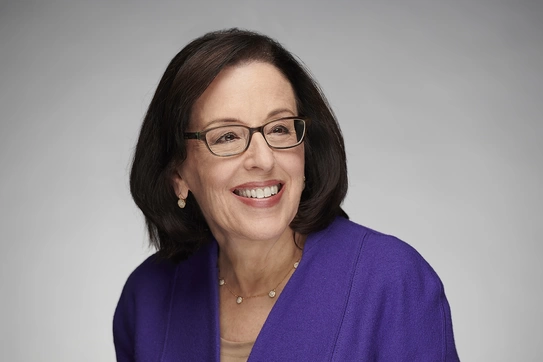
Ann Bartel
· Merrill Lynch Professor of Workforce TransformationColumbia University · Italian
Active 1974–2023
Research topics
- Political Science
- Psychology
- Medicine
- Sociology
- Economics
- Demography
- Nursing
- Demographic economics
- Law
- Environmental health
- Business
- Clinical psychology
- Labour economics
- Psychiatry
- Economic growth
Selected publications
The impact of paid family leave on employers: evidence from New York
Community Work & Family · 2023-01-29 · 16 citations
articleOpen access1st authorTo study the impacts of New York's 2018 Paid Family Leave (PFL) policy on employer outcomes, we designed and fielded a survey of small firms in New York and a control state, Pennsylvania, which does not have a PFL policy. We match each NY firm to a comparable PA firm and use difference-in-differences models to analyze within-match-pair changes in outcomes. Contrary to common concerns about the burdens of PFL on employers, we find no evidence that PFL had any adverse impacts on employer ratings of employee performance or their ease of handling long employee absences. Instead, we find suggestive evidence of an improvement in employers' ratings of employee commitment and cooperation, concentrated in the first policy year. We also observe an increase in employers' ratings of the ease of handling employee absences in the first policy year. Lastly, we find a rise in the incidence of employee leave-taking in the second policy year, driven by the smallest firms in our study.
Paid family leave and parental investments in infant health: Evidence from California
Economics & Human Biology · 2023-10-07 · 10 citations
articleAnnual Review of Public Health · 2022 · 51 citations
1st authorCorresponding- Demographic economics
- Business
- Environmental health
This article reviews the evidence on the impacts of paid family and medical leave (PFML) policies on workers' health, family well-being, and employer outcomes. While an extensive body of research demonstrates the mostly beneficial effects of PFML taken by new parents on infant, child, and parental health, less is known about its impact on employees who need leave to care for older children, adult family members, or elderly relatives. The evidence on employers is similarly limited but indicates that PFML does not impose major burdens on them. Taken together, the evidence suggests that PFML policies are likely to have important short- and long-term benefits for population health, without generating large costs for employers. At thesame time, further research is needed to understand the effects of different policy parameters (e.g., wage replacement rate and leave duration) and of other types of leave beyond parental leave.
California's Paid Family Leave Law and the Employment of 45-64 Year Old Adults
SSRN Electronic Journal · 2021-01-01 · 2 citations
articleOpen accessThe Impact of Paid Family Leave on Employers: Evidence from New York
RePEc: Research Papers in Economics · 2021-01-01
preprintOpen access1st authorCorrespondingWe designed and fielded a survey of New York and Pennsylvania firms to study the impacts of New York's 2018 Paid Family Leave policy on employer outcomes. We match each NY firm to a comparable PA firm and use difference-in-difference models to analyze within-match-pair changes in outcomes. We find that PFL leads to an improvement in employers' rating of their ease of handling long employee absences, concentrated in the first policy year and among firms with 50–99 employees. We also find an increase in employee leave-taking in the second policy year, driven by smaller firms.
The effect of data aggregation on estimations of nurse staffing and patient outcomes
Health Services Research · 2021-08-11 · 16 citations
articleOpen accessOBJECTIVE: To examine how estimates of the association between nurse staffing and patient length of stay (LOS) change with data aggregation over varying time periods and settings, and statistical controls for unobserved heterogeneity. DATA SOURCES/STUDY SETTING: Longitudinal secondary data from October 2002 to September 2006 for 215 intensive care units and 438 general acute care units at 143 facilities in the Veterans Affairs (VA) health care system. RESEARCH DESIGN: This retrospective observational study used unit-level panel data to analyze the association between nurse staffing and LOS. This association was measured over both a month-long and a year-long period, with and without fixed effects. DATA COLLECTION: We used VA administrative data to obtain patient data on the severity of illness and LOS, as well as labor hours and wages for each unit by month. PRINCIPAL FINDINGS: Overall, shorter LOS was associated with higher nurse staffing hours and lower proportions of hours provided by licensed professional nurses (LPNs), unlicensed personnel, and contract staff. Estimates of the association between nurse staffing and LOS changed in magnitude when aggregating data over years instead of months, in different settings, and when controlling for unobserved heterogeneity. CONCLUSIONS: Estimating the association between nurse staffing and LOS is contingent on the time period of analysis and specific methodology. In future studies, researchers should be aware of these differences when exploring nurse staffing and patient outcomes.
The Impact of Paid Family Leave on Employers: Evidence from New York
SSRN Electronic Journal · 2021-01-01 · 2 citations
articleOpen access1st authorCorrespondingThe Impact of Paid Family Leave on Employers: Evidence from New York
National Bureau of Economic Research · 2021-04-01 · 18 citations
reportOpen access1st authorWe designed and fielded a survey of New York and Pennsylvania firms to study the impacts of New York's 2018 Paid Family Leave policy on employer outcomes. We match each NY firm to a comparable PA firm and use difference-in-difference models to analyze within-match-pair changes in outcomes. We find that PFL leads to an improvement in employers' rating of their ease of handling long employee absences, concentrated in the first policy year and among firms with 50-99 employees. We also find an increase in employee leave-taking in the second policy year, driven by smaller firms.
Support for Paid Family Leave among Small Employers Increases during the COVID-19 Pandemic
Socius Sociological Research for a Dynamic World · 2021-01-01 · 7 citations
articleOpen access1st authorThe United States is one of the few countries that does not guarantee paid family leave (PFL) to workers. Proposals for PFL legislation are often met with opposition from employer organizations, which fear disruptions to business, especially among small employers. But there are limited data on employers’ views. The authors surveyed firms with 10 to 99 employees in New York and New Jersey on their attitudes toward PFL programs before and during the coronavirus disease 2019 (COVID-19) pandemic. There was high support for state PFL programs in 2019 that rose substantially over the course of the pandemic: by the fall of 2020, almost 70 percent of firms were supportive. Increases in support were larger among firms that had employees using PFL, suggesting that experience with PFL led to employers becoming more supportive. Thus, concerns about negative impacts on small employers should not impede efforts to expand PFL at the state or federal level.
California’s Paid Family Leave Law and the Employment of 45- to 64-Year-Old Adults
Work Aging and Retirement · 2021-07-22
preprintOpen access1st authorAbstract Paid family leave allows workers to take time off from work to care for a family member with a serious health condition, with reduced financial risk and increased job continuity. In 2004, California was the first state in the nation to implement a paid family leave program allowing workers to take up to 8 weeks off work with partial pay to care for their own or a family member’s serious health condition. Although the effects of California’s law on the labor supply of parents of newborns have been extensively studied, the role of paid family leave in the labor supply of workers who may need to provide care for a spouse has not been studied widely. We examine the effects of California’s law on the employment of workers who are aged 45–64 and have a disabled spouse, using the 2001–2008 American Community Survey. Our preferred estimates suggest the paid leave program increased the employment of 45- to 64-year-old women with a disabled spouse in California by around 0.9 percentage points (or 1.4% on a prelaw base rate of 65.9%) in the postlaw period compared with their counterparts in other states, with a 2.9 percentage point rise in private-sector employment. The employment of men with a disabled spouse in California also increased, but by a smaller amount: 0.7 percentage points (or 0.8% on a prelaw base 86.8%; with a nonsignificant 0.4 percentage point decrease in private-sector employment).
Frequent coauthors
- 96 shared
Jane Waldfogel
Columbia University
- 96 shared
Christopher J. Ruhm
National Bureau of Economic Research
- 81 shared
Maya Rossin‐Slater
Stanford University
- 43 shared
Meredith Slopen
The Graduate Center, CUNY
- 37 shared
Casey Ichniowski
Columbia University
- 36 shared
Kathryn Shaw
- 34 shared
Nachum Sicherman
- 29 shared
Jenna Stearns
University of California, Davis
- Resume-aware match score
- Save to shortlist
- AI-drafted outreach
See your match with Ann Bartel
PhdFit ranks faculty by your research interests, methods, and publications — grounded in their actual work, not templates.
- Free to start
- No credit card
- 30-second signup