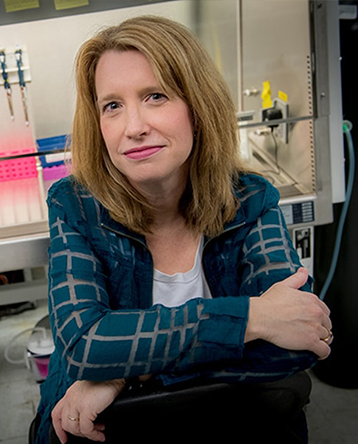
Anne Skaja Robinson
· Trustee ProfessorVerifiedCarnegie Mellon University · Chemical Engineering
Active 1981–2026
About
Anne Skaja Robinson is the Trustee Professor and Department Head of Chemical Engineering at Carnegie Mellon University, having joined the faculty in November 2018. Prior to this, she was the Catherine and Henry Boh Professor in Engineering and Chair of Chemical and Biomolecular Engineering at Tulane University from 2012 to 2018. She began her academic career at the University of Delaware, where she advanced to full professor and associate department head. Her research focuses on understanding the fundamental interactions between molecules, particularly protein folding and misfolding, and developing novel approaches to inhibit protein misfolding and aggregation. This work has important applications for difficult-to-express proteins such as membrane proteins and for improving the production of biotherapeutics like antibodies. The Robinson Laboratory also investigates cellular interactions that lead to aggregation and transmission of pathogenic tau protein, which is relevant to Alzheimer's disease and other neurodegenerative diseases including corticobasal degeneration. Her honors include the DuPont Young Professor Award, the National Science Foundation Presidential Early Career Award for Science and Engineering (PECASE), and fellowships in the American Institute for Medical and Biological Engineering and the American Institute of Chemical Engineers. She has served on the Board of Directors of the American Institute of Chemical Engineers and holds advisory roles for Biotechnology and Bioengineering, Biotechnology Journal, and the FDA's Advisory Committee for Pharmaceutical Sciences.
Research topics
- Environmental health
- Environmental science
- Medicine
- Meteorology
- Geography
- Ecology
- Political Science
- Engineering
- Waste management
- Chemistry
- Biology
- Natural resource economics
- Environmental engineering
- Environmental chemistry
- Environmental protection
- Physics
- Organic chemistry
- Toxicology
- Pulp and paper industry
- Business
- Demography
- Internal medicine
- Economics
- Composite material
Selected publications
Biophysical Journal · 2026-02-01
articleSenior authorFunctional dynamics of G protein-coupled receptors reveal new routes for drug discovery
Nature Reviews Drug Discovery · 2025-01-02 · 60 citations
reviewOpen accessG protein-coupled receptors (GPCRs) are the largest human membrane protein family that transduce extracellular signals into cellular responses. They are major pharmacological targets, with approximately 26% of marketed drugs targeting GPCRs, primarily at their orthosteric binding site. Despite their prominence, predicting the pharmacological effects of novel GPCR-targeting drugs remains challenging due to the complex functional dynamics of these receptors. Recent advances in X-ray crystallography, cryo-electron microscopy, spectroscopic techniques and molecular simulations have enhanced our understanding of receptor conformational dynamics and ligand interactions with GPCRs. These developments have revealed novel ligand-binding modes, mechanisms of action and druggable pockets. In this Review, we highlight such aspects for recently discovered small-molecule drugs and drug candidates targeting GPCRs, focusing on three categories: allosteric modulators, biased ligands, and bivalent and bitopic compounds. Although studies so far have largely been retrospective, integrating structural data on ligand-induced receptor functional dynamics into the drug discovery pipeline has the potential to guide the identification of drug candidates with specific abilities to modulate GPCR interactions with intracellular effector proteins such as G proteins and β-arrestins, enabling more tailored selectivity and efficacy profiles. Recent advances in structural biology techniques and computational simulations have enhanced our understanding of the conformational dynamics of G protein-coupled receptors and their interactions with ligands. This Review highlights how such advances may be used in the discovery and optimization of drugs that target G protein-coupled receptors, focusing on three categories: allosteric modulators, biased ligands, and bivalent and bitopic compounds.
Biochemistry · 2024-12-03
erratumOpen accessBiotechnology Journal · 2024-11-01 · 3 citations
articleOpen accessSenior authorCorrespondingABSTRACT Over the past decade, engineered producer cell lines have led 10‐fold increases in antibody yield, based on an improved understanding of the cellular machinery influencing cell health and protein production. With prospects for further production improvements, increased antibody production would enable a significant cost reduction for life‐saving therapies. In this study, we strategized methods to increase cell viability and the resulting cell culture duration to improve production lifetimes. By overexpressing the cell surface adenosine A 2A receptor (A 2A R), the Akt pathway was activated, resulting in improved cellular proliferation. Alternatively, by inducing autophagy through temperature downshift, we were able to significantly enhance cellular‐specific productivity, with up to a three‐fold increase in total antibody production as well as three‐fold higher cell‐specific productivity. Interestingly, the expression levels of the autophagy pathway protein Beclin‐1 appeared to correlate best with the total antibody production, of autophagy‐related proteins examined. Thus, during cell clonal development Beclin‐1 levels may serve as a marker to screen for conditions that optimize antibody titer.
Ligand binding kinetics of A2AR nanodiscs using fluorescence anisotropy
Biophysical Journal · 2024-02-01
articleOpen accessSenior authorLigand binding kinetics to evaluate the function and stability of A2AR in nanodiscs
Biophysical Journal · 2024-12-17 · 2 citations
articleOpen accessSenior authorAdvances in nanodisc platforms for membrane protein purification
Trends in biotechnology · 2023-03-17 · 27 citations
reviewSenior authorCorrespondingBiotechnology Journal · 2023-10-28 · 8 citations
articleOpen accessSenior authorCorrespondingRosmarinic acid (RA) has gained attraction in bioprocessing as a media supplement to improve cellular proliferation and protein production. Here, we observe up to a two-fold increase in antibody production with RA-supplementation, and a concentration-dependent effect of RA on cell proliferation for fed-batch Chinese hamster ovary (CHO) cell cultures. Contrary to previously reported antioxidant activity, RA increased the reactive oxygen species (ROS) levels, stimulated endoplasmic reticulum (ER) stress, activated the unfolded protein response (UPR), and elicited DNA damage. Despite such stressful events, RA appeared to maintained cell health via mammalian target of rapamycin (mTOR) pathway activation; both mTOR complex 1 (mTORC1) and mTOR complex 2 (mTORC2) were stimulated in RA-supplemented cultures. By reversing such mTOR pathway activity through either chemical inhibitor addition or siRNA knockdown of genes regulating the mTORC1 and mTORC2 complexes, antibody production, UPR signaling, and stress-induced DNA damage were reduced. Further, the proliferative effect of RA appeared to be regulated selectively by mTORC2 activation and have reproduced this observation by using the mTORC2 stimulator SC-79. Analogously, knockdown of mTORC2 strongly reduced X-box binding protein 1 (XBP1) splicing, which would be expected to reduce antibody folding and secretion, sugging that reduced mTORC2 would correlate with reduced antibody levels. The crosstalk between mTOR activation and UPR upregulation may thus be related directly to the enhanced productivity. Our results show the importance of the mTOR and UPR pathways in increasing antibody productivity, and suggest that RA supplementation may obviate the need for labor-intensive genetic engineering by directly activating pathways favorable to cell culture performance.
AIChE Journal · 2023-02-16 · 10 citations
articleOpen accessCorrespondingAbstract Therapeutic monoclonal antibodies (mAbs) are typically manufactured using mammalian cell cultures in fed‐batch bioreactors, with increasing emphasis on meeting productivity and product quality attribute targets that depend strongly on such process variables as nutrient feed rates and bioreactor operating conditions. In this article, we identify, categorize, and address the challenges of achieving both productivity and product quality goals simultaneously, by developing a multivariable, model‐based control system that can satisfy multiple production objectives in a fed‐batch cell culture process. Here, we discuss model development and present theoretical concepts of observability and controllability that are essential to understanding and handling effectively these intrinsic challenges. Subsequently, we evaluate via simulation the performance of the outer‐loop model predictive control and demonstrate the overall capability to satisfy complex production objectives in a laboratory scale bioreactor, as a first step toward the ultimate goal of creating an advanced control system for fed‐batch mAb manufacturing processes.
Characterization of Phosphorylated Tau-Microtubule complex with Molecular Dynamics (MD) simulation
arXiv (Cornell University) · 2023-12-18 · 1 citations
preprintOpen accessSenior authorAlzheimer's Disease (AD), a neurodegenerative disorder, is reported as one of the most severe health and socioeconomic problems in current public health. Tau proteins are assumed to be a crucial driving factor of AD that detach from microtubules (MT) and accumulate as neurotoxic aggregates in the brains of AD patients. Extensive experimental and computational research has observed that phosphorylation at specific tau residues enhances aggregation, but the exact mechanisms underlying this phenomenon remain unclear. In this study, we employed molecular dynamics (MD) simulations on pseudo-phosphorylated tau-MT complex (residue 199 ~ 312), incorporating structural data from recent cryo-electron microscopy studies. Simulation results have revealed altered tau conformations after applying pseudo-phosphorylation. Additionally, root-mean-square deviation (RMSD) analyses and dimensionality reduction of dihedral angles revealed key residues responsible for these conformational shifts
Recent grants
Laboratory Studies of Heterogeneous Oxidation of Organic Aerosols
NSF · $396k · 2008–2012
Frequent coauthors
- 132 shared
Neil M. Donahue
Carnegie Mellon University
- 129 shared
Albert A. Presto
Carnegie Mellon University
- 76 shared
Spyros Ν. Pandis
University of Patras
- 57 shared
R. Subramanian
Université Paris Cité
- 56 shared
Eric M. Lipsky
Pennsylvania State University
- 52 shared
Julian Marshall
Seattle University
- 45 shared
Christopher J. Hennigan
Deloitte (United States)
- 44 shared
Joshua S. Apte
University of California, Berkeley
Labs
Understanding the fundamental interactions between molecules, protein folding and misfolding, and cellular interactions leading to aggregation and transmission of pathogenic tau protein.
Education
- 1994
Ph.D., Chemical Engineering
University of Illinois at Urbana-Champaign
- 1989
M.S., Chemical Engineering
Johns Hopkins University
- 1988
B.S., Chemical Engineering
Johns Hopkins University
Awards & honors
- DuPont Young Professor Award
- National Science Foundation Presidential Early Career Award…
- Fellow of the American Institute for Medical and Biological…
- Fellow of the American Institute of Chemical Engineers
- Marvin J. Johnson Award in Microbial and Biochemical Technol…
- Resume-aware match score
- Save to shortlist
- AI-drafted outreach
See your match with Anne Skaja Robinson
PhdFit ranks faculty by your research interests, methods, and publications — grounded in their actual work, not templates.
- Free to start
- No credit card
- 30-second signup