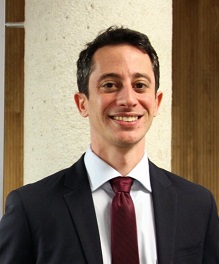
Jared Gars
· Assistant ProfessorUniversity of Florida · Food and Resource Economics
Active 2011–2026
About
Jared E. Gars is an Assistant Professor in the Food and Resource Economics Department at the University of Florida. He also serves as an Assistant Director at the Joint Initiative of Latin American Experimental Economics and is a research affiliate at LEAP-Bocconi. His research focuses on agriculture, behavioral economics, and public economics in both developed and developing countries. Dr. Gars is currently working with private and public institutions on field experiments in Latin America and Africa. He teaches courses such as Comparative World Agriculture and has a background that includes a Ph.D. in Agricultural and Applied Economics from the University of Wisconsin–Madison, an M.A. in Agricultural Economics from Purdue University, and a B.A. in Economics and History from the University of Florida.
Research topics
- Economics
- Business
- Economic growth
- Natural resource economics
- Medicine
- Environmental economics
- Economy
- Environmental engineering
- Environmental science
- International trade
- Environmental resource management
- Agricultural economics
- Development economics
Selected publications
Workfare and forest cover: The case of NREGS in India
Journal of the Agricultural and Applied Economics Association · 2026-03-01
articleOpen accessAbstract We examine the impacts of India's National Rural Employment Guarantee Scheme (NREGS), the world's largest workfare program, on forest cover as proxied by vegetation density. We estimate null effects on vegetation for the overall sample as well as for the subsample where we are best able to isolate changes in forest cover, but we find significant treatment effect heterogeneity, with program impacts mediated by pre‐treatment cropland expansion trends and market access. Our findings suggest that any positive and negative effects of NREGS on forest cover offset one another on average, but that program impacts varied by context.
Incentivizing Engagement: Experimental Evidence on Journalist Performance Pay
SSRN Electronic Journal · 2025-01-01
preprintOpen accessConfidence and information usage: Evidence from soil testing in India
American Journal of Agricultural Economics · 2025-01-23 · 5 citations
articleOpen access1st authorAbstract Informational barriers are often considered to be a major constraint to the adoption of improved farming practices, inputs, and technologies by smallholder farmers. In the Indian context, it is widely believed that farmers misapply chemical fertilizers because they lack scientific information on soil conditions and corresponding fertilizer recommendations, thus resulting in imbalanced and potentially detrimental fertilizer application. Policymakers are frequently interested in providing farmers with various streams of information to overcome these informational barriers to optimize farming activities. However, such informational interventions frequently fail either because generic recommendations may be ill‐suited for decision makers in highly heterogeneous agricultural environments or because farmers' beliefs may be so entrenched as to make them unresponsive to new information. We implemented a field experiment in Bihar, India to test whether plot‐specific fertilizer recommendations affect farmers' fertilizer use. We find little evidence for sizable impacts on fertilizer use in general, though impacts are more apparent for low cost or costless recommendations such as increasing the use of highly subsidized fertilizers or shifting the timing of application. Despite modest evidence of such effects, even those fall short of their potential magnitude. We show that treated farmers who are less confident in their subjective beliefs about optimal fertilizer application rates (i.e., with more disperse priors) are more responsive to the recommendations and have a higher ex ante willingness to pay for soil testing. These results suggest that heterogeneity in beliefs may constrain the overall effectiveness of information provision, even when the information is tailored to individual farms.
Do farmers prefer result-based, hybrid or practice-based agri-environmental schemes?
European Review of Agricultural Economics · 2024 · 12 citations
1st authorCorresponding- Environmental economics
- Business
- Environmental resource management
Abstract This study examines farmers’ preferences for practice-based, result-based and hybrid agri-environmental schemes in three countries through a choice experiment conducted by the Organization for Economic Cooperation and Development, focusing on biodiversity, climate and water quality. The results reveal that, in general, farmers tend to prefer practice-based schemes for water quality or climate change mitigation goals over hybrid or result-based schemes. Moreover, the study indicates that only a limited number of hybrid schemes are both preferred by farmers and more socially beneficial compared to equivalent practice- or result-based schemes. These conclusions are further reinforced by a cost-benefit analysis.
Privatization of public goods: Evidence from the sanitation sector in Senegal
Journal of Development Economics · 2022 · 13 citations
- Business
- Agricultural economics
- Economics
Privatization of a public good (the management of sewage treatment centers in Dakar, Senegal) leads to an increase in the productivity of downstream sewage dumping companies and a decrease in downstream prices of the services they provide to households. We use the universe of legal dumping of sanitation waste from May 2009 to May 2018 to show that legal dumping increased substantially following privatization-on average an increase of 74%, or an increase of about 1640 trips to treatment centers each month. This is due to increased productivity of all trucks, not just those associated with the company managing the privatized treatment centers. Household-level survey data shows that downstream prices of legal sanitary dumping decreased by 5% following privatization, and DHS data shows that diarrhea rates among children under five decreased in Dakar relative to secondary cities in Senegal following privatization with no similar effect on respiratory illness as a placebo.
Improving retention in Vocational Training in Buenos Aires
AEA Randomized Controlled Trials · 2021-03-22
dataset1st authorCorrespondingPrivatization of public goods: Evidence from the sanitation sector in Senegal
SSRN Electronic Journal · 2021-01-01
articleOpen accessImproving retention in Vocational Training in Buenos Aires
AEA Randomized Controlled Trials · 2021-03-22
dataset1st authorCorrespondingImproving retention in Vocational Training in Buenos Aires
AEA Randomized Controlled Trials · 2021-03-22
dataset1st authorCorrespondingPrivatization of Public Goods: Evidence from the Sanitation Sector in Senegal
National Bureau of Economic Research · 2021-09-01 · 1 citations
preprintOpen accessPrivatization of a public good (the management of sewage treatment centers in Dakar, Senegal) leads to an increase in the productivity of downstream sewage dumping companies and a decrease in downstream prices of the services they provide to households. We use the universe of legal dumping of sanitation waste from May 2009 to May 2018 to show that legal dumping increased substantially following privatization-on average an increase of 74%, or an increase of about 1640 trips to treatment centers each month. This is due to increased productivity of all trucks, not just those associated with the company managing the privatized treatment centers. Household-level survey data shows that downstream prices of legal sanitary dumping decreased by 5% following privatization, and DHS data shows that diarrhea rates among children under five decreased in Dakar relative to secondary cities in Senegal following privatization with no similar effect on respiratory illness as a placebo.
Frequent coauthors
- 15 shared
Molly Lipscomb
University of Virginia
- 12 shared
Laura Schechter
- 12 shared
Joshua Deutschmann
- 9 shared
Jean‐François Houde
- 2 shared
Jussi Lankoski
Organisation de Coopération et de Développement Economiques
- 2 shared
Mutlu Özdoğan
- 2 shared
Belay Simane
Addis Ababa University
- 2 shared
Jeremy D. Foltz
University of Wisconsin–Madison
- Resume-aware match score
- Save to shortlist
- AI-drafted outreach
See your match with Jared Gars
PhdFit ranks faculty by your research interests, methods, and publications — grounded in their actual work, not templates.
- Free to start
- No credit card
- 30-second signup