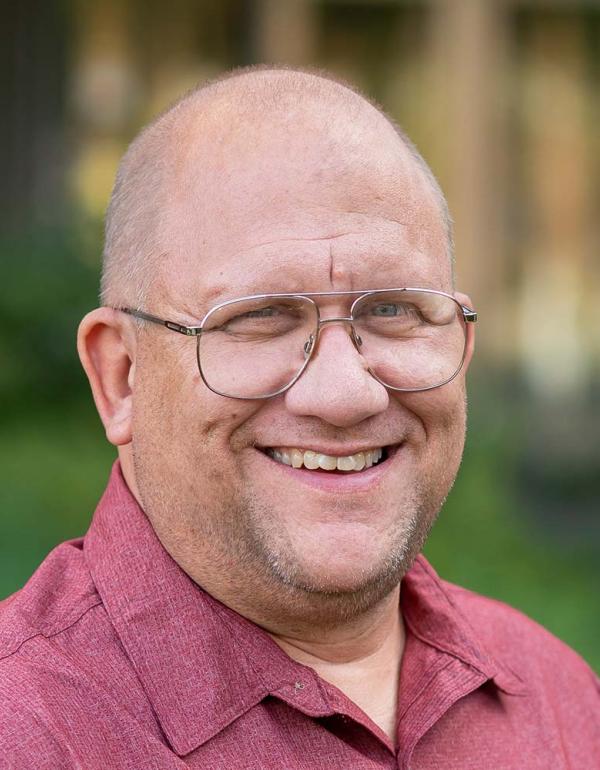
William Fagan
VerifiedUniversity of Maryland, College Park · Biology
Active 1972–2024
Research topics
- Data Mining
- Computer Science
- Statistics
- Artificial Intelligence
- Mathematics
- Ecology
- Econometrics
- Data science
- Geography
- Biology
- Environmental science
- Engineering
- Telecommunications
Selected publications
Clarifying space use concepts in ecology: range vs. occurrence distributions
bioRxiv (Cold Spring Harbor Laboratory) · 2022 · 33 citations
- Computer Science
- Data Mining
- Artificial Intelligence
Abstract Quantifying animal movements is necessary for answering a wide array of research questions in ecology and conservation biology. Consequently, ecologists have made considerable efforts to identify the best way to estimate an animal’s home range, and many methods of estimating home ranges have arisen over the past half century. Most of these methods fall into two distinct categories of estimators that have only recently been described in statistical detail: those that measure range distributions (methods such as Kernel Density Estimation that quantify the long-run behavior of a movement process that features restricted space use) and those that measure occurrence distributions (methods such as Brownian Bridge Movement Models and the Correlated Random Walk Library that quantify uncertainty in an animal movement path during a specific period of observation). In this paper, we use theory, simulations, and empirical analysis to demonstrate the importance of applying these two classes of space use estimators appropriately and distinctly. Conflating range and occurrence distributions can have serious consequences for ecological inference and conservation practice. For example, in most situations, home-range estimates quantified using occurrence estimators are too small, and this problem is exacerbated by ongoing improvements in tracking technology that enable more frequent and more accurate data on animal movements. We encourage researchers to use range estimators to estimate the area of home ranges and occurrence estimators to answer other questions in movement ecology, such as when and where an animal crosses a linear feature, visits a location of interest, or interacts with other animals. Open Research Statement Tracking data on Aepyceros melampus, Beatragus hunteri, Bycanistes bucinator, Cerdocyon thous, Eulemur rufifrons, Glyptemys insculpta, Gyps coprotheres, Madoqua guentheri, Ovis canadensis, Propithecus verreauxi, Sus scrofa , and Ursus arctos are publicly archived in the Dryad repository (Noonan et al. 2018; https://doi.org/10.5061/dryad.v5051j2 ), as are data from Procapra gutturosa (Fleming et al. 2014a; https://doi.org/10.5061/dryad.45157 ). Data on Panthera onca were taken from (Morato et al. 2018). Additional data are publicly archived in the Movebank repository under the following identifiers: Canis latrans , 8159699; Canis lupus , 8159399; Chrysocyon brachyurus , 18156143; Felis silvestris , 40386102; Gyps africanus , 2919708; Lepus europaeus , 25727477; Martes pennanti , 2964494; Panthera leo , 220229; Papio cynocephalus , 222027; Syncerus caffer , 1764627; Tapirus terrestris , 443607536; Torgos tracheliotus , 2919708; and Ursus americanus , 8170674.
A better index for analysis of co-occurrence and similarity
Science Advances · 2022 · 57 citations
Senior authorCorresponding- Computer Science
- Data Mining
- Statistics
contradicted predictions of the island biogeography theory finding that community stability increased with increasing physical isolation. Reanalysis of the same dataset with the estimator [Formula: see text] reversed that result and supported theoretical predictions. We found similarly marked effects in reanalyses of antibiotic cross-resistance and human disease biomarkers. Our index α is not merely an improvement; its use changes data interpretation in fundamental ways.
Autocorrelation‐informed home range estimation: A review and practical guide
Methods in Ecology and Evolution · 2021 · 166 citations
- Computer Science
- Data Mining
- Computer Science
Abstract Modern tracking devices allow for the collection of high‐volume animal tracking data at improved sampling rates over very‐high‐frequency radiotelemetry. Home range estimation is a key output from these tracking datasets, but the inherent properties of animal movement can lead traditional statistical methods to under‐ or overestimate home range areas. The autocorrelated kernel density estimation (AKDE) family of estimators was designed to be statistically efficient while explicitly dealing with the complexities of modern movement data: autocorrelation, small sample sizes and missing or irregularly sampled data. Although each of these estimators has been described in separate technical papers, here we review how these estimators work and provide a user‐friendly guide on how they may be combined to reduce multiple biases simultaneously. We describe the magnitude of the improvements offered by these estimators and their impact on home range area estimates, using both empirical case studies and simulations, contrasting their computational costs. Finally, we provide guidelines for researchers to choose among alternative estimators and an R script to facilitate the application and interpretation of AKDE home range estimates.
Effects of body size on estimation of mammalian area requirements
Conservation Biology · 2020 · 97 citations
- Statistics
- Ecology
- Environmental science
Accurately quantifying species' area requirements is a prerequisite for effective area-based conservation. This typically involves collecting tracking data on species of interest and then conducting home-range analyses. Problematically, autocorrelation in tracking data can result in space needs being severely underestimated. Based on the previous work, we hypothesized the magnitude of underestimation varies with body mass, a relationship that could have serious conservation implications. To evaluate this hypothesis for terrestrial mammals, we estimated home-range areas with global positioning system (GPS) locations from 757 individuals across 61 globally distributed mammalian species with body masses ranging from 0.4 to 4000 kg. We then applied block cross-validation to quantify bias in empirical home-range estimates. Area requirements of mammals <10 kg were underestimated by a mean approximately15%, and species weighing approximately100 kg were underestimated by approximately50% on average. Thus, we found area estimation was subject to autocorrelation-induced bias that was worse for large species. Combined with the fact that extinction risk increases as body mass increases, the allometric scaling of bias we observed suggests the most threatened species are also likely to be those with the least accurate home-range estimates. As a correction, we tested whether data thinning or autocorrelation-informed home-range estimation minimized the scaling effect of autocorrelation on area estimates. Data thinning required an approximately93% data loss to achieve statistical independence with 95% confidence and was, therefore, not a viable solution. In contrast, autocorrelation-informed home-range estimation resulted in consistently accurate estimates irrespective of mass. When relating body mass to home range size, we detected that correcting for autocorrelation resulted in a scaling exponent significantly >1, meaning the scaling of the relationship changed substantially at the upper end of the mass spectrum.
Recent grants
NSF · $100k · 2013–2018
Collaborative Research: Modeling Animal Dispersal: Linking the Ideal to the Real
NSF · $180k · 2019–2022
NSF · $194k · 2006–2012
MathBench Modules: Mathematics for all biology undergraduates
NSF · $191k · 2008–2010
COLLABORATIVE RESEARCH: Spatial Spread of Stage-structured Populations
NSF · $250k · 2012–2016
Frequent coauthors
- 175 shared
Justin M. Calabrese
Center for Advanced Systems Understanding
- 138 shared
Thomas Mueller
- 111 shared
Christen H. Fleming
University of Central Florida
- 65 shared
Peter Leimgruber
Smithsonian Conservation Biology Institute
- 60 shared
Sharon Bewick
Clemson University
- 57 shared
Eliezer Gurarie
Purchase College
- 49 shared
Anshuman Swain
Harvard University
- 47 shared
Michael Noonan
Okanagan University College
- Resume-aware match score
- Save to shortlist
- AI-drafted outreach
See your match with William Fagan
PhdFit ranks faculty by your research interests, methods, and publications — grounded in their actual work, not templates.
- Free to start
- No credit card
- 30-second signup