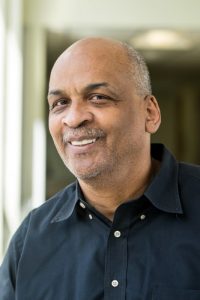
Keith Gilyard
· Edwin Erle Sparks Professor of English and African American Studies Director of Graduate StudiesPennsylvania State University · English
Active 1985–2025
About
Keith Gilyard is the Edwin Erle Sparks Professor of English and African American Studies at Pennsylvania State University. His educational background includes a Bachelor of Science from City University New York, an MFA from Columbia University, and an EdD from New York University. His areas of specialization encompass African American Literature and Language, Race and Ethnicity Studies, and Rhetoric and Composition. Gilyard's work focuses on African American discourse, cultural politics, and pedagogy, contributing significantly to the understanding of language and race in American society.
Research topics
- Sociology
- Psychology
- Political Science
- History
- Linguistics
- Communication
- Art
- Law
- Medicine
- Audiology
- Psychoanalysis
- Philosophy
Selected publications
Review Essay: Rhetorics of Change
College Composition and Communication · 2025-02-01
article1st authorCorrespondingThe Journal of African American History · 2023-09-01
article1st authorCorrespondingOn the Semantic Borders of White Nationalism
Utah State University Press eBooks · 2023
1st authorCorresponding- Political Science
- Linguistics
- Political Science
The University Press of Colorado, including the Utah State University Press imprint, publishes forty to forty-five new titles each year, with the goal of facilitating communication among scholars and providing the peoples of the state and region with a fair assessment of their histories, cultures, a
Langston Hughes and Dream Deferral
The Langston Hughes Review · 2022-09-01
article1st authorCorrespondingABSTRACT “Langston Hughes and Dream Deferral” examines the protests over George Floyd’s murder through the lens of Langston Hughes’s famous motif of dream deferral. Keith Gilyard argues that Hughes’s primary concern as a poet was illuminating the process by which black people’s dreams have been deferred throughout American history. However, much of the essay focuses on conflicting viewpoints on black resistance in the post-civil rights era. Gilyard shows how Hughes speaks to contemporary issues, interweaving between the poet’s commentaries on politics and the controversies over the use of violence during the protests.
Chapter 11. A Fairer Public Hearing, 1960–1969
Duke University Press eBooks · 2020
1st authorCorresponding- Psychology
- Audiology
- Communication
Chapter 6. The Struggle Has Nine Lives, 1932–1934
Duke University Press eBooks · 2020
1st authorCorresponding- Sociology
- History
- Psychoanalysis
College-Writing Instruction and African-American Rhetoric
2018-04-17
book-chapter1st authorCorresponding2018-04-17
book-chapter1st authorCorrespondingHistorical Overview of African-American Rhetoric
2018-04-17
book-chapter1st authorCorrespondingJohn Dewey, W. E. B. Du Bois, and a Rhetoric of Education
University of South Carolina Press eBooks · 2018-10-21
book-chapter1st authorCorresponding
Frequent coauthors
- 9 shared
Adam J. Banks
Stanford University
- 1 shared
Chris M. Anson
Hospital de Sant Pau
- 1 shared
Demetrice A. Worley
- 1 shared
Jack Collom
- 1 shared
Sheryl Noethe
- 1 shared
Laraine R. Fergenson
- 1 shared
David Dwyer
- 1 shared
David R. Shumway
Labs
English Department LabPI
- Resume-aware match score
- Save to shortlist
- AI-drafted outreach
See your match with Keith Gilyard
PhdFit ranks faculty by your research interests, methods, and publications — grounded in their actual work, not templates.
- Free to start
- No credit card
- 30-second signup