Bala Maheswaran · Northeastern University · PhdFit
Resume-aware faculty matching
Find professors who actually fit you
Upload your resume. PhdFit's six research agents compare your background with faculty profiles, recent publications, lab focus, and outreach opportunities, then rank professors with evidence you can review.
Resume-aware matchingEvidence from recent researchOutreach drafts included
Advisor Match Brief Resume uploaded
Resume signals5 found
NLPHCIFairnessGraph MLPyTorch
Six-agent analysisRunning
Axel · Candidate AnalystResume parsed
Nova · Professor ResearcherRecent papers
Echo · Match ExplainerEvidence linked
Atlas · Strategy AdvisorFit ranked
Lyra · Outreach WriterDraft queued
Juno · Meeting Prep CompilerNext step ready
SC
Dr. Sarah Chen
Stanford · NLP & interpretability
91
fit
Fairness + NLP projects overlap with her recent work.
Strong methods fit: model evaluation and interpretability.
Clear outreach angle for current trustworthy AI research.
Outreach angle
Ask how her lab is extending interpretability methods into fairness audits for real-world AI systems.
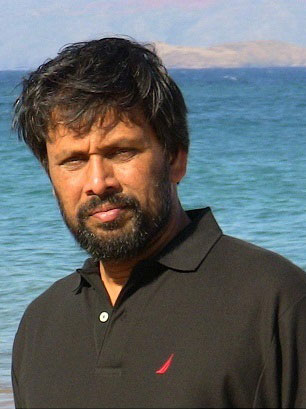
Bala Maheswaran
Northeastern University · Electrical and Energy Engineering
Bala Maheswaran is a distinguished faculty member at Northeastern University’s College of Engineering with over twenty-five years of teaching experience. His research focuses on experiential engineering education through innovation and invention, emphasizing technical design, energy systems, and medical engineering (MedEng) design innovations via prototyping and proof of concept. His past research includes high-temperature superconductors, two-dimensional electron gas, and engineering physics education. Dr. Maheswaran has contributed extensively to the field with over 130 publications, including original research, education-related papers, conference proceedings, workshops, and panel discussions.
He is a founding member and program chair of the Data Science and Artificial Intelligence (DSAI) Constituent Committee of ASEE and serves as Zone 1 Chair on the Council of Sections and the Board of Directors of the American Society for Engineering Education. Additionally, he co-chairs the annual TASME conference, is the Director of the Engineering Division at ATINER, and has held numerous leadership roles in organizing national and international conferences. His leadership and contributions to engineering education have been recognized through numerous awards, including the Northeastern University First-Year Engineering Outstanding Teaching Award (twice), the ASEE Northeast Section Outstanding Teaching Award, and the ASEE Division Distinguished Educator and Service Award. His accolades also include the Lifetime Achievement Award from TASME, induction into Northeastern University’s Twenty-Five-Year Associate Group, and the College of Engineering’s Outstanding Faculty Service Award. Dr. Maheswaran holds an M.S. and Ph.D. in experimental solid state Physics and an MSEE in Electrical & Computer Engineering from Northeastern University.
ASME Open Journal of Engineering · 2025-01-01 · 1 citations
articleOpen access
Abstract Global energy consumption continues to surge, demanding a transition from fossil fuels to cleaner and more sustainable alternatives. A variety of renewable energy sources—solar, wind, hydro, and geothermal—are critical to this transformation, with each offering diverse and regionally adaptive solutions. Among these sources, solar energy has become a dominant force through both photovoltaic (PV) and solar thermal technologies. While PV systems remain the leading force in regard to rapid deployment and decentralized applications, concentrated solar thermal power (CSTP) systems offer a unique advantage of thermal energy storage. Thermal energy storage offers an affordable and efficient form of dispatchable electricity generation and industrial process heat. Despite its benefits, CSTP remains a niche and is vastly underrepresented in engineering curricula across the United States. This article presents a comprehensive initiative at Northeastern University to address this educational gap by systematically institutionalizing CSTP content across nine mechanical engineering courses from the first year through the graduate level. Through hands-on projects, advanced simulations, and heliostat-focused design challenges, engineering students gain practical and theoretical exposure to CSTP technologies. By aligning curriculum development with the goals of the Department of Energy (DOE) and Heliostat Consortium (HelioCon), Northeastern University establishes a replicable model for integrating CSTP education and preparing a new generation of engineers to meet the growing demands of the clean energy transition.
Frequent coauthors
R.S. Markiewicz
16 shared
B.C. Giessen
Northeastern University
15 shared
R. S. Markiewicz
Universidad del Noreste
14 shared
Julia Ariano
Universidad del Noreste
12 shared
Gabriella Green
Eastern University
12 shared
Awards & honors
Northeastern University First-Year Engineering Outstanding T…
Special Recognition Award from NU student chapters of BESS,…
ASEE Northeast Section Outstanding Teaching Award
Multiple Best Student Paper Awards
ASEE Division Distinguished Educator and Service Award
Resume-aware match score
Save to shortlist
AI-drafted outreach
See your match with Bala Maheswaran
PhdFit ranks faculty by your research interests, methods, and publications — grounded in their actual work, not templates.
Abstract Abstract Teaching engineering is always an interesting and changing adventure. Especially, the virtual hybrid form of teaching requires innovative approaches to increase the students’ motivation to learn fundamental engineering concepts. The basic concepts in engineering design are long-standing, for example, design process, problem-solving, graphics, modeling, prototyping, and importantly teamwork. The experiential and interactive learning is a key component to motivate students to understand the new concepts faster but also supports them to apply their skills for more practical results. The goal of this paper is to present the results of experimental teaching techniques used in the Hybrid NUflex1. This model was designed to deal with density restrictions and to provide flexibility to faculty and students. In the Hybrid Nuflex, either by choice or due to density restrictions, some portion of the students in each class will be remote and some will attend the class in person. The students were informed in advance by the university before the class whether they would be in-person or virtual for that class. Instructors teaching in-person cannot meet all the students’ in class at a given lecture and this creates a challenge for team activities mainly building product prototype. Teaching in the Hybrid format is an innovative venture and needs creative approaches to make it more effective. Exploring new approaches for teaching in the NUflex format is an endless quest. For my part, I have introduced several interactive activities to build a team environment between in-person students and students participating online to make the learning more interactive and experiential. In this paper, I will show innovative experiential learning approaches and their outcomes. This includes sample student activities and exercises by mixing in-person and virtual participants. I will also present prototypical course requirements, such as team activities, project approach, project reports, designing, and building prototypes. This work will be beneficial to other educators to style their own experiential learning approaches in the Hybrid format. This is a work in progress paper.
Abstract In the face of global environmental problems and the rapid rise in oil prices, hybrid vehicles are a better choice than traditional fuel vehicles. However, purchasing a new hybrid car can be a bit expensive. We will develop a combination device that can be installed on an old gas car, giving it the advantages of a hybrid car. Companies such as Tesla and Toyota have developed similar technology. Still, our objective is to put our system into old cars, save people's money and allow people to spend a little money to get most of the advantages of Hybrid cars. The core idea of the design is the electric motor can provide extra power when the fuel engine is running at low speed because at low speed the fuel engine needs extra fuel consumption, which pollutes the environment and wastes fuel. We also put an energy harvesting device on the brakes to recover the kinetic energy during braking and store it in the battery to save more energy. Owing to the limited materials and space, we will verify the feasibility of our set-up on a go-kart. These steps include refurbishing the entire frame of the car to install required components such as the engine, electric motor, battery pack, etc. The most important part is to verify the fuel economy of the unit, we will compare the fuel consumption with the fuel engine alone and with the hybrid unit. This paper shares a sample project illustrating a new teaching approach via innovation. One of the objectives of the Experiential Engineering Education and this paper is to reform engineering education by moving away from the boundaries of traditional classroom-based approaches to project-based approaches using real world situations. This new teaching approach can improve the effectiveness of engineering education. We hope that the benefits of this teaching approach shown using this sample project-based learning could serve as a model for other educators.
It is well known that some energy always is dispersed to the surroundings in the form of heat, mechanical energy, sound, and many other ways. Our team was brought together in Cornerstone of Engineering 1 and 2, an accelerated introduction to engineering course at our university, by the inspiration to conserve energy using these concepts. The team, students pursuing degrees in chemical, mechanical, and electrical engineering, aimed to design a device that would utilize the energy generated from everyday practices that are otherwise wasted. We focused on conserving energy in the game of basketball, a high-energy and globally popular sport. The goal was to design and build a device that harnesses the vibrational energy generated when a basketball is hit against the backboard of the basket, while not interfering with the game or being of high maintenance to the users. To transfer the kinetic energy from the vibrations of the backboard to electrical energy, a series of piezoelectric vibrational crystals were placed on a panel attached to the backboard. The size of attachment was sized down (approximately half size) to be tested on a smaller backboard. Using piezoelectricity was determined to be the most fitting for our project goals while being available at a relatively low cost. Furthermore, the product was designed as a portable attachment so it was user-friendly and more practical. The developed solution to the problem stated worked well and could be considered for use in the future of basketball for energy conservation.