About
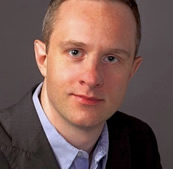
Thomas Medvetz is an Associate Professor and the Director of Graduate Studies in the Department of Sociology at UC San Diego. He received his Ph.D. in sociology from the University of California, Berkeley in 2007. Prior to joining UCSD, he was a Postdoctoral Associate at the Institute for the Social Sciences at Cornell University. His research focuses on think tanks, the American conservative movement, and the public role of intellectuals. His work has been published in various academic journals, and he authored the book 'Think Tanks in America,' published by the University of Chicago Press in 2012. His scholarly contributions include analyses of power dynamics within organizations, the boundaries of public debate, and the emergence of think tanks as a field of knowledge production.
Research topics
- Sociology
- Political Science
- Social Science
- Law
- Computer Science
- Epistemology
- Aesthetics
- Public administration
- Engineering ethics
- Public relations
- Engineering
- Geography
- Philosophy
Selected publications
Edward Elgar Publishing eBooks · 2024-01-12 · 1 citations
book-chapter1st authorCorrespondingThis chapter draws on previous research into the role of public policy think tanks in the United States to reflect on the uses and limits of Bourdieu’s field theory in policy studies. Part one describes the theoretical challenge of capturing both the sui generis and hybrid aspects of the think tank’s existence within a single theoretical framework. My solution was to depict think tanks, using a modified version of Bourdieu’s field theory, as inhabitants of an interstitial field—essentially, a space that is both bounded and hierarchical, but also multipolar and constitutively hybrid. Part two reflects on the strengths and weaknesses of this approach by relating the idea of an interstitial field to Gil Eyal’s theory of the spaces between fields. In the closing section, I argue that as privileged sites for the exercise of a new type of “meta-power” interstitial fields are likely to play a growing role in political and social life for the foreseeable future.
Oxford University Press eBooks · 2023 · 8 citations
Senior authorCorresponding- Political Science
- Sociology
- Social Science
Abstract This introduction provides a road map for the handbook, which brings together investigations from social scientists, philosophers, and legal scholars into the political dimensions of expertise. It argues that the sense of crisis hovering over democratic politics today can be traced to the paradoxical combination of growing mistrust of scientific findings and expert opinions and unprecedented reliance on experts that marks our current era. The chapter then offers a two-part survey of the topics covered in the handbook. The first part links the crisis of trust in experts to a threefold process of socialization, politicization, and mediatization of science over the last few decades; the second turns from causes to effects by discussing new dynamics of expertise that have emerged in response to the ongoing legitimation crisis affecting science and the professions.
Transcendence, fast and slow: Infinite Jest and the dynamics of a cultural splash
American Journal of Cultural Sociology · 2022 · 2 citations
1st authorCorresponding- Sociology
- Sociology
- Aesthetics
Abstract This paper builds on two leading models of artistic practice, the “network-building” and “autonomous sphere” approaches, to show how an expressive work can reverse the normal antinomy between artistic recognition and commercial success and become an immediate crossover hit. Focusing on a single “pointy” case from the world of literature—the 1996 novel Infinite Jest , by David Foster Wallace—I ask whether a set of unique social dynamics attends the process of making a “cultural splash.” In the case of Infinite Jest , success came from occupying an intermediate position in the “space between fields” and eliciting a complex, mutually referential response from cultural intermediaries. In this way, the book attracted samplings of recognition and renown, the contrasting reputational ingredients associated with an enduring cultural appeal. Nevertheless, the novel’s declining reputation in recent years suggests that we should differentiate a cultural splash from the better-known dynamics of canonization and classicization. In the paper’s final section, I conceptualize a cultural splash as an effect generated by works that undergo a “fast transcendence” by unmooring themselves temporarily from the limiting effects of being counted as “art” or “pop.”
Contemporary Sociology A Journal of Reviews · 2022 · 3 citations
1st authorCorresponding- Political Science
- Political Science
- Sociology
:<i>Seeing the World: How U.S. Universities Make Knowledge in a Global Era</i>
American Journal of Sociology · 2019-11-01
article1st authorCorrespondingIntroduction: Pierre Bourdieu, a twentieth-century life
2018-04-05
book1st authorCorrespondingBourdieu and the Sociology of Intellectual Life
Oxford University Press eBooks · 2018-04-05 · 2 citations
book1st authorCorrespondingChapter abstract Having grown up in the relative cultural backwater of Béarn, in southwestern France, Pierre Bourdieu found himself wrenched and jolted by his earliest encounters with French intellectual society. His perceptions, tastes, and dispositions offered constant reminders that he had not been made for this world. But the same disjuncture yielded productive insights and made Bourdieu into an accidental anthropologist of intellectual life. This chapter thematizes “the social relations of intellectual life” as a linchpin of his work, first tracing the sociobiographical roots of this interest and dividing Bourdieu’s career into four successive but overlapping phases, each defined by a particular approach to the subject. The chapter then highlights several moments in his theory where the focus on intellectual life holds the key to its deeper purpose or meaning. A key task for sociology after Bourdieu is to develop a more advanced theory of “intellectual practical sense.”
Oxford University Press eBooks · 2018-04-05
book1st authorCorrespondingThis chapter provides a concise summary of the life, work, and significance of the late sociologist Pierre Bourdieu. His life, the authors argue, must be understood in the context of twentieth-century French society. His own personal trajectory through the French academic hierarchy must be put in the context of the expansion of mass education in France during the late twentieth century. His concern with power and domination can be traced back to his experience as an unwilling soldier in France’s colonial occupation of Algeria. His eventual ascent to the top of France’s academic hierarchy resulted in a series of critical studies of the French elite: the professoriate, artists, writers, and so on. This retelling of Bourdieu’s biography is followed by a summary of the subsequent chapters of the Handboook.
The Evidence Enigma: Correctional Boot Camps and Other Failures in Evidence-Based Policymaking
Contemporary Sociology A Journal of Reviews · 2015-08-31
article1st authorCorrespondingThe Blackwell Encyclopedia of Sociology · 2015-10-26 · 3 citations
other1st authorCorrespondingThe term “think tank” refers to a half‐century‐old political folk concept denoting a civil society organization specialized in the production and dissemination of policy‐related knowledge, rhetoric, and advice. The concept's entry into the political lexicon was made possible by the formation, typically at the national level, of relatively stable institutional niches in which organizations compete to produce relevant “policy research.” In recent decades, the number and seeming impact of think tanks have increased worldwide, making them a focus of growing scholarly and popular attention. Even so, ambiguities concerning the proper definition of a think tank and the characteristics of their affiliated “policy experts” have hampered the development of a general theory of their effects.
Frequent coauthors
- 2 shared
Jeffrey J. Sallaz
Environmental Education Exchange
- 2 shared
Neil Gross
Harvard University Press
- 1 shared
Brian F. McCabe
Einstein Medical Center Philadelphia
- 1 shared
Arlie Russell Hochschild
- 1 shared
Rebecca Sager
Loyola Marymount University
- 1 shared
John O'brien
University of Connecticut
- 1 shared
Philip S. Gorski
Yale University
- 1 shared
Melissa Aronczyk
Rutgers, The State University of New Jersey
Labs
- Resume-aware match score
- Save to shortlist
- AI-drafted outreach
See your match with Thomas Medvetz
PhdFit ranks faculty by your research interests, methods, and publications — grounded in their actual work, not templates.
- Free to start
- No credit card
- 30-second signup