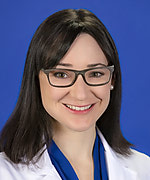
Alexandra Warrick, M.D.
· Physical Medicine and Rehabilitation, Sports MedicineVerifiedUniversity of California, Davis · Physical Medicine and Rehabilitation
Active 2014–2023
About
Alexandra Elizabeth Warrick, M.D., is an Assistant Clinical Professor in the Department of Physical Medicine and Rehabilitation at UC Davis Health. She specializes in Sports Medicine and Physical Medicine & Rehabilitation, with clinical expertise in diagnosing and treating musculoskeletal injuries. Dr. Warrick provides nonsurgical medical care for individuals of all functional and athletic abilities, including professional, recreational, and competitive athletes. Her approach involves detailed biomechanical assessments, physical examinations, and the use of diagnostic musculoskeletal ultrasound to develop comprehensive treatment plans that incorporate physical therapy, activity modifications, and return-to-play protocols. She is skilled in ultrasound-guided joint and tendon injections and has a particular interest in running biomechanics, collaborating with the sports performance lab for functional assessments. Dr. Warrick's academic and research interests include diagnostic musculoskeletal ultrasound, ultrasound-guided injections, regenerative medicine, platelet-rich plasma, and the nutritional health of athletes. She teaches medical students, residents, and fellows at UC Davis School of Medicine, focusing on musculoskeletal ultrasound evaluations and clinical examinations. Her research involves clinical trials in regenerative medicine, as well as studies on injury prevention, athlete health, and specific conditions such as Neurogenic Thoracic Outlet Syndrome. She has been recognized with several awards for her teaching and research, and she actively participates in providing sideline medical coverage for various athletic events, including UC Davis intercollegiate sports, Sacramento Republic Soccer, and the California International Marathon.
Research signals
Five dimensions sourced from public faculty / publication signals. Sign in to compare against your own profile and see your match score.
Research topics
- Medicine
- Physical therapy
- Clinical psychology
- Psychology
- Surgery
- Physical medicine and rehabilitation
- Family medicine
- Internal medicine
Selected publications
Journal of Athletic Training · 2023-09-01 · 2 citations
articleOpen accessCorrespondingAuthors of previous studies of patients with acute hamstring strains have reported injury to the biceps femoris and semitendinosus (ST) in 50% to 100% and 0% to 30%, respectively. This retrospective case series of hamstring injuries in National Collegiate Athletic Association Division I collegiate athletes exhibited an injury pattern on ultrasound imaging that differed from what would be expected based on prior literature. We examined ultrasound images of 38 athletes with acute hamstring strains for injury location (proximal muscle, proximal myotendinous junction, midportion of muscle, distal muscle) and affected muscles (biceps femoris, ST, or semimembranosus). Twenty-six athletes (68.4%) injured the ST, and 9 athletes (23.7%) injured the biceps femoris long head. Most athletes (23, 60.5%) injured the proximal portion of the muscle or myotendinous junction. Though this study had many limitations, we demonstrated more frequent involvement of the ST and less frequent involvement of the biceps femoris than reported in the literature.
Journal of Eating Disorders · 2023 · 7 citations
1st authorCorresponding- Medicine
- Family medicine
- Psychology
BACKGROUND: Short and long-term health consequences surrounding Low Energy Availability can be mitigated by recognizing the risk factors and making early diagnosis of the Female Athlete Triad (Triad) and Relative Energy Deficiency in Sport (RED-S). While awareness of the Triad among physicians and allied health professionals has been studied, there are very few studies that assess physician awareness of both the Triad and RED-S. METHODS: Our study assesses Low Energy Availability, the Triad, and RED-S knowledge with an electronic survey, educational handout, and follow up survey among physicians across multiple specialties at a single academic institution. RESULTS: Among 161 respondents, respective Triad and RED-S awareness among surveyed specialties was highest in Orthopedic surgeons (100%, 100%), followed by Physical Medicine & Rehabilitation (70%, 53%), Family Medicine (67%, 48%), Internal Medicine (54%, 36%), Obstetrics and Gynecology (46%, 32%), Pediatrics (45%, 29%), Endocrinology (33%, 33%), and Other (33%, 33%). Comparing the initial survey results to the follow-up survey results, there was an increase from 37 to 72% of physicians who correctly identified that the presence of low BMI or recent weight loss is not a required component of the Triad or RED-S. Both the initial and follow-up survey revealed a continued misperception surrounding the use of hormonal contraception to resume menstrual cycles, with 33% of physicians on initial survey and 44% of physicians on follow-up survey incorrectly answering that question. CONCLUSIONS: Multidisciplinary physicians have various levels of knowledge surrounding the Triad and RED-S, and there is a need for improved physician awareness, diagnosis, and treatment of the Triad and RED-S. Misperceptions exist surrounding the role of hormonal contraception in female athletes with the Triad and RED-S to regain and regulate menses.
Medicine & Science in Sports & Exercise · 2021-07-12
article1st authorCorrespondingHISTORY: 19 year-old female collegiate volleyball player and former track & field athlete presents for a second opinion regarding medical management of right anterior shin pain that began in 9/2019, 13 months prior to presentation. She noticed a bump over her anterior shin at that time, and was instructed to be non-weightbearing for 3 months. She progressed to weightbearing in a boot for a month, then advanced out of the boot, however heel walking in regular shoes was painful over several months. She intermittently participated in PT, received a bone stimulator 5 months into treatment, and started shockwave therapy 11 months into treatment at which time her pain increased and she was placed back into a boot. PHYSICAL EXAMINATION: Right Leg: Focal prominence at mid-diaphysis of anterior tibia with localized hyperpigmentation 0.5 cm x 0.5 cm. Slight pes planus. No tenderness to anterior tibia. Full knee flexion and extension, full strength in knee extension and ankle dorsiflexion. Neurovascularly intact. Negative right leg hop test. Ipsilateral lower leg and ankle exam normal. Gait: Normal, without pain. DIFFERENTIAL DIAGNOSIS: 1. Anterior tibial stress fracture 2. Medial tibial stress syndrome 3. Chronic Exertional Compartment Syndrome TEST AND RESULTS: 8/19 - Ferritin 10 (22-291 ng/mL), normal iron, TIBC, transferrin9/19 - Tib/Fib Xray - Linear lucency in the anterior cortex of the mid tibial shaft with associated cortical thickening, periosteal reaction that extend laterally consistent with a stress fracture.12/19 - Tib/Fib Xray - Incomplete nondisplaced fracture involving the anterior cortex of mid right tibia2/20 - Tib/Fib Xray - Imaging unchanged4/20 - Vitamin D, 25 Hydroxy - 20 (20-79 ng/mL), CBC, BMP, TSH normal5/20 - DEXA normal6/20 - CT - Persistent incomplete stress fracture at the anterior tibial diaphysis FINAL/WORKING DIAGNOSIS: Anterior tibial stress fracture at the anterior tibial diaphysis TREATMENT AND OUTCOMES: -Xrays (10/20) demonstrate persistence of faint fracture line-Recommended MRI, which demonstrates cortical thickening at the mid tibial diaphysis-Recommended referral to orthopedic surgeon for consideration of intramedullary nailing of the tibia-Continue calcium and vitamin D supplementation, recommend rechecking labs and workup for RED-S-Nutritionist counseling (12/20)
Neurogenic Thoracic Outlet Syndrome in Athletes — Nonsurgical Treatment Options
Current Sports Medicine Reports · 2021 · 16 citations
1st authorCorresponding- Medicine
- Physical therapy
- Surgery
ABSTRACT: Neurogenic thoracic outlet syndrome (NTOS) is an etiologically and clinically diverse disorder caused by compression of the brachial plexus traversing the thoracic outlet. Athletes who perform repetitive overhead activities are at risk of developing NTOS with sport-specific symptoms. This article reviews the controversial NTOS nomenclature, common sites of anatomic compression, and red flag symptoms that require immediate intervention. It also reviews the congenital, traumatic, and functional etiologies of NTOS, with a discussion of the differential diagnosis, diagnostic criteria, and workup for NTOS. Nonsurgical treatment is highlighted with an emphasis on thoracic outlet syndrome-specific physical therapy and updates on injection options and ultrasound guided hydrodissection. This article compares nonsurgical versus surgical functional outcome data with an emphasis on athletes with NTOS. Functional assessment tools and performance metrics for athletes are reviewed, as well as return to sport considerations.
Current Physical Medicine and Rehabilitation Reports · 2020-11-12
reviewOpen access1st authorCorrespondingUltramarathon Plasma Metabolomics: Phosphatidylcholine Levels Associated with Running Performance
Sports · 2020-04-01 · 10 citations
articleOpen accessThe purpose of this study was to identify plasma metabolites associated with superior endurance running performance. In 2016, participants at the Western States Endurance Run (WSER), a 100-mile (161-km) foot race, underwent non-targeted metabolomic testing of their post-race plasma. Metabolites associated with faster finish times were identified. Based on these results, runners at the 2017 WSER underwent targeted metabolomics testing, including lipidomics and choline levels. The 2017 participants’ plasma metabolites were correlated with finish times and compared with non-athletic controls. In 2016, 427 known molecules were detected using non-targeted metabolomics. Four compounds, all phosphatidylcholines (PCs) were associated with finish time (False Discovery Rate (FDR) < 0.05). All were higher in faster finishers. In 2017, using targeted PC analysis, multiple PCs, measured pre- and post-race, were higher in faster finishers (FDR < 0.05). The majority of PCs was noted to be higher in runners (both pre- and post-race) than in controls (FDR < 0.05). Runners had higher choline levels pre-race compared to controls (p < 0.0001), but choline level did not differ significantly from controls post-race (p = 0.129). Choline levels decreased between the start and the finish of the race (p < 0.0001). Faster finishers had lower choline levels than slower finishers at the race finish (p = 0.028).
Current Physical Medicine and Rehabilitation Reports · 2020 · 10 citations
1st authorCorresponding- Medicine
- Physical therapy
- Physical medicine and rehabilitation
Ultramarathon Comprehensive Injury Prevention
Current Physical Medicine and Rehabilitation Reports · 2019-07-04 · 4 citations
article1st authorCorrespondingKnee Pain - Football, Basketball
Medicine & Science in Sports & Exercise · 2018-05-01
article1st authorCorrespondingHISTORY: 16 year-old high school football and basketball athlete was referred to Sports Medicine. He could not recall a specific injury, but had 2 months of recurrent pain and swelling with high-impact activities. No neuropathic, mechanical, nor instability symptoms. No prior knee orthopedic history. PHYSICAL EXAMINATION: Inspection showed slight genu valgum and small right knee effusion. No pain with palpation of all bony and soft tissue landmarks of the knee. Active range of motion was pain free and symmetric for knee flexion and extension. Strength was intact at 5/5 hip flexion, knee extension and knee flexion. Provocative maneuvers showed no pain with bounce and McMurrays, firm 1+ endpoint with Lachmans, anterior drawer, and posterior drawer. He was stable and symmetric with no laxity or pain during varus and valgus stressing of the knee at 0 and 30 degrees of flexion. No pain with patellar compression and negative dial testing. DIFFERENTIAL DIAGNOSIS: Includes meniscus pathology, plica syndrome, patellofemoral pain, osteochondritis dissecans (OCD), stress injury TESTS AND RESULTS: 1. Standing knee xrays showed medial femoral condyle OCD with knee effusion and loose body in suprapatellar space. 2. MRI of right knee showed 1.7 x 1.3 cm osteochondral defect at the central weight-bearing surface of the medial femoral condyle with displaced osteochondral fragment in the suprapatellar bursa. FINAL WORKING DIAGNOSIS: Grade IV osteochondritis dissecans lesion TREATMENT AND OUTCOMES: 1. Recommended non-weight bearing and medial unloader brace requested while physical therapy initiated. 2. Diagnostic arthroscopy for loose body removal and biopsy for matrix-induced chondrocyte implantation. 3. Low impact activities only, physical therapy and medial unloader brace with ambulation until harvested cells ready for implantation. 4. Matrix-induced autologous chondrocyte implantation was performed after 6 weeks of cell culturing. 5. Athlete treated with post-operative rehabilitation protocol. 6. MRI at 6 months demonstrated interval progression of healing medial femoral condyle OCD. 7. Athlete will continue post-operative rehabilitation protocol and will be assessed for readiness for sport progression at 12 and 18 months.
Thrombosis and Haemostasis · 2014-11-21 · 62 citations
articleOpen accessCoronary artery disease (CAD) is characterised by progressive atherosclerotic plaque leading to flow-limiting stenosis, while myocardial infarction (MI) occurs due to plaque rupture or erosion with abrupt coronary artery occlusion. Multiple inflammatory pathways influence plaque stability, but direct assessment of endothelial inflammation at the site of coronary artery stenosis has largely been limited to pathology samples or animal models of atherosclerosis. We describe a technique for isolating and characterising endothelial cells (ECs) and EC microparticles (EMPs) derived directly from the site of coronary artery plaque during balloon angioplasty and percutaneous coronary intervention. Coronary artery endothelial cells (CAECs) were identified using imaging flow cytometry (IFC), and individual CAEC and EMP expression of the pro-atherogenic adhesion molecule vascular cell adhesion molecule-1 (VCAM-1) was assessed immediately following angioplasty. Patients with MI registered 73 % higher VCAM-1 expression on their CAECs and 79 % higher expression on EMPs compared to patients with stable CAD. In contrast, VCAM-1 expression was absent on ECs in the peripheral circulation from these same subjects. VCAM-1 density was significantly higher on CAECs and EMPs among patients with MI and positively correlated with markers of myocardial infarct size. We conclude that increased VCAM-1 expression on EC and formation of EMP at the site of coronary plaque is positively correlated with the extent of vascular inflammation in patients with myocardial infarction.
Frequent coauthors
- 4 shared
Marcia Faustin
University of California, Davis
- 3 shared
Brandee Waite
- 2 shared
Robert H. Weiss
- 2 shared
Brandon V. Hassid
University of California, Davis
- 1 shared
Jeremiah W. Ray
- 1 shared
Kenneth J. Chmiel
Indiana University School of Medicine
- 1 shared
Scott D. Simon
Penn State Milton S. Hershey Medical Center
- 1 shared
Brandon Coleman
Awards & honors
- Outstanding Professionalism Award Nomination for Fellow Phys…
- Outstanding Resident Teaching Award, Physical Medicine & Reh…
- William M. Fowler Resident Research Award, Physical Medicine…
- Chief Resident Physician, Physical Medicine & Rehabilitation…
- Outstanding Medical Student in Physical Medicine & Rehabilit…
- Resume-aware match score
- Save to shortlist
- AI-drafted outreach
See your match with Alexandra Warrick, M.D.
PhdFit ranks faculty by your research interests, methods, and publications — grounded in their actual work, not templates.
- Free to start
- No credit card
- 30-second signup