Bill Brown
· Associate Professor of Media ProductionVerifiedUniversity of North Carolina at Chapel Hill · Film Studies
Active 1939–2026
About
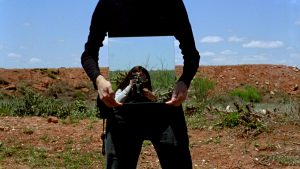
Bill Brown grew up in Lubbock, Texas, where he developed an early interest in the local aerospace environment by observing jets take off at Reese Air Force Base. The base, which opened in the 1940s, primarily served as a training ground for fighter pilots until its closure in 1997. Following the shutdown, the property, including runways and hangars, was transferred to the City of Lubbock. The city has since been working to repurpose the site, with institutions such as Texas Tech University and South Plains College acquiring some of the facilities. Additionally, the area has attracted diverse tenants, including a prosthetics manufacturer and a company specializing in flash freezing food using liquid nitrogen. Bill Brown's connection to the site reflects a personal and observational engagement with the region's historical and industrial transformation.
Research topics
- Economics
- Political Science
- Monetary economics
- Positive economics
- Mathematical analysis
- Literature
- Finance
- Neoclassical economics
- Economic history
- Applied mathematics
- Law
- Statistics
- Psychology
- Mathematics
- Keynesian economics
- Pure mathematics
- Social psychology
- Statistical physics
Selected publications
Parametric Multi-Fidelity Monte Carlo Estimation With Applications to Extremes
Technometrics · 2026-05-21
preprintOpen accessIn a multi-fidelity setting, data are available from two sources, high- and low-fidelity. Low-fidelity data has larger size and can be leveraged to make more efficient inference about quantities of interest, e.g. the mean, for high-fidelity variables. In this work, such multi-fidelity setting is studied when the goal is to fit more efficiently a parametric model to high-fidelity data. Three multi-fidelity parameter estimation methods are considered, joint maximum likelihood, (multi-fidelity) moment estimation and (multi-fidelity) marginal maximum likelihood, and are illustrated on several parametric models, with the focus on parametric families used in extreme value analysis. An application is also provided concerning quantification of occurrences of extreme ship motions generated by two computer codes of varying fidelity.
2025-01-01
book-chapter1st authorCorresponding2025-01-01
book-chapter1st authorCorrespondingThe Inflation-Mongers Say “Transitory”
2025-01-01
book-chapter1st authorCorrespondingRival Explanations for the Great Pandemic Inflation
2025-01-01
book-chapter1st authorCorrespondingFamine, Fiscal Explosion, and War
2025-01-01
book-chapter1st authorCorrespondingFour Shots of Fed Inflation 2019–25
2025-01-01
book-chapter1st authorCorrespondingBad Money-Induced Fragilities on the Eve of Pandemic
2025-01-01
book-chapter1st authorCorrespondingA Modern History of Bad Money in US Elections 1890–2012
2025-01-01
book-chapter1st authorCorrespondingPandemic Spasm to Great Inflation
2025-01-01
book-chapter1st authorCorresponding
Frequent coauthors
- 25 shared
Philippe Simonnot
- 12 shared
Robert M. Pringle
Princeton University
- 9 shared
Ngozi Enwerem
VA North Texas Health Care System
- 9 shared
Mahmoud B. Malas
University of California, San Diego
- 9 shared
Julie A. Freischlag
Atrium Health Wake Forest Baptist
- 9 shared
Thomas Reifsnyder
Johns Hopkins University
- 9 shared
Umair Qazi
Institute of Public Health
- 9 shared
Eric B. Schneider
- Resume-aware match score
- Save to shortlist
- AI-drafted outreach
See your match with Bill Brown
PhdFit ranks faculty by your research interests, methods, and publications — grounded in their actual work, not templates.
- Free to start
- No credit card
- 30-second signup