Upload your resume. PhdFit's six research agents compare your background with faculty profiles, recent publications, lab focus, and outreach opportunities, then rank professors with evidence you can review.
Ask how her lab is extending interpretability methods into fairness audits for real-world AI systems.
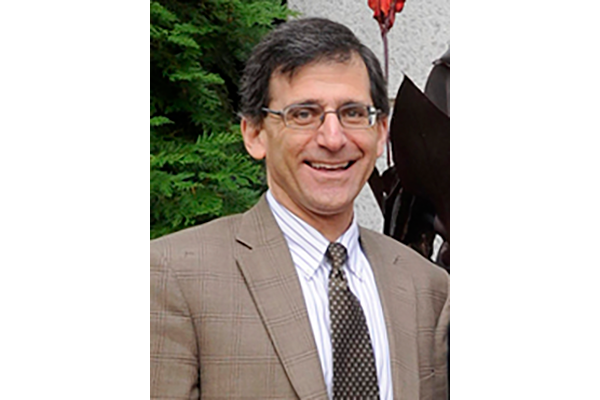
Northeastern University · Electrical and Energy Engineering
Active 1924–2023
Bradley Lehman is a Professor in the Department of Electrical and Computer Engineering at Northeastern University. He received his B.E.E. from Georgia Institute of Technology, his M.S.E.E. from the University of Illinois at Champaign-Urbana, and his Ph.D. in Electrical Engineering from Georgia Institute of Technology in 1992. His research focuses on power electronics, including the modeling, design, and control of DC-DC converters, as well as electric motor drives and control systems. He performs research in areas such as pulse width modulation, motion control, analog circuits, control theory, differential equations, time delays, nonlinear systems, and industrial control. Lehman has contributed to merging fundamental research with real-world applications, aiming to improve the performance and reliability of high-frequency switch-mode converters and renewable energy systems. He has been recognized with numerous honors, including being named a Fellow of the IEEE Power Electronics Society and receiving the IEEE Modeling and Control Technical Achievement Award.
Automotive Electric Propulsion Systems: A Technology Outlook
IEEE Transactions on Transportation Electrification · 2023-10-06 · 21 citations
Electrification of the transportation industry introduces far-reaching paradigm shifts in sustainability, energy dependency, and manufacturing sectors. The ultimate success of this transition, in part, depends on sustainable development of highly efficient, reliable, and affordable electric propulsion systems. This article provides an overview on the existing practices and future trends in magnetic design, power electronic converter, and control/safety for electric propulsion systems. Efficiency, torque density, cost, noise and vibration, and reliability are used as figures of merit in this study. Our investigation identifies the areas of research with the highest impact and the highest urgency. Although several challenges have been identified, these areas all provide great opportunities for future research in this emerging industry.
Sister M. Madeleva
Pallavi Bharadwaj
Indian Institute of Technology Gandhinagar
Power Electronics Research GroupPI
PhdFit ranks faculty by your research interests, methods, and publications — grounded in their actual work, not templates.
Bach · 2022
Notes have different names (such as D♭ vs C#) because they belong to different diatonic scales. From the sixteenth century forward, there were equally spaced systems of intonation holding a general principle where sharps are pitched lower than nearby flats. The naming distinctions matter because these notes were at least a comma apart from one another, differently pitched to fit into the scales. To play the correct notes within ensembles, and to play keyboard solos, keyboards with only twelve key levers presented a practical problem. It was necessary to compromise (tastefully adjust) some of their sharp or flat pitches toward one another to play acceptable approximations.
From the sixties to the sixties
Early Music · 2020
In this set of recordings we explore chamber and orchestral music mostly by Germans and Austrians, going slightly beyond the century of 1660–1760. We will encounter Rosenmüller, Schmelzer, Biber, Fasch, Kerll, Kress, Endler, Pisendel, Hasse, Heinichen, Graupner, Telemann, Quantz, Handel, three of the Bachs, and a few others who influenced them. There are two essential albums by the young American ensemble ACRONYM. In both of them, there is the rich sound of a firm and deep instrumental bass line leading the music. The players are remarkably creative with instrumentation and the details they find to emphasize within the music; both albums have the same 12 instrumentalists plus baritone Jesse Blumberg. An uncommon sonority is the use of a lirone among the continuo instruments. The first disc is Johann Rosenmüller in exile (New Focus Recordings fcr909, issued 2017, 52′). From his post in Leipzig, Rosenmüller in his late 30s faced allegations of sexual misconduct with some of the boys. He escaped prison and fled to Italy, building a new career for himself in Venice with the translated name of Giovanni Rosenmiller. The selections here are from his Venetian repertory. There are four cantatas from undated manuscripts, alternated with three published sonatas in five instrumental parts (nos.4, 6 and 8) from 1670. The cantatas are about faithfulness, mercy and victory over death. Blumberg and the instrumentalists are consistently excellent. This album does not duplicate any of the Rosenmüller compositions that The King’s Noyse recorded in a similar programme (Harmonia Mundi hmu 907179, issued 1996, 72′).
Modelling Flexible a-Si PV for Increased Energy Capture and Improved Reliability
2022 IEEE Applied Power Electronics Conference and Exposition (APEC) · 2020 · 4 citations
Amorphous-silicon (a-Si) photovoltaic (PV) modules provide high usability owing to their thin-film flexibility and robustness under shading conditions. However, there are limited tools for modelling their output characteristics due to their rapid degradation over time as compared to the crystalline-Silicon (c-Si) photovoltaic modules. This work modifies the well-established PV modelling tools to fit the experimental a-Si PV module characteristics. The proposed models involve high accuracy and fast convergence of modelling parameters, which makes them directly usable for model based maximum power point (MPP) tracking. Real-time experimental validations under varying ambient conditions show that the proposed model is more than 97.5% accurate in MPP prediction. Benchmarking the proposed method against popular datasheet- based models show at least 10% improvement in output power prediction accuracy. Further, aging and degradation effect is quantified on the modelling parameters and their effect on output performance, paving a way for reliability analysis.
Computerized Performance Validation for a Solar Inverter with Flash-Memory-Based PWM
2020-02-01 · 2 citations
This paper further develops the concept of very large size flash-memory-based pulse-width-modulation (PWM) with an application to a three-phase IGBT solar inverter. Using flash memory demonstrates a low-cost alternative to advanced processors and allows the implementation of multiple optimization methods for current harmonics reduction or efficiency improvement. A previously-reported optimized solution is applied herein and both thermal regime and efficiency are analyzed using PSIM models to prove a 33% semiconductor power loss reduction near highest modulation index and near unity power factor. This translates to the new flash PWM method providing around 1.5% higher efficiency when using the European or California efficiency standards for solar industry, compared to a typical -91% (European) efficient conventional IGBT solar inverter using the same devices. Finally, results for GaN transistors are discussed.
Early Music · 2016-05-01
Georg Philipp Telemann (1681–1767) wrote an enormous amount of music for instrumental and vocal ensembles. As shown in the detailed work-list of New Grove’s article about him, not all of it is catalogued in the Telemann-Werkverzeichnis (twv), or published. A vast amount of it is not yet recorded, either, despite the work of enterprising performers and record companies in the Telemann revival of the past 65 years. The 13 recent CDs presented here demonstrate the richness of this music. Let us begin with a terrific disc that has almost all world premiere recordings: Telemann: Sonaten, trios, concerti (Oehms Classics oc897, rec 2012, 63′) played by L’Accademia Giocosa. The ensemble is well named, as the performances sound joyful. The membership has an association with the Bavarian Radio Symphony Orchestra, along with some freelance players. No one is credited as director. There are four to ten players, playing one-to-a-part in every piece. There are four violinists, but only two of them (at most) play in any piece. There are two pieces for strings alone; two add a flute, and the other two are for a larger ensemble including two oboes and bassoon. The booklet notes do not say much beyond a brief biographical sketch. The instruments are in Baroque style, but there is no information about them. Nevertheless, the performances sparkle with the freshness of discovery and a strong range of Affekt; I have found that I wanted to keep replaying this one for sheer enjoyment of Telemann’s creative spirit.
2014-05-01 · 4 citations
This paper investigates for the first time the use of a very large SD Card flash memory to the design of a three-phase Pulse Width Modulation (PWM) generator and describes the hardware and software used for implementation. The new digital architecture differs from conventional counter-based implementation and it follows a pre-programmed optimal PWM pattern that is read from memory with magnitude and phase as coordinates. This architecture allows the inclusion of multiple optimization criteria within the PWM pattern. Experimental results are shown with a PICDEM PIC18 Explorer Board and a SD Card Reader PICtail Daughter Board, both from Microchip. The optimal PWM pattern is defined in MATLAB and the entire design process is described in this paper.
<i>Musimathics: The Mathematical Foundations of Music</i>
Physics Today · 2008-12-01 · 69 citations
Musimathics: The Mathematical Foundations of Music , Gareth Loy , Volume 1, MIT Press, Cambridge, MA, 2006. $52.00 (482 pp.). ISBN 978-0-262-12282-5 Buy at Amazon
Vibrational stabilization of linear systems with time delay
Lecture notes in control and information sciences · 2006-02-06 · 1 citations
Bach's extraordinary temperament: our Rosetta Stone—2
Early Music · 2005-05-01 · 7 citations
Journal Article Bach's extraordinary temperament: our Rosetta Stone—2 Get access Bradley Lehman Bradley Lehman Bradley Lehman is a harpsichordist, organist, composer, and software engineer. His doctoral degree (University of Michigan, 1994) is in harpsichord performance, including master's degrees in both historical musicology and the other early keyboard instruments Search for other works by this author on: Oxford Academic Google Scholar Early Music, Volume 33, Issue 2, May 2005, Pages 211–232, https://doi.org/10.1093/em/cah067 Published: 01 May 2005