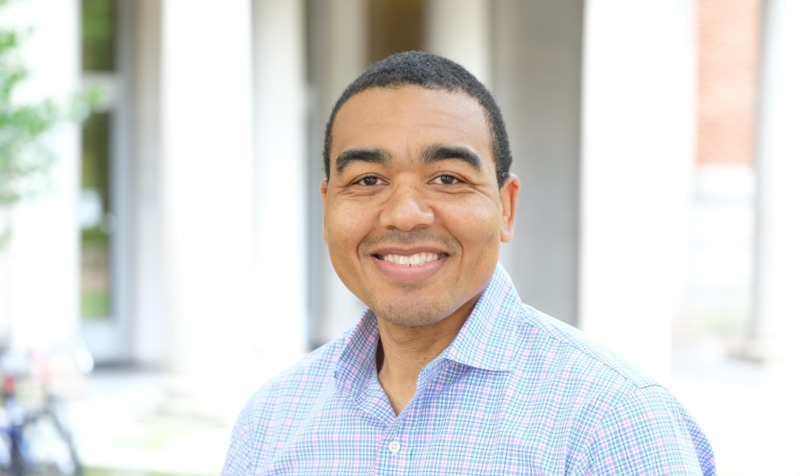
Brian Boyd
· William C. Friday Distinguished Professor of EducationVerifiedUniversity of North Carolina at Chapel Hill · Curriculum and Instruction
Active 1958–2025
About
Brian Boyd, Ph.D., is the William C. Friday Distinguished Professor in the UNC School of Education and director of the Frank Porter Graham Child Development Institute at the University of North Carolina at Chapel Hill. He was previously the director of the Juniper Gardens Children’s Project at the University of Kansas. Boyd is engaged in research involving the most vulnerable and often marginalized populations. As a special educator by training, much of his research has involved the development and evaluation of evidence-based practices that can be implemented within school and home contexts. His recent work has focused on how issues of implicit bias and race affect the outcomes of children with and without disabilities. Boyd’s research has been continuously funded by federal agencies such as the Institute of Education Sciences and the National Institutes of Health. He is a past vice president of the International Society for Autism Research and serves on multiple national boards dedicated to improving outcomes for autistic persons and those from historically underserved communities.
Research topics
- Psychology
- Social psychology
- Psychiatry
- Clinical psychology
- Nursing
- Geography
- Medicine
- Developmental psychology
- Gender studies
Selected publications
Circumscribed Interests and Attention in Autism: The Role of Biological Sex
UNC Libraries · 2025-08-29
articleOpen accessSenior authorPerspective: The role of diversity advisory boards in autism research
UNC Libraries · 2025-05-08
articleOpen accessSenior authorIn this perspective, we argue that the regular use of diversity advisory boards in autism research will improve the inclusivity and participation of marginalized groups in autism research and intervention development. We define a diversity advisory board as a representative group of community members, scholars, policymakers, and area experts that specifically discuss and examine research and interventions for accurate representation and consideration of underrepresented and marginalized identities such as racial, gender, sexual minorities, and dis/abilities who are often excluded from the research process. We present three arguments for forming and integrating diversity advisory boards in autism research and intervention development. First, diversity advisory boards would encourage scholars and interventionists to be intentional in considering how their intervention will work for culturally, racially, gendered, and dis/ability diverse groups. Second, diversity advisory boards will lead to increased diverse samples of autistic participants if members of the board are incentivized to support recruitment efforts from their local communities and networks. Finally, the regular use of diversity advisory boards will improve the research-to-practice gap by including a wider range of community members in the early development and implementation of autism interventions. Recommended actions researchers could take to select, maintain, and meaningfully engage a diversity advisory board are included in this perspective.
UNC Libraries · 2025-04-05
articleOpen accessRecent findings from the Centers for Disease Control and Prevention's (CDC) Autism and Developmental Disabilities Monitoring (ADDM) Network's 2020 prevalence report indicate that disparities in autism diagnoses between Black and White youth have narrowed, reflecting improved screening, awareness, and access to services (Maenner et al., 2023. Morbidity and Mortality Weekly Report. Surveillance Summaries (Washington, D.C.: 2002), 72, 1-14.). Claims of reducing disparities beyond prevalence rates, however, are not fully supported, as indicated by the reality that Black youth whose screenings indicate autistic traits are still not being referred for full evaluation or early intervention services at the same rate as their White peers (Major et al., 2020. Autism, 24, 1629-1638; Smith et al., 2020. Pediatrics, 145, S35-S46.). Black 8-year-olds identified as autistic still experience disparate educational placements (Waitoller et al., 2010. The Journal of Special Education. 44, 29-49.) where services may not be autism-specific or have Individual Education Plan goals only focused on "behavior problems" (Severini et al., 2018. Journal of Autism and Developmental Disorders, 48, 3261-3272.), are served in the most restrictive environments (Skiba et al., 2006. Exceptional Children, 72, 411-424.) and lack consistent augmentative and alternative communication support (Pope et al., 2022. American Journal of Speech-Language Pathology, 31, 2159-2174.). Additionally, ADMM researchers report consistent disparities in the identification of co-occurring intellectual disability where Black autistic children have significantly more co-occurrences than White autistic children. The purpose of this commentary is to first examine the assertion that the narrowed gap indicates, "…improved…access to services among historically underserved groups," (p. 9) (Maenner et al., 2023. Morbidity and Mortality Weekly Report. Surveillance Summaries (Washington, D.C.: 2002), 72, 1-14.). We will then recommend strategies to address the ongoing disparities.
Advancing health-care equity for autistic people: mental health as a key priority
UNC Libraries · 2025-10-05
articleOpen accessAdvancing health-care equity for autistic people: mental health as a key priority
The Lancet · 2025-04-06 · 4 citations
articleAutism · 2025-01-10 · 7 citations
articleAutistic adults have reported experiencing discrimination across settings. Nonetheless, population-based research examining the prevalence of discrimination against autistic individuals has been more limited. Therefore, this study aimed to examine the prevalence of types of discrimination (i.e., due to race or ethnicity, due to sexual orientation or gender identity, and due to health condition or disability) experienced by autistic youth ( n = 2339) compared to youth with other neurodevelopmental diagnoses (i.e. attention-deficit/hyperactivity disorder, learning disability, and speech or other language disorder; n = 10,325) and neurotypical youth ( n = 44,781) 6–17 years of age utilizing a large, population-based sample. Data for this study were acquired from the 2021–2022 National Survey of Children’s Health, a nationally distributed caregiver-report questionnaire. Results found that the prevalence of discrimination due to race or ethnicity and sexual orientation or gender identity was higher among autistic youth than neurotypical youth. Notably, results also found that discrimination due to health condition or disability was far more prevalent among autistic youth than neurotypical youth and youth with other neurodevelopmental diagnoses. Findings highlight the increased prevalence of discrimination experienced by autistic youth and should prompt researchers, policymakers, and vested community members to action to address this problem. Lay abstract Autistic individuals have described facing unfair or discriminatory treatment across settings, such as in school and at work. However, there have been few studies examining how widespread or prevalent discrimination is against autistic individuals. We aimed to fill that gap by examining how prevalent or common it is for autistic youth to experience discrimination based on race or ethnicity, sexual orientation or gender identity, and health condition or disability. We compared rates of discrimination against autistic youth to youth without developmental differences/diagnoses and youth with other developmental differences (i.e. youth diagnosed with attention-deficit/hyperactivity disorder [ADHD], learning disability, and speech/language disorders). We analyzed data from the 2021–2022 National Survey of Children’s Health, which is a nationwide survey on which parents report about aspects of their children’s lives. We found that autistic youth experience higher rates of discrimination based on race or ethnicity and sexual orientation or gender identity compared to youth who are typically developing and do not have a diagnosis (such as a speech or language disorder). Importantly, they also face significantly more discrimination due to their disability than youth with other diagnoses, such as ADHD, and youth without a developmental diagnosis. These results show that autistic youth are at risk for experiencing discriminatory treatment. Our study should motivate researchers, policymakers, and community members to address this critical issue.
Journal of Autism and Developmental Disorders · 2025-02-22 · 2 citations
articleJournal of Autism and Developmental Disorders · 2025-09-04 · 1 citations
articleA culturally grounded autism parent training program with Black parents
UNC Libraries · 2025-05-03
articleOpen accessParent training (i.e. group-based supports and psychoeducation aimed at parent as primary agent of change) in Autism Spectrum Disorders (autism) is well-documented as an Evidence-Based Intervention designed to increase advocacy, knowledge, and empowerment. While research on Parent Training acknowledges the cultural limitations, the field lacks culturally grounded models. Furthermore, barriers in diagnosis, service acquisition, and inclusion of under-represented populations including Black families have been established; however, research programs have traditionally failed to include these families. This study aims to provide a first toward addressing the lack of inclusion. We describe the practice-based implementation of a culturally concordant Parent Training program (Spectrum of Care) developed by a community organization (the Color of Autism) as well as feedback from parents after the implementation process. The findings indicate that culturally grounded strategies could promote engagement and empowerment of Black families. There, however, is still a need for research that attends to parental mistrust and examines culturally grounded strategies more closely.
Journal of Clinical Child & Adolescent Psychology · 2025-11-20
articleOpen accessOBJECTIVE: To determine the proportion and profile of preschoolers on the autism spectrum who do not acquire spoken language despite receiving evidence-supported interventions that target spoken language. METHODS: We examined an aggregate dataset comprising 707 preschoolers on the autism spectrum who had received evidence-supported interventions to determine the proportion and profile of those who experienced limited progress in spoken language. Interventions were delivered through programs affiliated with university research settings and ranged in duration from 6 to 24 months. Spoken language outcomes were determined from parent-report measures, which were validated against direct assessments and natural language samples. RESULTS: Approximately two-thirds of children who were non-speaking at baseline were using single words or more complex spoken language by intervention exit. Those who remained non-speaking had lower baseline motor imitation scores, derived mainly from parent reports. Approximately half of the children who were minimally speaking (i.e. had single words or no words) at baseline were combining words by intervention exit. Those who did not acquire word combinations had lower baseline scores in cognitive, social, adaptive and motor imitation measures, and shorter intervention duration. Age at intervention start influenced spoken language advancement differently depending on the initial spoken language level. The odds of acquiring spoken language did not differ based on the intervention received. CONCLUSIONS: Approximately one-third of children who had limited or no spoken language at baseline did not advance to spoken language stages following intervention. Development of spoken language was associated with modifiable factors at the child and intervention level.
Recent grants
Validation of an outcome measure of early social-communication for young children with ASD
NIH · $2.9M · 2023–2026
Behavioral Inflexibility in IDD Outcome Measurement
NIH · $2.8M · 2014–2021
Frequent coauthors
- 44 shared
Maureen A. Conroy
University of Florida
- 39 shared
Jennifer M. Asmus
University of Wisconsin–Madison
- 36 shared
Danielle Madera
Cohen Children's Medical Center
- 29 shared
Linda R. Watson
University of North Carolina at Chapel Hill
- 27 shared
Kara Hume
University of North Carolina at Chapel Hill
- 23 shared
Samuel L. Odom
University of North Carolina at Chapel Hill
- 22 shared
Grace T. Baranek
University of Southern California
- 17 shared
James W. Bodfish
Vanderbilt University
Education
Ph.D., Special Education
University of Florida
Awards & honors
- William C. Friday Distinguished Professor in the UNC School…
- Past vice president of the International Society for Autism…
- Resume-aware match score
- Save to shortlist
- AI-drafted outreach
See your match with Brian Boyd
PhdFit ranks faculty by your research interests, methods, and publications — grounded in their actual work, not templates.
- Free to start
- No credit card
- 30-second signup