Resume-aware faculty matching

Find professors who actually fit you

Upload your resume. Four AI agents analyze your background, rank the faculty who fit, inspect their recent research, and help you draft outreach — grounded in their actual work, not templates.

Free to startNo credit cardCancel anytime
Top matches Balanced preset
Dr. Sarah Chen
Stanford · Interpretability · NLP
91
Dr. Marcus Holloway
MIT · Robotics · RL
84
Dr. Aisha Okonkwo
CMU · Fairness · HCI
82
Nova · Professor Researcher · re-ranking top 20…
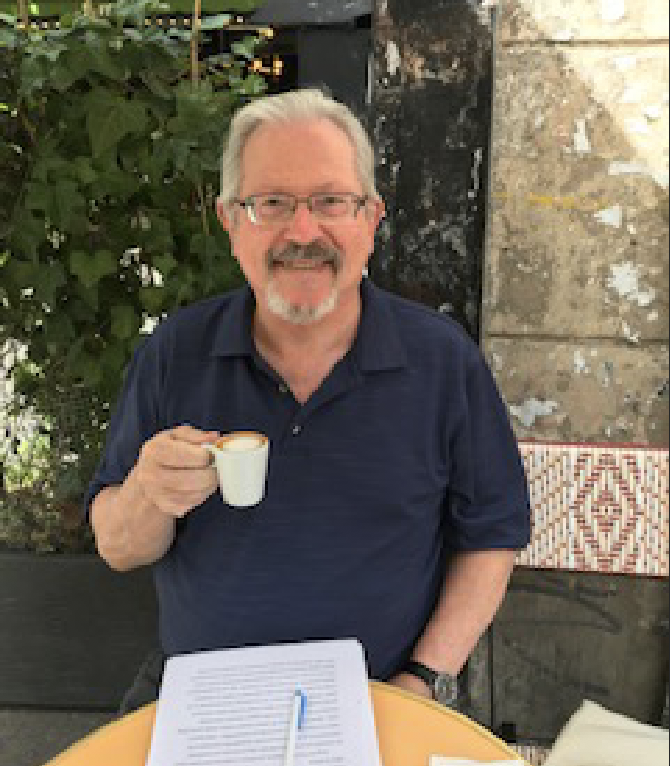
Brian Richardson

Brian Richardson

· Professor of English and Comparative Literature, Affiliate Professor, American Studies

University of Maryland, College Park · American Studies

Active 1958–2025

h-index27
Citations3.5k
Papers30334 last 5y
Funding
See your match with Brian Richardson — sign in to PhdFit.Sign in

Research topics

  • Sociology
  • Literature
  • Art
  • Computer Science
  • History
  • Engineering
  • Philosophy
  • Media studies
  • Aesthetics
  • Epistemology

Selected publications

  • Structural Indeterminacy and the Separation of Powers

    SSRN Electronic Journal · 2025-01-01

    preprintOpen accessSenior author
  • Vicious Circles: Circular Fiction and Time Loop Narratives

    Poetics Today · 2025-03-01

    article1st authorCorresponding

    Abstract Time loop narratives raise a number of interesting questions for narrative theory. There is the curious temporality of a work in which past, present, and future are rearranged. There is also the question of how such narratives progress, given that they are composed of repeated events that must be sequenced and developed, and provided with an ending that should satisfactorily conclude such works. The status of characters in these works also needs to be explored; they can (and sometimes do) encounter their “other” selves in the storyworld. Observations on the ontological status of the fictional world of such narratives and comments on the ways in which they are represented and misrepresented in literary criticism and narrative theory are also set forth.

  • The Hidden Ending of Julian Barnes’s The Sense of an Ending

    Modern fiction studies · 2025-09-01

    articleOpen access1st authorCorresponding

    Abstract: The Sense of an Ending is a strange text that provokes interpretive challenges. The discoveries the protagonist makes later in life fail to fully explain the unusual events that overtook him in his sixties. His resolution of these mysteries is unconvincing and therefore invites readers to construct an alternative explanation. Following out clues in the novel, this essay offers a reinterpretation of the key events and central relationships, including the likely parentage of young Adrian, which is more comprehensive and thematically resonant than those offered in the novel or elsewhere.

  • Sport Organizations and Whistleblowing

    2025-01-01

    otherSenior author
  • The counternarratives of <i>Ulysses</i>

    Frontiers of Narrative Studies · 2025-06-18

    article1st authorCorresponding

    Abstract James Joyce’s Ulysses contains numerous counternarratives – ideological, cultural, and literary – and it brilliantly embodies those oppositions in the construction of the narrative itself. Ulysses enacts counternarratives of the traditional heroic epic, the Victorian novel, and mimetic narrative in general. Joyce removes all supernatural and implausible elements in his version of the epic form, thereby deflating its pretension and at the same time making it more realistic. His primary assault on Victorian conventions comes through representations of the human body that had been forbidden by Victorian statutes and sensibilities. Instead, Joyce creates an epic of the human body in Ulysses , representing all human bodily functions, including urinating, defecating, menstruating, masturbating, and nose-picking. Most egregiously, Joyce assaults the mimetic or realistic parameters of fiction in several ways: having perfected realistic representations of subvocal speech, he goes on to present impossible scenarios, as when one character remembers something perceived only by another. His intersecting counter narratives together reveal how much had been denied, ignored, or repressed by earlier forms of fictional representation, and thereby disclose the range, importance, and the power of counternarratives, which in turn can help us theorize them more effectively.

  • The Public Law of Public Utilities

    SSRN Electronic Journal · 2025-01-01

    preprintOpen accessSenior author
  • Print Culture and the Making of Italian Literature

    Oxford University Press eBooks · 2024-09-19

    book-chapter1st authorCorresponding

    Abstract Printing transformed the production and diffusion of literary works in Italy from the 1460s onward, encouraging their composition and making them available more rapidly and less expensively throughout and beyond the peninsula. Authors who wished to appear in print had to work together with publishers and sometimes with editors, and negotiating these collaborations could present problems. Editors were employed by publishers to select and correct texts and to provide paratexts for canonical works. In the sixteenth century, they developed the genre of lyric anthologies, bringing together communities of male and female poets and readers. From the late eighteenth century, the creation of series of texts fostered a sense of an Italian literary corpus, and from the following century, works in Italian and in translation, especially novels, were disseminated more widely in economical formats. In periods of religious or political tension, print publication has been restricted by the threat of censorship.

  • The Reader in Modernist Fiction

    Edinburgh University Press eBooks · 2024-05-31

    book1st authorCorresponding

    Between 1890 and 1938, a large number of significant works of fiction appeared that foregrounded the effects of reading, usually the reading of narrative fiction. The primary project in this book is to assemble and analyze these instances and explore their implications concerning a range of subjects including the implicit construction of the modernist reader, the validity of social pronouncements, intertextual allusions, the reading of the narrative itself, and even perception in general. Though several approaches to the figure of the reader can be discerned, what is most intriguing is the insistence with which Joseph Conrad, James Joyce, Ford Madox Ford, Katherine Mansfield, William Faulkner, Katherine Anne Porter, and other modernists regularly created scenes in which reader characters misread and then come to a painful end. By dramatizing the dangers of misreading, these authors helped create an alternative interpreter, whom I will call the critical reader, who evaluates scenes and discourses more skeptically and can therefore elude the errors that condemn the more naïve, complacent, or uncritical figures in the work.

  • Conclusion: The Stories of Modern Fiction, the End(s) of Misreading, and the Other Reader’s Response

    Edinburgh University Press eBooks · 2024-05-31

    book-chapter1st authorCorresponding

    The results of this study are summarized—thematic, ideological, theoretical, sexual, and intertextual. I reflect on the nature(s) of the modernist reader that so many of these texts have helped construct, noting its parallels to and differences from rival conceptions of audiences and general accounts of interpretation. Drawing on feminist, queer, and African American practice, I develop a theory of the dual implied reader to help explain the effects produced by many modernist works. By tracing the creation, development, and final transformation of the modernist reader(s), we can thereby clarify some basic features of modernism as well as appreciate its repeated alignment with significant minority literary practices, progressive ideological positionings, and dramatic re-evaluations of sexual relations.

  • Introduction: Modernist Hieroglyphics and the Implicated Reader

    Edinburgh University Press eBooks · 2024-05-31

    book-chapter1st authorCorresponding

    The introduction outlines some of the basic impulses behind and dynamics within modernist narrative texts. It argues that modernist practices typically frustrate many expectations appropriate for Victorian narrative. It demarcates how modernist stories of misreading differ fundamentally from ostensibly similar earlier treatments from Cervantes to Jane Austen, discusses earlier critical accounts of the use and abuse of reading, and examines recent debates over reading and critical interpretation. It includes a brief consideration pre-or quasi-modernist strategies in Wells’ <italic>The History of Mr. Polly</italic>, D. H. Lawrence’s <italic>Lady Chatterley’s Lover</italic>, and E. M. Forster’s <italic>Howards End</italic>. It also points to key intellectual transformations across the disciplines at the time, such as the skeptical hermeneutics of Marx and Nietzsche, which make the search for a hidden, underlying meaning a significant break from the past and a defining feature of modern knowledge.

Frequent coauthors

  • Jan Alber

    9 shared
  • Martin McLaughlin

    8 shared
  • Henrik Skov Nielsen

    8 shared
  • Richard Andrews

    7 shared
  • Guido Bonsaver

    6 shared
  • Cecil H. Clough

    6 shared
  • Verina R. Jones

    6 shared
  • Peter Armour

    6 shared

Awards & honors

  • Perkins Prize for the year’s best book in narrative studies…
  • Choice Outstanding Academic Title for Narrative Theory: Core…
  • Resume-aware match score
  • Save to shortlist
  • AI-drafted outreach

See your match with Brian Richardson

PhdFit ranks faculty by your research interests, methods, and publications — grounded in their actual work, not templates.

  • Free to start
  • No credit card
  • 30-second signup