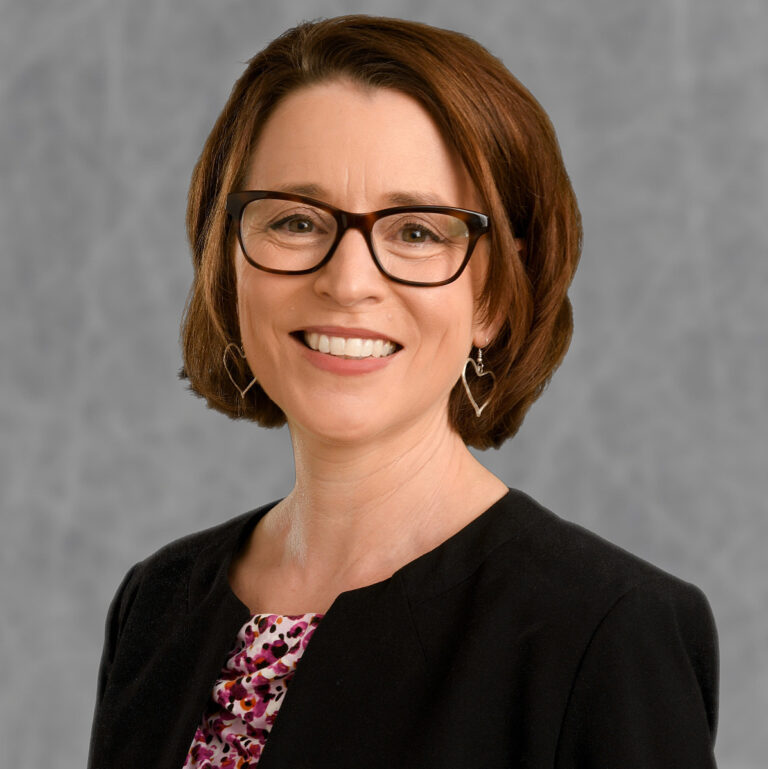
Deanna Dannels
VerifiedNorth Carolina State University · Communication
Active 2000–2026
About
Deanna Dannels serves as the dean of NC State's College of Humanities and Social Sciences (CHASS), a role she has held since 2021. She leads over 4,600 students across eight academic departments, two schools, and two centers, advocating for the importance of the human perspective in addressing technological, societal, and scientific challenges. Her leadership has focused on developing a strategic plan to make CHASS the most innovative humanities and social sciences college in the nation, with initiatives including undergraduate cohort scholar programs for underserved students, faculty research reboot programs, outreach expansion in North Carolina's public schools, wellness initiatives, and securing funding for societal challenge projects. Dannels is an accomplished scholar and educator, recognized with numerous awards such as the college’s Alumni Distinguished Graduate Professor Award, the Board of Governor’s Award for Excellence in Teaching, and NC State’s Outstanding Teacher Award. Her research emphasizes teacher training, faculty development, and integrating communication instruction into scientific and pre-professional disciplines, including engineering and design. She is a passionate advocate for the value of humanistic education, emphasizing the transferable skills students gain and its role within NC State’s land-grant mission. Before her deanship, she held various leadership roles, including associate dean of academic affairs and editor of the journal Communication Education. Dannels holds a B.A. in communication and history from Gonzaga University and both an M.A. and Ph.D. in communication from the University of Utah.
Research topics
- Psychology
- Pedagogy
- Sociology
- Mathematics education
- Computer science
Selected publications
The voyages of humanities and social sciences
Communication Education · 2026-02-20
article1st authorCorresponding2023-06-22
book-chapterSenior authorIn this chapter, the authors sketch an approach to communication across the curriculum (CAC) oriented toward inquiry-guided learning. They describes how the Campus Writing and Speaking Program (CWSP) at NCSU supports inquiry-guided learning by helping faculty to infuse language activities into their courses in new and creative ways. Another inquiry-based use of informal writing and speaking, however, supports the development of formal papers and presentations. Like many similar programs around the country, the Campus Writing and Speaking Program at NCSU supports the goal of improving students’ abilities to write and speak effectively. In the middle of the continuum are strategies that are still done quickly—usually overnight, without revision or rehearsal. In its support of the IGL initiative on the NCSU campus, the Campus Writing and Speaking Program has been blessed with faculty and administrators in other programs who are passionate about collaboration.
Communication Education · 2022-01-02
articleSenior authorCorresponding2022-01-01
other2021-03-09
book-chapter1st authorCorrespondingI have been a teacher my entire adult life. Every full-time job I have ever had has been in a university setting. Every piece of research I have conducted and published, save one study, has been conducted within traditional classrooms. Understandable, right? My research has focused on how noncommunication majors work through the challenges of learning communication skills while also learning disciplinary content. I have also studied how new graduate teaching assistants negotiate communication difficulties of the classroom as they learn what it means to be a teacher. Where better to explore these questions than in the classroom? Where better to learn about the intersections between communication, teaching, and learning than in the classrooms within which these processes occur? Where else could I learn about those tricky issues that riddle novice teachers and learners who are trying to navigate through processes outside of their comfort zones?
Assessment Of Teaming, Writing, And Speaking Instruction In Che Capstone Design
2020-09-03
articleOpen accessA multidisciplinary faculty team at North Carolina State University has been iteratively designing and implementing teaming, writing, and speaking instructional modules to be implemented within a junior-level chemical engineering laboratory course and a senior level capstone design course. The laboratory course is the first course in the curriculum to require collaborative writing and oral presentations, so team management and interpersonal dynamics within the team structure are integral parts of the instructional material. The senior capstone design course in chemical engineering provides students with a realistic experience of industrial practice in process design. At NCSU, this often involves industrial sponsorship and mentoring of projects that require a multidisciplinary student team. This presents the students with unique teaming, writing and speaking challenges as they attempt to transcend genre-specific communication norms to produce coherent and effective documents and presentations. The paper will report the research findings and assessment results of this three-year effort, with a focus on the performance of the most recent year's courses. These represent the first offerings of fully developed teaming, writing and speaking (TWS) instruction in each class. The results indicate that while TWS instruction does contribute to enhanced performance in the laboratory class, senior design has so many confounding factors, such as the presence of team members from different disciplines, the possible receipt of previous TWS instruction, and the different levels of project mentor involvement, that TWS instruction did not significantly improve teaming, writing and speaking performance. Future curricular implementation issues and instructional recommendations will be proposed, based on these results.
Communication Education · 2020-10-01
articleOpen access1st authorCorrespondingRaising the curtain to look back on my life as an editor, with hopes and goals and intentions and lessons learned taking center stage; this manuscript wanders through intersecting sounds, places, melodies, and scenes emblematic of my journey through and reflections on editorial work.
Communication Education · 2020-10-01
articleOpen access1st authorCorresponding*[brackets denote speaker notes] [breathe] Distinguished audience, my name is Deanna Dannels and I have the honor of standing before you, for the last time, as Editor of Communication Education. I ...
“Yes, and … ” continuing the scholarly conversation about student precarity in higher education
Communication Education · 2020-03-11 · 3 citations
articleSenior authorYou’ll see here the cost of tuition, room, and board here. We take pride in being a university that works very hard to address all unmet need for the cost of attendance here. We do not want money t...
Instruction And Assessment Of Multidisciplinary Teaming Skills In Senior Design
2020-09-03 · 2 citations
articleOpen accessAlthough numerous articles in engineering disciplines focus on incorporating communication into courses and curricula, minimal scholarship exists that addresses the specific instruction and assessment issues involved with multidisciplinary teaming competence. As multidisciplinary teams are increasingly being implemented in engineering industry and academic courses (specifically in senior design courses), it is critical to explore the strategies for instruction and assessment of multidisciplinary teams. This study does just that by describing a tri-phased instructional and assessment protocol for multidisciplinary teaming instruction. Additionally, this study presents preliminary assessment results that contributed to iterative redesign of this tri-phased protocol. Ultimately, the protocols presented in this study can be tailored for other institutions and further tested for effectiveness in building multidisciplinary teaming competence.
Frequent coauthors
- 12 shared
C. Kyle Rudick
University of Kentucky
- 11 shared
Chris M. Anson
Hospital de Sant Pau
- 6 shared
Lisa Bullard
North Carolina State University
- 6 shared
Amy L. Housley Gaffney
- 5 shared
Ann L. Darling
University of Utah
- 5 shared
S. Peretti
University of Geneva
- 4 shared
Kelly Norris Martin
Rochester Institute of Technology
- 4 shared
Paula Berardinelli
North Carolina State University
Education
- 1999
PhD, Communication
University of Utah
Awards & honors
- Alumni Distinguished Graduate Professor Award
- Board of Governor’s Award for Excellence in Teaching
- NC State’s Outstanding Teacher Award
- Recognition from the National Council of Teachers of English…
- Resume-aware match score
- Save to shortlist
- AI-drafted outreach
See your match with Deanna Dannels
PhdFit ranks faculty by your research interests, methods, and publications — grounded in their actual work, not templates.
- Free to start
- No credit card
- 30-second signup