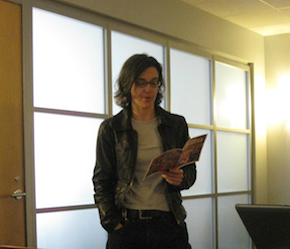
Lisa Diedrich
· Professor & Director of Undergraduate StudiesStony Brook University · Women's and Gender Studies
Active 2000–2024
About
Lisa Diedrich is a Professor and the Director of Undergraduate Studies in the Women's, Gender, and Sexuality Studies department at Stony Brook University. She holds a PhD in Women's, Gender, and Sexuality Studies from Emory University. Her research interests include critical medical studies, disability studies, feminist theories, and interdisciplinary methods. She is engaged in exploring issues related to gender, health, and social justice through her scholarly work.
Research topics
- Political Science
- Sociology
- Law
- Computer Science
- Literature
- Pedagogy
- Psychology
- Medicine
- Environmental ethics
- Ecology
- Philosophy
- Epistemology
- Art
- Visual arts
Selected publications
Illness politics and social media mobilisation
The Lancet · 2024-06-01 · 1 citations
article1st authorCorrespondingIllness Politics and Hashtag Activism
Forerunners · 2024 · 10 citations
1st authorCorresponding- Political Science
- Political Science
- Law
*Illness Politics and Hashtag Activism* explores illness and disability in action on social media, analyzing several popular hashtags as examples of how illness figures in recent U.S. politics. Lisa Diedrich shows how illness- and disability-oriented hashtags serve as portals into how and why illness and disability are sites of political struggle and how illness politics is informed by, intersects with, and sometimes stands in for sexual, racial, and class politics. She argues that illness politics is central—and profoundly important—to both mainstream and radical politics, and she investigates the dynamic intersection of media and health and health-activist practices to show how their confluence affects our perception and understanding of illness.
Health, Medicine, and Literature in the American Context
Oxford Research Encyclopedia of Literature · 2023-05-22
reference-entry1st authorCorrespondingAbstract Writers have long explored illness and care as key themes in a wide range of work across a variety of literary genres. In the second half of the 20th century, literature and medicine emerged as a subfield of literary study as well as a component of medical education. In the American context, since the 1970s, research and teaching methods associated with the subfield of literature and medicine have become increasingly institutionalized in universities and medical schools. As with many emergent fields, there has been much debate around the name of the field and its primary objects of study and methods of analysis. Interdisciplinary scholars have expanded the field from a narrow focus on literature to a broader interest in the multiplicity of discourses, texts, genres, and forms—including verbal, visual, digital, and multimodal forms of creative expression and pedagogy. As a response to this expansion beyond literature, several alternatives to “literature and medicine” have been proposed and institutionalized as part of the process of field formation. Around 2000, “narrative medicine” emerged as a clinical practice that emphasizes the role of stories in medical encounters and seeks to teach health practitioners narrative competence as a form of care. Other scholars have debated whether “medical humanities” or “health humanities” best captures the parameters and investments of the field, with health humanities offered as a more inclusive name indicating the importance of spaces, practices, and practitioners beyond the institution of medicine. Some scholars have proposed “health studies” or “critical health studies” as encouraging the cross-fertilization of theories and methods from the humanities and social sciences (including medical sociology, history of medicine, philosophy, and literary studies), as well as from the interdisciplinary fields of women’s, gender, and sexuality studies, science studies, critical race studies, and disability studies, into medical and health thought and practice. Scholars calling for a more critical medical humanities or health studies argue for the importance of structural analysis and an examination of how power operates in medicine and health care. Many notable developments—including the turns to narrative, to comics, and to structural analysis—have had global impacts, especially in light of the ongoing Covid-19 pandemic. The experience of illness and its diagnosis and treatment connects the local and phenomenological—the embodied individual in the world and in relation to others (loved ones, caretakers, health practitioners, health advocates, and activists)—with national and transnational systems and structures, including health care policies and delivery services, basic and applied medical research and development, and poverty, racism, war, climate change, and other environmental factors contributing to the increasing precarity of vulnerable people and health disparities between populations.
Feminist formations · 2023-12-01
article1st authorCorresponding"Towards an AIDS ARCHIVE":Homesickness and Homemaking in Marika Cifor's Viral Cultures: Activist Archiving in the Age of AIDS Lisa Diedrich (bio) Full disclosure: I was one of the reviewers of Marika Cifor's (2022) monograph Viral Cultures: Activist Archiving in the Age of AIDS for University of Minnesota Press. Thus, I have had the pleasure of reading earlier versions of the manuscript before reading the book in print in the present moment—the present moment being, literally, the cusp between 2022 and 2023, entering the fourth year of the COVID-19 pandemic. I begin by noting the multiplicity of my own readings of different versions of Cifor's manuscript and now book to indicate the multiple temporalities and spaces in which I have encountered Cifor's work and its subject: AIDS, AIDS activism, and AIDS activist archiving. In thinking with and contributing to this dossier about Cifor's work, I want to document these "affective encounters"1 as a kind of memory work in progress. I first situate Cifor's project in relation to other work, including my own, on the early days of AIDS and AIDS activism in the United States, and then focus on aspects of Viral Cultures that struck me in my most recent reading, generated by Cifor's discussion of nostalgia and her formulation of the concept "vital nostalgia." Cifor describes nostalgia as an "historical emotion" and charts its shifting meanings from the original coinage by German physician Johannes Hofer in the 17th century as a "psychopathological disorder" linked to the feeling of homesickness. She discusses how, since the 1970s, nostalgia has come to be interpreted as an "apolitical, regressive, and ahistorical" emotion. I want to draw out something that is not so much explicit in, but infuses, Cifor's analysis, and affected me on this reading through what felt like, for me, a very literal encounter with the word and concept homesick in relation to AIDS archives. [End Page 153] Home. Sick. What Cifor's work helped me realize is that AIDS archives create a kind of home for illness and illness politics. Even more so, her work articulates an understanding of activism in general, and activist archiving in particular, as a practice of homemaking in response to loss. Backwards and Forwards "Towards an AIDS ARCHIVE" When I first read Viral Cultures, I immediately grasped it as making a crucial contribution to conversations happening now about the early days of AIDS and AIDS activism in the United States and how we remember (and forget) and document (and fail to document) that period in the present and for the future. Activist-artists Alexandra Juhasz and Theodore Kerr (2022) have coined the term "AIDS crisis revisitation" to describe a concept and practice they locate in film, media, and art produced beginning in the mid-to-late 2000s, which shows a forgetting as much as a remembering in recent work on the early years of AIDS in the United States. My own work grapples with illness and disability in action in particular times and places. In my book Indirect Action (2016), I explore the multiplicity of the conjunction illness-thought-politics in what I called the "prehistory of AIDS" through an array of subjects: queering the origin story of AIDS activism by recalling its feminist history; exploring health activism and the medical experience; analyzing psychiatry and self-help movements; thinking ecologically about counter-practices of generalism in science and medicine; and considering the experience and event of epilepsy and the witnessing of schizophrenia. I concluded my analysis with a discussion of an "afterimage" of early AIDS and AIDS activism in the present by comparing and contrasting how past forms of treatment activism are "screened" (both made visible on film and blocked from view) in the films Dallas Buyers Club (2013) and How to Survive a Plague (2012). The "afterimage" I take up is ACT UP's phrase and campaign "Drugs into Bodies," as well as the repercussions of its success in the present, exploring how pharmaceutical treatments have become, in the United States, the most common, and often the only, "solution to any and all problems—medical, psychological, and social" (2016, 16). In Viral Cultures, Cifor...
New York University Press eBooks · 2023-09-07
book-chapter1st authorCorresponding"The Urban Forum Dialogue Tool: Reflecting on a Designerly Approach to Transdisciplinary Research"
The Plan Journal · 2023-01-01 · 1 citations
articleOpen accessWith a view to working toward urban sustainability goals, two Swedish research platforms, SLU Urban Futures at the University of Agricultural Sciences in Alnarp (SLU) and the Urban Arena at Lund University, launched Urban Forum, a transdisciplinary dialogue format, in 2019. Designed to foster exchange between practitioners and scholars in the spatial design fields the Forum convenes actors from practice and academia working on matters of shared concern to increase their interaction and defuse preconceptions against each other. The initiative recognizes that academic and non-academic design actors are equally needed to build transformative capacities and reflects two related convictions: that siloing practice and academia is unproductive and that synthetic encounters can serve to reimagine roles and retool mindsets currently hampering mutually beneficial knowledge exchange. This article analyzes a series of Urban Forum events from 2019-21 to extrapolate procedures for overcoming entrenched notions of the practice/academia dynamic; identify criteria for productive knowledge exchange; suggest ways to design transdisciplinary dialogues; and highlight the benefit of involving designerly knowledge and working methods into the transdisciplinary methodology toolbox.
2022-01-01
book-chapter2022-11-07
book-chapter1st authorCorresponding2022-07-13
book-chapter1st authorCorrespondingComics as Pedagogy: On Studying Illness in a Pandemic
The Comics Grid Journal of Comics Scholarship · 2021 · 4 citations
1st authorCorresponding- Sociology
- Pedagogy
- Psychology
During the pandemic, graphic medicine has become even more central to what and how I teach. In this essay, I discuss how I used comics as pedagogy in classes on illness and illness politics that I taught during the first year of the pandemic. I begin this commentary by briefly addressing how I framed the problem of studying illness in a pandemic before discussing two assignments that show graphic medicine in action as a pedagogical tool: the first, an asynchronous online group discussion exercise in which students practiced annotation as a method of visual analysis, and the second, a documenting COVID-19 final project assignment for which students could document in comics form a pandemic experience.
Frequent coauthors
- 8 shared
Ellen Braae
- 8 shared
Lake Douglas
- 6 shared
Gini Lee
- 3 shared
Vera Vicenzotti
Swedish University of Agricultural Sciences
- 3 shared
Victoria Hesford
Stony Brook University
- 3 shared
Andrea Kahn
- 3 shared
Bruce Clarke
- 3 shared
Saskia de Wit
Delft University of Technology
Education
- 2005
Ph.D., American Studies
University of California, Santa Barbara
- 2001
M.A., American Studies
University of California, Santa Barbara
- 1998
B.A., American Studies
University of California, Santa Barbara
- Resume-aware match score
- Save to shortlist
- AI-drafted outreach
See your match with Lisa Diedrich
PhdFit ranks faculty by your research interests, methods, and publications — grounded in their actual work, not templates.
- Free to start
- No credit card
- 30-second signup