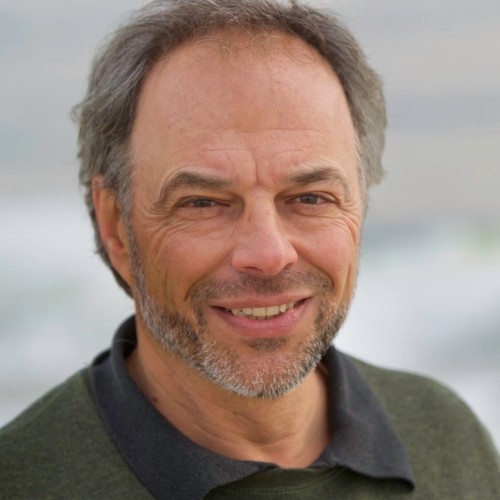
Carl Safina
· Endowed ChairStony Brook University · Marine Conservation and Policy Program
Active 1983–2024
Research topics
- Humanities
- Art
- Philosophy
- Geography
- Biology
- Ecology
- Fishery
Selected publications
Fish farming and beyond: Moral reckoning required
Science Advances · 2024-10-16 · 3 citations
reviewOpen access1st authorCorrespondingProblems in animal aquaculture stem from failures of care and conscience. Solutions require not "balanced" goals but moral reckonings overhauling economic valuations and policies.
Elsevier eBooks · 2023 · 1 citations
1st authorCorresponding- Fishery
- Geography
- Ecology
2022
1st authorCorresponding- Humanities
- Art
- Humanities
Carl Safina, Meeresbiologe und Autor des internationalen Bestsellers «Die Intelligenz der Tiere», nimmt seine Leserinnen und Leser in die Lebenswelten von Tieren mit, die an den wenigen noch verbliebenen wilden Orten der Erde zu Hause sind. In ergreifenden Geschichten erfahren wir, was Tiere tun, warum sie es tun und wie sich das Leben für sie anfühlt.
Carl Safina—Provide your audience with information they care about
Risk Analysis · 2022-11-01
editorialOpen accessSenior authorThis essay is part of a series of essays that are based on interviews conducted for this special issue with people who practice risk communication related to human or natural hazards as part of their professions.
2022-01-01
book-chapter1st authorCorrespondingCarl Safina, Meeresbiologe und Autor des internationalen Bestsellers «Die Intelligenz der Tiere», nimmt seine Leserinnen und Leser in die Lebenswelten von Tieren mit, die an den wenigen noch verbliebenen wilden Orten der Erde zu Hause sind. In ergreifenden Geschichten erfahren wir, was Tiere tun, warum sie es tun und wie sich das Leben für sie anfühlt.
2022-01-01
book-chapter1st authorCorrespondingCarl Safina, Meeresbiologe und Autor des internationalen Bestsellers «Die Intelligenz der Tiere», nimmt seine Leserinnen und Leser in die Lebenswelten von Tieren mit, die an den wenigen noch verbliebenen wilden Orten der Erde zu Hause sind. In ergreifenden Geschichten erfahren wir, was Tiere tun, warum sie es tun und wie sich das Leben für sie anfühlt.
2022-01-01
book-chapter1st authorCorrespondingCarl Safina, Meeresbiologe und Autor des internationalen Bestsellers «Die Intelligenz der Tiere», nimmt seine Leserinnen und Leser in die Lebenswelten von Tieren mit, die an den wenigen noch verbliebenen wilden Orten der Erde zu Hause sind. In ergreifenden Geschichten erfahren wir, was Tiere tun, warum sie es tun und wie sich das Leben für sie anfühlt.
2022
1st authorCorresponding- Humanities
- Humanities
- Art
Carl Safina, Meeresbiologe und Autor des internationalen Bestsellers «Die Intelligenz der Tiere», nimmt seine Leserinnen und Leser in die Lebenswelten von Tieren mit, die an den wenigen noch verbliebenen wilden Orten der Erde zu Hause sind. In ergreifenden Geschichten erfahren wir, was Tiere tun, warum sie es tun und wie sich das Leben für sie anfühlt.
Where Are Zoos Going—or Are They Gone?
Journal of Applied Animal Welfare Science · 2018-08-31 · 18 citations
articleOpen access1st authorCorrespondingTo some, zoos are prisons exploiting animals. In reality zoos range from bad to better. I make this distinction: A bad zoo makes animals work for it; a good zoo works for animals. Good zoos do effective conservation work and continually strive to improve exhibits, relevance to conservation, and inspiring public engagement for wildlife. Many zoos have improved enormously; the better ones being crucial in saving species that would have otherwise gone extinct. Nonetheless, for some people the mere word "zoo" carries impressions of old zoos, bad zoos, circuses, and theme-park shows that many find distasteful. Good zoos know they must innovate forward. As society grows increasingly estranged from nature and continues driving broad declines of wildlife, wild lands, and natural systems, the goal of zoos and every organization concerned with animal welfare should not be to separate humans from other animals, but to entangle all humans in nonhuman lives. Zoos of the next decades must become the first stage in bringing young people into life-long, engaged caring about animals. They could carry on that mission in their communities, in schools, in wild lands, as well as inside their gates. Without a strong public constituency, wild animals will not withstand continued human proliferation. Zoos and aquariums must innovate toward being a crucial force abetting the continued existence of wildness on Earth. Zoos of the future must become uplifting places of respect, rescue, enhancement, conservation, and public engagement.
2017-01-01
book-chapter1st authorCorrespondingWas geht im Inneren von Tieren vor? Können wir wissen, wie sie fühlen und denken? Carl Safina nimmt uns mit auf abenteuerliche Entdeckungsreisen in die unbekannte Welt der Elefanten, Wölfe und Orcas. Sein spannend zu lesendes Buch erzählt außergewöhnliche Geschichten von Freude, Trauer, Eifersucht, Angst und Liebe und ist voll von erstaunlichen Einsichten in die Persönlichkeiten der Tiere.
Frequent coauthors
- 18 shared
Joanna Burger
- 11 shared
Michael Gochfeld
Rutgers, The State University of New Jersey
- 9 shared
Kelly R. Stewart
University of Glasgow
- 7 shared
Andrew J. Read
Duke University
- 7 shared
Jeffrey E. Moore
UCLA Medical Center
- 7 shared
Ramūnas Žydelis
Lithuanian Ornithological Society
- 6 shared
Tara M. Cox
- 5 shared
Sara McDonald
Labs
School of Marine and Atmospheric SciencesPI
- Resume-aware match score
- Save to shortlist
- AI-drafted outreach
See your match with Carl Safina
PhdFit ranks faculty by your research interests, methods, and publications — grounded in their actual work, not templates.
- Free to start
- No credit card
- 30-second signup