Resume-aware faculty matching

Find professors who actually fit you

Upload your resume. Four AI agents analyze your background, rank the faculty who fit, inspect their recent research, and help you draft outreach — grounded in their actual work, not templates.

Free to startNo credit cardCancel anytime
Top matches Balanced preset
Dr. Sarah Chen
Stanford · Interpretability · NLP
91
Dr. Marcus Holloway
MIT · Robotics · RL
84
Dr. Aisha Okonkwo
CMU · Fairness · HCI
82
Nova · Professor Researcher · re-ranking top 20…
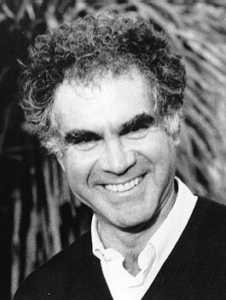
Carlo Ginzburg

Carlo Ginzburg

University of California, Los Angeles · History

Active 1966–2026

h-index38
Citations6.8k
Papers41845 last 5y
Funding
See your match with Carlo Ginzburg — sign in to PhdFit.Sign in

About

Carlo Ginzburg is a Professor Emeritus at UCLA in the Department of History, specializing in Italian Renaissance and Early Modern European History. His research focuses on these historical periods, and he has authored several significant publications including 'The Cheese and the Worms: The Cosmos of a Sixteenth Century Miller,' 'The Night Battles: Witchcraft and Agrarian Cults in the Sixteenth and Seventeenth Centuries,' and 'The Enigma of Piero della Francesca.' Ginzburg's work often explores themes related to historical methodology, myth, and cultural history, contributing to the understanding of early modern European history and the history of witchcraft and popular beliefs.

Research topics

  • Psychoanalysis
  • Psychology
  • Sociology
  • Art
  • Aesthetics
  • Literature
  • Art history
  • History
  • Philosophy

Selected publications

  • Carlo Ginzburg in Conversation with Filippo Barbera and Maurizio Catino: The Historical Method at the Crossroad of Social and Human Sciences

    Sociologica · 2026-04-20

    articleOpen access1st authorCorresponding

    This interview with Carlo Ginzburg — conducted in Bologna in May 2025 by sociologists Filippo Barbera and Maurizio Catino — explores the epistemological foundations of the indiciary paradigm and its relevance for historical and social inquiry. Ginzburg articulates a conception of truth as a provisional endpoint reached through the careful analysis of traces, signs, and unintentional revelations, as opposed to the postmodern dissolution of the boundary between historical and fictional narrative. Drawing on his work in microhistory, the history of witchcraft trials, and the Sofri case, Ginzburg clarifies the role of philology as both a technical discipline and a moral disposition — one that enables scholars to overcome the provincialism of the ego through critical distance rather than empathetic identification. The conversation addresses the relationship between the indiciary paradigm and abductive inference, the methodological potential of judicial records for sociology, and the ongoing relevance of an Aristotelian rhetorical tradition that places evidence at the centre of argumentation. Ginzburg also reflects on the threat posed by neosceptical and post-truth positions to democratic epistemology, and on the possible convergence of the indiciary paradigm with computational methods and artificial intelligence.

  • Gaza et le lien de la honte

    Esprit · 2025-12-09

    article1st authorCorresponding

    Protestant contre le boycott des universités israéliennes, mais contestant que les critiques de la politique israéliennes soient antisémites, l’historien italien et juif souligne que dans un rapport à un pays, la honte peut être un lien plus fort que l’amour.

  • Airs de famille et arbres généalogiques. Deux métaphores cognitives

    Revue française de psychanalyse · 2025-01-24

    article1st authorCorresponding
  • Continuing Our Dialogue

    Fordham University Press eBooks · 2024-02-06

    book-chapterSenior author
  • Confessing the Truth

    Fordham University Press eBooks · 2024-02-06

    book-chapterSenior author

    Torture and confession having played a decisive role in the “witch” trials, we analyze the mutation that led to their reintroduction into judicial procedures from the thirteenth century onwards. This was accompanied by the emergence of another technique of truth, invented at the same time by the Church, in which avowal also played a decisive role: confession. This leads us to question the function of truth and untruth within the power apparatuses and the resistance to them.

  • A Stranger among Us

    Fordham University Press eBooks · 2024-02-06

    book-chapterSenior author

    Despite their differences, the Terror of 1793–94 shared several features with the witch hunt. Here too, it is a persecution apparatus that brings into play certain schemes, such as that of the conspiracy, in order to capture the affects of the multitudes and to mobilize them against the absolute enemies that are the queen, then the king, the aristocrats, and all those designated as “suspects.” The Terror is indeed part of a phase of disincorporation of the political body provoked by the Revolution: it tries to reincorporate it by violence without succeeding. This raises the question of a political foundation of democracy that would not necessarily pass through a phase of Terror.

  • Afterword to J. Rogozinski’s The Logic of Hatred

    Fordham University Press eBooks · 2024-02-06

    book-chapter1st authorCorresponding
  • Introduction

    Fordham University Press eBooks · 2024-02-06

    book-chapterSenior author

    To understand the logic of hatred, this book approaches its historical manifestations in persecution phenomena first through the fifteenth through seventeenth centuries’ witch hunt. The task is to describe this enigmatic phenomenon by setting aside the preconceptions that dissimulate it: those that wrongly present it as a universal, archaic phenomenon, and one that only targets misfits. That is why a genealogy of persecution must draw on a phenomenological method that unveils history’s flesh and the remainder of individual and collective bodies.

  • The Logic of Hatred

    Fordham University Press eBooks · 2024-02-06

    bookSenior author

    This book seeks to uncover the logic of hatred, to understand how this affect manifests itself historically in persecution and terror apparatuses. This historical genealogy of persecution is based on a phenomenological approach. Focusing on the witch hunt that was waged in the fifteenth through seventeenth centuries, the first part of the book analyzes the techniques used to designate and annihilate its targets: the search for the “diabolical stigma,” the confession of the “truth” extracted by torture, and the constitution of an absolute Enemy through certain representations, such as those of the conspiracy and of a “world turned upside-down,” or the figure of Satan. The author locates one of the origins of the witch hunt in the anguish that popular uprisings arouse in the dominant classes. The second part of the book extends the investigation to related phenomena, such as the extermination of lepers in the Middle Ages and the Terror in the French Revolution. By studying these historical experiences and marking their differences and similarities, this book shows the passage from exclusion to persecution and how the revolt of the oppressed can let itself be transformed and captured by persecutory politics. The analyses presented thus shed light on “conspiracy theories” and the terror apparatuses of our time.

  • Notes

    Fordham University Press eBooks · 2024-02-06

    book-chapterSenior author

Frequent coauthors

  • Jack Goody

    228 shared
  • Keith Hopkins

    227 shared
  • Bernard Cohn

    227 shared
  • Maurice Godelier

    227 shared
  • Теодор Шанин

    227 shared
  • Sylvia Thrupp

    227 shared
  • Geoff Eley

    227 shared
  • Eric Wolf

    University of Colorado Boulder

    227 shared

Education

  • Ph.D., History

    University of California, Los Angeles

    1971
  • B.A., History

    University of Bologna

    1966
  • Resume-aware match score
  • Save to shortlist
  • AI-drafted outreach

See your match with Carlo Ginzburg

PhdFit ranks faculty by your research interests, methods, and publications — grounded in their actual work, not templates.

  • Free to start
  • No credit card
  • 30-second signup