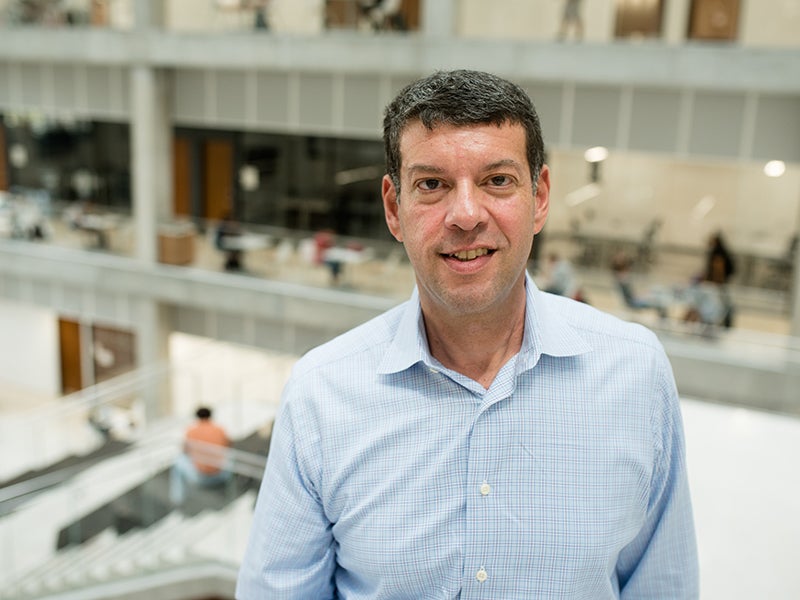
Carlos Caldas
· Professor & Associate Chair for Academic Affairs Civil, Architectural and Environmental EngineeringVerifiedUniversity of Texas at Austin · Civil, Architectural and Environmental Engineering
Active 1970–2026
About
Carlos H. Caldas, PhD, PE, is a Gerard A. Rohlich Regents Professor in Civil Engineering and a Professor of Construction Engineering and Project Management at the Department of Civil, Architectural & Environmental Engineering at The University of Texas at Austin. His research focuses on construction engineering, project management, and related fields, with a particular emphasis on risk management practices, project performance assessment, automation, and productivity analysis in construction projects. Dr. Caldas has supervised numerous PhD, M.S., and postdoctoral students, contributing significantly to the academic and practical understanding of construction processes and project delivery. His work encompasses the development of methodologies for automating construction operations, evaluating project performance, and implementing innovative technologies such as blockchain and digital supply chains in the construction industry.
Research topics
- Biology
- Genetics
- Computational biology
- Evolutionary biology
- Oncology
- Statistics
- Computer Science
- Artificial Intelligence
- Data Mining
- Internal medicine
- Medicine
- Mathematics
- Virology
- Database
- Cancer research
- Chemistry
Selected publications
Compartment-specific tumor-infiltrating immune cells and prognosis in breast cancer.
Apollo (University of Cambridge) · 2026-02-20
articleOpen accessZenodo (CERN European Organization for Nuclear Research) · 2026-01-01
datasetOpen accessSenior authorThe supplemental materials provide the full set of data and structured inputs used to implement the proposed collaborative risk assessment methodology. These materials are intended to support transparency and reproducibility for researchers seeking to understand or replicate the analysis. Specifically, the dataset includes: (1) original risk assessment inputs for two project segments, including cost impact ranges and likelihoods; (2) detailed prompt structures used to generate stakeholder-specific risk assessments; and (3) the resulting risk assessment inputs generated from prompt engineering for multiple stakeholders, including assigned weights, three-point cost estimates, and likelihood values across all risk events.
Zenodo (CERN European Organization for Nuclear Research) · 2026-01-01
datasetOpen accessSenior authorThe supplemental materials provide the full set of data and structured inputs used to implement the proposed collaborative risk assessment methodology. These materials are intended to support transparency and reproducibility for researchers seeking to understand or replicate the analysis. Specifically, the dataset includes: (1) original risk assessment inputs for two project segments, including cost impact ranges and likelihoods; (2) detailed prompt structures used to generate stakeholder-specific risk assessments; and (3) the resulting risk assessment inputs generated from prompt engineering for multiple stakeholders, including assigned weights, three-point cost estimates, and likelihood values across all risk events.
Clinical Cancer Research · 2025-07-10
articleAbstract Spatial transcriptomics (ST) is transforming our understanding of tumor heterogeneity by enabling high-resolution, location-specific mapping of gene expression across tumors and their microenvironment. However, the translational potential of spatial transcriptomics is still limited by its high cost, hindering the assembly of large patient cohorts needed for robust biomarker discovery. Here we present Path2Space, a deep learning approach that predicts spatial gene expression directly from histopathology slides. Trained on substantial breast cancer ST data, it robustly predicts the spatial expression of over 4,300 genes in independent validations, markedly outperforming existing ST predictors. Path2Space additionally accurately infers cell-type abundances in the tumor microenvironment (TME) based on the inferred ST data. Applied to more than a thousand breast tumor histopathology slides from the TCGA, Path2Space characterizes their TME on an unprecedented scale and identifies three new spatially-grounded breast cancer subgroups with distinct survival rates. Path2Space-inferred TME landscapes enable more accurate predictions of patients’ response to chemotherapy and trastuzumab directly from H&E slides than those obtained by existing established sequencing-based biomarkers. Path2Space thus offers a transformative, fast and cost-effective approach to robustly delineate the TME directly from their histopathology slides, facilitating the development of spatially-grounded biomarkers to advance precision oncology. Citation Format: Emma M. Campagnolo, Eldad D. Shulman, Roshan Lodha, Amos Stemmer, Peng Jiang, Carlos Caldas, Simon Knott, Danh-Tai Hoang, Kenneth Aldape, Eytan Ruppin. Path2Space: An AI approach for cancer biomarker discovery via histopathology inferred spatial transcriptomics [abstract]. In: Proceedings of the AACR Special Conference in Cancer Research: Artificial Intelligence and Machine Learning; 2025 Jul 10-12; Montreal, QC, Canada. Philadelphia (PA): AACR; Clin Cancer Res 2025;31(13_Suppl):Abstract nr B047.
2025-06-03
preprintOpen access<p>Supplementary Figure 3: Kaplan-Meier plots of overall survival (OS) according to CTC status at baseline for HER2-positive/hormone receptor-positive tumors(A, B) and HER2-positive/hormone receptor-negative tumors(C, D). Survival time is given as time since baseline CTC assessment in months. (A, C) cutoff for CTC positivity ≥1 CTC; (B, D) cutoff for CTC positivity ≥5 CTCs. The P-values refer to pairwise comparisons with the log rank test.</p>
Fitness and transcriptional plasticity of human breast cancer single-cell-derived clones
Cell Reports · 2025-05-01 · 4 citations
articleOpen accessSenior authorClonal fitness and plasticity drive cancer heterogeneity. We used expressed lentiviral-based cellular barcodes combined with single-cell RNA sequencing to associate single-cell profiles with in vivo clonal growth. This generated a significant resource of growth measurements from over 20,000 single-cell-derived clones in 110 xenografts from 26 patient-derived breast cancer xenograft models. 167,375 single-cell RNA profiles were obtained from 5 models and revealed that rare propagating clones display a highly conserved model-specific differentiation program with reproducible regeneration of the entire transcriptomic landscape of the original xenograft. In 2 models of basal breast cancer, propagating clones demonstrated remarkable transcriptional plasticity at single-cell resolution. Dichotomous cell populations with different clonal growth properties, signaling pathways, and metabolic programs were characterized. By directly linking clonal growth with single-cell transcriptomes, these findings provide a profound understanding of clonal fitness and plasticity with implications for cancer biology and therapy.
2025-06-03
preprintOpen access<p>Supplementary Figure 1. Diagram showing patient disposition.</p>
2025-06-03
supplementary-materialsOpen access<p>Supplementary Table 4: Comparisons of the probabilities of being CTC positive betweenHER2- positive/hormone receptor-positive and HER2-positive/hormone receptor-negative tumors according to time point of CTC assessment (baseline, first follow-up) and cutoff for CTC positivity (≥1 CTC, ≥5 CTCs). Probabilities of being CTC positive are given in terms of percentages and odds ratios with 95% confidence intervals (CI) obtained using binary logistic regression models with the response variable CTC positive (yes vs no).</p>
2025-06-03
preprintOpen access<p>Supplementary Figure 4. Kaplan-Meier plot of overall survival according to change in CTC status from baseline to first follow-up (cutoff for CTC positivity ≥1 CTC). (A) HER2-positive/hormone receptor-positive tumors; (B) HER2-positive/hormone receptor-negative tumors. Survival time is given as time since baseline CTC assessment in months. The P-values refers to the global log rank test with 3 degrees of freedom.</p>
Cancer Letters · 2025-10-30
articleOpen access
Recent grants
Frequent coauthors
- 1064 shared
Suet‐Feung Chin
Cancer Research UK Cambridge Center
- 742 shared
Elena Provenzano
Cambridge University Hospitals NHS Foundation Trust
- 666 shared
Oscar M. Rueda
- 441 shared
Helena Earl
Cancer Research UK Cambridge Center
- 413 shared
Samuel Aparício
University of British Columbia
- 395 shared
Jean Abraham
Cancer Research UK Cambridge Center
- 388 shared
Alejandra Bruna
- 384 shared
Paul D.P. Pharoah
Cedars-Sinai Medical Center
Labs
Education
- 1994
Fellowship
Johns Hopkins Medicine
- 1984
MD with Honours
University of Lisbon
Awards & honors
- National Academy of Construction member (2022)
- Researcher of the Year Award – Construction Industry Institu…
- Outstanding Instructor Award – Construction Industry Institu…
- Best Paper Award – ASCE Journal of Computing in Civil Engine…
- Distinguished Professor Award – Construction Industry Instit…
- Resume-aware match score
- Save to shortlist
- AI-drafted outreach
See your match with Carlos Caldas
PhdFit ranks faculty by your research interests, methods, and publications — grounded in their actual work, not templates.
- Free to start
- No credit card
- 30-second signup