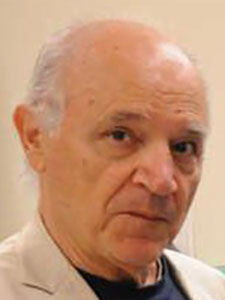
Carmine Vittoria · Northeastern University · PhdFit
Resume-aware faculty matching
Find professors who actually fit you
Upload your resume. PhdFit's six research agents compare your background with faculty profiles, recent publications, lab focus, and outreach opportunities, then rank professors with evidence you can review.
Resume-aware matchingEvidence from recent researchOutreach drafts included
Advisor Match Brief Resume uploaded
Resume signals5 found
NLPHCIFairnessGraph MLPyTorch
Six-agent analysisRunning
Axel · Candidate AnalystResume parsed
Nova · Professor ResearcherRecent papers
Echo · Match ExplainerEvidence linked
Atlas · Strategy AdvisorFit ranked
Lyra · Outreach WriterDraft queued
Juno · Meeting Prep CompilerNext step ready
SC
Dr. Sarah Chen
Stanford · NLP & interpretability
91
fit
Fairness + NLP projects overlap with her recent work.
Strong methods fit: model evaluation and interpretability.
Clear outreach angle for current trustworthy AI research.
Outreach angle
Ask how her lab is extending interpretability methods into fairness audits for real-world AI systems.
Carmine Vittoria
Northeastern University · Electrical and Energy Engineering
Future microwave, wireless communication systems, computer chip designs, and sensor systems will require miniature fabrication processes in the order of nanometers or less as well as the fusion of various material technologies to produce composites consisting of many different materials. This requires distinctly multidisciplinary collaborations, implying that specialized approaches will not be able to address future world markets in communication, computer, and electronic miniaturized products. Anticipating that many students lack specialized simultaneous training in magnetism and magnetics, as well as in other material technologies, Magnetics, Dielectrics, and Wave Propagation with MATLABR Codes avoids application-specific descriptions, opting for a general point of view of materials per se. Specifically, this book develops a general theory to show how a magnetic system of spins is coupled to acoustic motions, magnetoelectric systems, and superconductors. Phenomenological approaches are connected to atomic-scale formulations that reduce complex calculations to essential forms and address basic interactions at any scale of dimensionalities. With simple and clear coverage of everything from first principles to calculation tools, the book revisits fundamentals that govern magnetic, acoustic, superconducting, and magnetoelectric motions at the atomic and macroscopic scales, including superlattices. Constitutive equations in Maxwell’s equations are introduced via general free energy expressions which include magnetic parameters as well as acoustic, magnetoelectric, semiconductor, and superconducting parameters derived from first principles. More importantly, this book facilitates the derivation of these parameters, as the dimensionality of materials is reduced toward the microscopic scale, thus introducing new concepts. The deposition of ferrite films at the atomic scale complements the approach toward the understanding of the physics of miniaturized composites. Thus, a systematic formalism of deriving the permeability or the magnetoelectric coupling tensors from first principles, rather than from an ad hoc approach, bridges the gap between microscopic and macroscopic principles as applied to wave propagation and other applications.
Recently, nonmetallic ferromagnetic nanowires (NWs) have been implemented in porous templates. Such composite substrates are used to design various microwave, magnetic, and electronic devices. To synthesize ferrite NWs, the precursor solution consists of either magnetic nanoparticles (NPs) dispersed in a polymer as a surfactant or metal nitrates, which are used in a sol-gel method. The magnetic properties of ferrite NPs change significantly due to their large surface-to-volume ratio. For these NPs, the saturation magnetization is reduced due to the superparamagnetism phenomenon. In this letter, we investigated the increase of the saturation magnetization and the volume loading of synthesized yttrium iron garnet (YIG) NWs in a porous silicon membrane. To enhance the filling factor of the YIG NWs, multiple techniques are utilized, such as a permanent magnet, bath sonication, and vacuum suction. Our experiments show that in the sol-gel method using vacuum suction, the NWs loading factor can be greater than a 50%, as the purity of the YIG NWs increases to 98.2% by decreasing the precursor molarity (from 2 to 1 M), reducing the oxygen flow in the electric furnace (from 10-20 standard liters per minute to 5-10 SLPM) and increasing the magnetic stirring time (up to 24 h). The magnetic properties of the YIG NWs are investigated using a vibrating sample magnetometer.