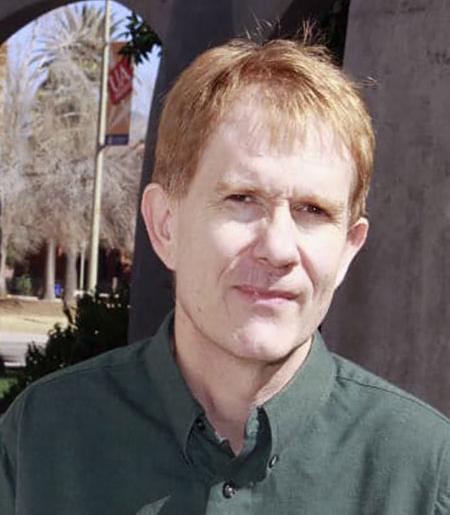
Shaun Nichols
· Distinguished Professor of Arts & Sciences in Philosophy Department Chair Philosophy, PsychologyVerifiedCornell University · Philosophy
Active 1990–2026
About
Shaun Nichols is a Distinguished Professor of Arts & Sciences in Philosophy at Cornell University, working in the philosophy of cognitive science. His research concerns the psychological foundations of philosophical thought, with a recent focus on drawing on learning theory to understand how people acquire philosophically significant concepts and distinctions, especially in the domain of morality. His work aims to explore the cognitive processes underlying moral and philosophical understanding, contributing to the broader fields of moral psychology and cognitive science.
Research topics
- Philosophy
- Psychology
- Epistemology
- Computer Science
- Social psychology
- Biology
Selected publications
On the Ontology of Composites in Abhidharma Buddhism
Philosophy and Phenomenological Research · 2026-04-06 · 1 citations
articleOpen accessSenior authorABSTRACT Abhidharma Buddhism maintains that the only ultimately real ( paramārtha ) entities in the universe are dharmas , which are simples. What then is the ontological status of composites on this theory? One possibility is that Abhidharma Buddhists deny the reality of composites. We argue, however, that Abhidharma Buddhists affirm the reality of some composites, based on the causal efficacy of the composites. This depends on distinguishing between two notions of reality—ultimate reality ( paramārtha ) and substantial reality ( dravyasat ). If an entity is causally efficacious, it counts as substantially real. Abhidharma Buddhists affirm the substantial reality of material composites (like the eye); in this case, the causal powers of the composite are of the same type of the causal powers of the constituent dharmas. Abhidharma Buddhists also affirm the substantial reality of mental composites (like sensory episodes), which are composed of diverse kinds of dharmas. We argue that in the latter case Abhidharma Buddhists are committed to some form of emergentism.
Questioning the Grounds for <i>Buddhist Physicalism</i>
Analysis · 2026-04-22
articleSenior authorCause and fault in development
2025-05-13
preprintOpen accessResponsibility requires causation. But there are different kinds of causes. Some are connected to their effects; others are disconnected. We ask how children’s developing ability to distinguish causes relates to their understanding of moral responsibility. We found in Experiment 1 that when Andy hits Suzy with his bike, she falls into a fence and it breaks, 3-year-old children treated “caused”, “break” and “fault” as referring to the direct cause, Suzy. By 4, they differentiated causes: Andy “caused” the fence to break, it’s his “fault”, but Suzy “broke” it. We found in Experiment 2 that when the chain involved disconnection, 3-year-olds focused only on the direct cause. Around 5 they distinguished causes, saying that the disconnecting cause “caused” an object to break, it’s their “fault”, but the direct cause “broke” it. Our findings relate to the outcome- to-intention shift in moral responsibility and suggest a more fundamental shift in children’s understanding of causation.
Is the cosmological argument intuitive?
Religious Studies · 2025-02-10 · 1 citations
articleOpen access1st authorCorrespondingAbstract The cosmological argument for the existence of God seems to have significant intuitive resonance. According to a familiar version of the cosmological argument, there must be some explanation for why the universe exists, and God provides the explanation. This argument seems to depend on the Principle of Sufficient Reason (PSR), according to which, if something exists, there must be an explanation for why it exists. As we detail, recent evidence indicates that people presuppose something like the PSR in their explanatory outlook. However, the other key part of the cosmological argument is that God is supposed to be self-explanatory – God’s existence is necessary. We examine this empirically and find that people do not generally think that the existence of God is necessary in the sense relevant for the cosmological argument.
How children map causal verbs to different causes across development
2025-11-09 · 1 citations
preprintOpen accessAlthough collision-like causes are fundamental in philosophical and psychological theories of causation, humans conceptualize many events as causes that lack direct contact. We argue that how people think and talk about different causes is deeply connected and investigate how children learn this mapping. If Andy hits Suzy with his bike, Suzy falls into a fence and it breaks, Andy caused the fence to break but Suzy broke it. If Suzy forgets sunscreen and gets sunburned, the absence of sunscreen caused Suzy’s sunburn, but the sun burned her skin. We tested 691 children and 150 adults. Four-year-old children mapped “caused” to distal causes and “broke” to proximal causes (Experiment 1). Though four-year-old children didn’t map “caused” to absences until later (Experiment 2), they already referred to absences when asked “why” an outcome occurred (Experiment 3). Our findings highlight the role of semantics and pragmatics in developing these mappings.
But Why?: Children’s belief in the necessity of explanations
Journal of Experimental Child Psychology · 2025-06-02 · 2 citations
articleSenior authorPLoS ONE · 2025-09-05 · 2 citations
articleOpen accessCorrespondingThe Developing Belief Network is a global research collaborative studying religious development in diverse social-cultural settings, with a focus on the intersection of cognitive mechanisms and cultural beliefs and practices in early and middle childhood. The current manuscript describes the study protocol for the network's second wave of data collection, which aims to further explore the development and diversity of religious cognition and behavior using a multi-time point approach. This protocol is designed to investigate three key research questions-how children represent and reason about religious and supernatural agents, how children represent and reason about religion as an aspect of social identity, and how religious and supernatural beliefs are transmitted within and between generations-via a set of eight tasks for children between the ages of 5 and 13 years and a survey completed by their parents/caregivers. This study is being conducted in 41 distinct cultural-religious settings, spanning 16 countries and 12 written languages. In this manuscript, we provide detailed descriptions of all elements of this study protocol, and give a brief overview of the ways in which this protocol has been adapted for use in diverse religious communities. As one example of how this protocol has been implemented outside of the United States, we present Arabic- and English-language study materials for children being raised in one of the following religious traditions in Lebanon: the Druze faith, Maronite Christianity, Orthodox Christianity, Shia Islam, or Sunni Islam. We end with reflections on the challenges of developing and implementing large-scale, multi-site, multi-time point studies of child development; our approach to navigating these challenges; and our suggestions for how future researchers might learn from our experiences and build on the work presented here.
Mind & Language · 2025-10-28
articleSenior authorFolk explanatory judgements seem to conform to the principle of sufficient reason (PSR), according to which if x is a fact, x must have an explanation. That is, children and adults judge that facts across a wide variety of descriptive domains must have an explanation. We test whether PSR‐conforming judgements extend to the realm of value. Across four studies, we find that adults are less willing to judge that claims about moral and aesthetic value must have an explanation, compared to descriptive claims. Moreover, explanatory judgements about moral and aesthetic claims diverge from judgements about claims concerning affective responses.
2025-10-23
articleOpen accessSenior authorLockean essentialism holds that people explain the characteristic features of natural kinds by appeal to hidden common causes—like DNA—that generate those features. Teleological essentialism, by contrast, proposes that people treat an entity’s purpose as part of its essence and explain its features in terms of what it is for. Across three preregistered experiments, we tested these competing accounts by examining how adults explain why members of different categories have their characteristic features. In Experiment 1, participants explained features of artifacts and biological kinds; in both cases, they overwhelmingly appealed to purposes rather than underlying causes. Experiment 2 showed that people can and do appeal to causal mechanisms such as DNA when explaining within-species differences, yet they revert to purpose-based explanations when explaining between-species differences, which prompts species-level categorization. Experiment 3, using randomly selected biological and non-living natural kinds, found that participants again favored purposes for biological kinds but invoked causes for certain non-living kinds (e.g., lead, oxygen, platinum). Together, these findings suggest that for biological kinds, which are central to theories of psychological essentialism, the explanatory connection between essence and features is primarily understood in teleological, not causal, terms.
Reasoning Beyond Explicit Rules: Adults’ and Children's Use of Closure Principles in Novel Cases
SSRN Electronic Journal · 2025-01-01
preprintOpen access
Frequent coauthors
- 338 shared
Graeme M. Bydder
Mātai Medical Research Institute
- 169 shared
Paul J. Cannon
- 169 shared
Ken P. Whittall
University of British Columbia
- 169 shared
Kurt H. Bockhorst
- 169 shared
M. D. Smith
- 169 shared
Ashok Rakhit
- 169 shared
A Als
Korea Institute for Advanced Study
- 169 shared
G. McGibney
Traclabs (United States)
Awards & honors
- Neil Lubow Prize
- Resume-aware match score
- Save to shortlist
- AI-drafted outreach
See your match with Shaun Nichols
PhdFit ranks faculty by your research interests, methods, and publications — grounded in their actual work, not templates.
- Free to start
- No credit card
- 30-second signup