Resume-aware faculty matching

Find professors who actually fit you

Upload your resume. Four AI agents analyze your background, rank the faculty who fit, inspect their recent research, and help you draft outreach — grounded in their actual work, not templates.

Free to startNo credit cardCancel anytime
Top matches Balanced preset
Dr. Sarah Chen
Stanford · Interpretability · NLP
91
Dr. Marcus Holloway
MIT · Robotics · RL
84
Dr. Aisha Okonkwo
CMU · Fairness · HCI
82
Nova · Professor Researcher · re-ranking top 20…
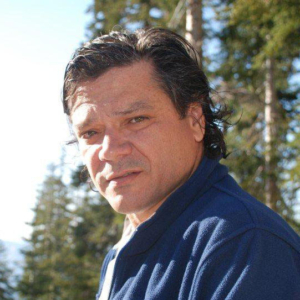
César J. Ayala

César J. Ayala

· Professor

University of California, Los Angeles · Sociology

Active 1989–2026

h-index11
Citations748
Papers8420 last 5y
Funding
See your match with César J. Ayala — sign in to PhdFit.Sign in

About

I am a comparative historical sociologist with an interest in colonialism and a regional focus on the Caribbean. My research explores the social and economic dynamics of colonial and post-colonial societies, particularly in the context of the Caribbean and Latin America.

Research topics

  • Sociology
  • Political Science
  • Humanities
  • Social Science
  • History
  • Media studies
  • Botany
  • Geography
  • Biology
  • Development economics
  • Archaeology
  • Economics
  • Economy
  • Food science
  • Demography
  • Law
  • Gender studies
  • Art
  • Economic history

Selected publications

  • Renormalon-based resummation for spacelike and timelike QCD quantities whose perturbation expansion has general form

    Journal of Physics G Nuclear and Particle Physics · 2026-01-19

    articleOpen access1st authorCorresponding

    Abstract We present a generalisation of our previous approach of a renormalon-motivated resummation of the QCD observables. Previously it was applied to the spacelike observables whose perturbation expansion was <mml:math xmlns:mml="http://www.w3.org/1998/Math/MathML" overflow="scroll"> <mml:mi class="MJX-tex-calligraphic" mathvariant="script">D</mml:mi> <mml:mo stretchy="false">(</mml:mo> <mml:msup> <mml:mrow> <mml:mi>Q</mml:mi> </mml:mrow> <mml:mrow> <mml:mn>2</mml:mn> </mml:mrow> </mml:msup> <mml:mo stretchy="false">)</mml:mo> <mml:mo>=</mml:mo> <mml:mi>a</mml:mi> <mml:mo stretchy="false">(</mml:mo> <mml:msup> <mml:mrow> <mml:mi>Q</mml:mi> </mml:mrow> <mml:mrow> <mml:mn>2</mml:mn> </mml:mrow> </mml:msup> <mml:mo stretchy="false">)</mml:mo> <mml:mo>+</mml:mo> <mml:mi class="MJX-tex-calligraphic" mathvariant="script">O</mml:mi> <mml:mo stretchy="false">(</mml:mo> <mml:msup> <mml:mrow> <mml:mi>a</mml:mi> </mml:mrow> <mml:mrow> <mml:mn>2</mml:mn> </mml:mrow> </mml:msup> <mml:mo stretchy="false">)</mml:mo> </mml:math> , where a ( Q 2 ) ≡ α s ( Q 2 )/ π is the running QCD coupling. Now we generalise the resummation to spacelike quantities <mml:math xmlns:mml="http://www.w3.org/1998/Math/MathML" overflow="scroll"> <mml:mi class="MJX-tex-calligraphic" mathvariant="script">D</mml:mi> <mml:mo stretchy="false">(</mml:mo> <mml:msup> <mml:mrow> <mml:mi>Q</mml:mi> </mml:mrow> <mml:mrow> <mml:mn>2</mml:mn> </mml:mrow> </mml:msup> <mml:mo stretchy="false">)</mml:mo> <mml:mo>=</mml:mo> <mml:mi>a</mml:mi> <mml:msup> <mml:mrow> <mml:mo stretchy="false">(</mml:mo> <mml:msup> <mml:mrow> <mml:mi>Q</mml:mi> </mml:mrow> <mml:mrow> <mml:mn>2</mml:mn> </mml:mrow> </mml:msup> <mml:mo stretchy="false">)</mml:mo> </mml:mrow> <mml:mrow> <mml:msub> <mml:mrow> <mml:mi>ν</mml:mi> </mml:mrow> <mml:mrow> <mml:mn>0</mml:mn> </mml:mrow> </mml:msub> </mml:mrow> </mml:msup> <mml:mo>+</mml:mo> <mml:mi class="MJX-tex-calligraphic" mathvariant="script">O</mml:mi> <mml:mo stretchy="false">(</mml:mo> <mml:msup> <mml:mrow> <mml:mi>a</mml:mi> </mml:mrow> <mml:mrow> <mml:msub> <mml:mrow> <mml:mi>ν</mml:mi> </mml:mrow> <mml:mrow> <mml:mn>0</mml:mn> </mml:mrow> </mml:msub> <mml:mo>+</mml:mo> <mml:mn>1</mml:mn> </mml:mrow> </mml:msup> <mml:mo stretchy="false">)</mml:mo> </mml:math> and timelike quantities <mml:math xmlns:mml="http://www.w3.org/1998/Math/MathML" overflow="scroll"> <mml:mi class="MJX-tex-calligraphic" mathvariant="script">F</mml:mi> <mml:mo stretchy="false">(</mml:mo> <mml:mi>σ</mml:mi> <mml:mo stretchy="false">)</mml:mo> <mml:mo>=</mml:mo> <mml:mi>a</mml:mi> <mml:msup> <mml:mrow> <mml:mo stretchy="false">(</mml:mo> <mml:mi>σ</mml:mi> <mml:mo stretchy="false">)</mml:mo> </mml:mrow> <mml:mrow> <mml:msub> <mml:mrow> <mml:mi>ν</mml:mi> </mml:mrow> <mml:mrow> <mml:mn>0</mml:mn> </mml:mrow> </mml:msub> </mml:mrow> </mml:msup> <mml:mo>+</mml:mo> <mml:mi class="MJX-tex-calligraphic" mathvariant="script">O</mml:mi> <mml:mo stretchy="false">(</mml:mo> <mml:msup> <mml:mrow> <mml:mi>a</mml:mi> </mml:mrow> <mml:mrow> <mml:msub> <mml:mrow> <mml:mi>ν</mml:mi> </mml:mrow> <mml:mrow> <mml:mn>0</mml:mn> </mml:mrow> </mml:msub> <mml:mo>+</mml:mo> <mml:mn>1</mml:mn> </mml:mrow> </mml:msup> <mml:mo stretchy="false">)</mml:mo> </mml:math> , where ν 0 is in general a noninteger number (0 &lt; ν 0 ≤ 1). We evaluate with this approach a timelike quantity, namely the scheme-invariant factor of the Wilson coefficient of the chromomagnetic operator in the heavy-quark effective Lagrangian, and related quantities.

  • Sobre David Adán Vázquez Valenzuela, De betabeles y revoluciones: El Partido Liberal Mexicano y la producción de remolacha azucarera en el sur de California y el sureste de Colorado, 1890-1929

    Historia Mexicana · 2024-06-12

    articleOpen access1st authorCorresponding

    -

  • Making Never-Never Land: Race and Law in the Creation of Puerto Rico

    Hispanic American Historical Review · 2024-09-25 · 3 citations

    article1st authorCorresponding

    Mónica A. Jiménez's Making Never-Never Land is a one-sided, unbalanced diatribe against US rule in Puerto Rico that reduces the historical experience of colonialism to the racial-legal dimension, at the expense of other dimensions of colonialism—for example, the effect of free trade or the protectionist tendencies of US farmers. Such one-sidedness makes this short book appear as more a legal brief than a historical study. The argument is as follows: In the case Downes v. Bidwell (1901), the US Supreme Court created the concept of “unincorporated territory” to distinguish Puerto Rico from conventional continental territories created during the nineteenth century on the basis of settler colonialism. The Downes decision granted the US Congress extraordinary plenary powers over Puerto Rico, where the United States could henceforth rule without the colonized being protected fully by the US Constitution. The colonized enjoy to this day only such protections as Congress sees fit to extend to the island. The concept of “unincorporated territory” allows the US government to treat Puerto Rico as internal for some purposes and as external for others, as canonized in the famous phrase “foreign in a domestic sense.”The study does not offer any new evidence or any novel interpretations of the doctrine of nonincorporation, a subject that has been widely debated by legal scholars and historians. Rather, it elevates the Downes decision to a supreme place among all the determinations that have influenced US colonialism in the island. It also fails to distinguish federal statecraft toward individuals from federal statecraft toward territories. This is a central flaw of the study.In 1917, Congress collectively naturalized all Puerto Ricans as US citizens. In 1922, in Balzac v. Porto Rico, the Supreme Court grappled with the fact that Puerto Ricans were at that point US citizens. Whereas Downes had conjoined notions about the supposed racial inferiority of the island's population with its territorial status, branding Puerto Rico an “unincorporated territory” because it was populated by “alien races” that could not be governed by “Anglo-Saxon principles” of government, Balzac dissociated federal statecraft toward individuals (US citizenship) from territorial status, arguing that Puerto Ricans could enjoy the full rights enjoyed by other US citizens if they lived in one of the states. Thus US citizens resident in Puerto Rico, whether born on the mainland or in Puerto Rico, would enjoy only those rights explicitly extended by the US Congress, while Puerto Rican residents of any state could enjoy full rights as US citizens. The distinction between territorial rights and the individual rights of citizens is not something that Jiménez entertains, but it is central to understanding US colonialism in Puerto Rico.This shortcoming leads the author to minimize the importance of US citizenship. For example, she argues that the granting of US citizenship did not extend “any new protections” to “Puerto Ricans who traveled to the United States as laborers or students” (p. 30). This is patently false. In Hawaii in 1917, Puerto Ricans challenged local impediments to voting rights, won their case in the supreme court of that territory, and began to vote in local elections, in contrast to Filipinos, who remained US nationals excluded from voting rights. Legally, Puerto Ricans were henceforth entitled to vote in US federal elections in any of the states, and Puerto Ricans in the US armed forces could henceforth become officers. Citizenship did make a difference, depending on location.A second mischaracterization of the US citizenship of Puerto Ricans is that it is a form of “second-class citizenship” (p. 29). But the relevant legislation is not the collective naturalization act of 1917 (the Jones-Shafroth Act) under which Puerto Ricans could lose their US citizenship if they lived abroad for a period of time, but the Nationality Act of 1940 and subsequent modifications, which granted jus soli citizenship based on the Fourteenth Amendment to Puerto Ricans and stated that birth in Puerto Rico is tantamount to birth in the United States.In short, this denunciation of the racist history of US colonialism in Puerto Rico is plagued by inaccuracies, lack of attention to territorial/individual distinctions, and exclusion of nonracial dimensions of colonialism. It is so one-sided that it mischaracterizes elements of the colonial experience, such as US citizenship, which enabled migration, facilitated political incorporation, and established voting rights in the states. Today, this means six million enfranchised Puerto Ricans in the states compared to three million disenfranchised in the island. Jiménez's book is a story of exclusion that occludes the partially inclusionary elements of US colonial rule over Puerto Rico. Newcomers to the topic of Puerto Rico may be shocked. Scholars familiar with the case of Puerto Rico will find little that is new in it.

  • The Paradox of Black Incomes in Puerto Rico in the Early Decades of U.S. Colonialism

    Comparative Studies in Society and History · 2024-10-01 · 2 citations

    articleOpen access1st authorCorresponding

    Abstract This paper examines racial income inequality in early twentieth-century Puerto Rico. It finds, surprisingly, that Black men had an income advantage relative to White and Mulatto men in 1910–1920. The effect of race on income in Puerto Rico was smaller than that of other covariates such as urban status, sex, and literacy. A comparison with the state of Louisiana and with the United States as a whole in the same Census years shows that Puerto Rico was exceptional by U.S. standards, displaying much lower levels of racial inequality. Most of the income advantage Black men had can be attributed to the fact that they were more urban than Mulatto or White men, but part of this surprising advantage can be attributed to the existence in the countryside of a layer of skilled Black workers. Overall, Black men had equal or slightly higher occupational scores than Whites. The coexistence of slavery with other forms of coerced labor affecting individuals of all races in the nineteenth century, as well as the emergence of a stratum of Black skilled workers which survived into the twentieth century and thrived economically when the sugar industry experienced an explosive boom after 1898, is at the root of Black income equalization in the Puerto Rican countryside and in the island as a whole during the early twentieth century.

  • The Lettered Barriada: Workers, Archival Power, and the Politics of Knowledge in Puerto Rico

    Hispanic American Historical Review · 2023 · 1 citations

    1st authorCorresponding
    • Sociology
    • Political Science
    • Humanities

    The Lettered Barriada examines the emergence of an autonomous working-class cultural sphere in Puerto Rico in the first four decades after the 1898 US occupation. Over 70 percent of Puerto Ricans were illiterate in 1898. A layer of skilled and better-off workers created an autonomous cultural circuit that included the publication of newspapers, pamphlets, and books, the performance of plays and concerts, study groups, and reading schools for workers. The institution of lectores (readers) in cigarmakers' shops produced many prominent working-class intellectuals, among them anarcho-feminist Luisa Capetillo (1879–1922), herself a reader in the cigar factories, and Bernardo Vega (1885–1965), the foremost chronicler of the emergence of a Puerto Rican community in New York in the early twentieth century. The principal organizations of this working-class culture were the Federación Libre de Trabajadores (FLT, the local affiliate of the American Federation of Labor) and the Partido Socialista (PS), which emerged out of the FLT in 1915. A complex array of cultural institutions—including the newspaper of the FLT and, after 1915, the PS, Unión Obrera, published continuously from 1902 to 1935—constitutes what Meléndez-Badillo calls the “lettered barriada” (a barriada being a working-class neighborhood).The book is at once an examination of the writings of these enlightened workers and a critique of their archival practices. For in the process of producing publications and in the other dimensions of this autonomous working-class cultural sphere, worker-authors left behind an “archive” for future generations that highlighted their worldviews. One inhabitant of this barriada highlighted by Meléndez-Badillo was an illiterate Black woman from the town of Comerío, Juana Colón (1886–1967). The role of an illiterate activist within the lettered barriada highlights the fact that for Meléndez-Badillo the autonomous working-class cultural sphere is something more than a collection of texts.In Puerto Rican historiography, previous scholars had examined the FLT and the PS critically. Nationalist and Marxist historians had pointed to the limitations of these organizations' analyses of the colonial state as a specific locus of power. Feminist scholars had examined the marginalized role of women within this autonomous working-class cultural sphere, a sphere that criticized women's exploitation in the tobacco factories but sometimes in reference to a supposedly more dignified role as wives in households; yet these scholars also recognized that the FLT embraced the demand for women's suffrage in 1908, long before the dominant Union and Republican Parties. In the 1970s, a new historiographical current that emphasized social and working-class history, under the rubric of nueva historia, recovered from oblivion the early twentieth-century history and cultural achievements of Puerto Rican working-class organizations. Ángel Quintero Rivera, Gervasio García, and Georg Fromm must be mentioned as the founders of this new historiographical current.Meléndez-Badillo's innovation is to examine the historiographical legacy of the workers themselves and to point out, implicitly rather than explicitly, that the nueva historia left unexamined the archive-making functions of the writers it examined. Thus the book's implicit argument is that the nueva historia remembered what the working-class writers who built the lettered barriada in 1900–1940 had left behind to be remembered, an archive that, according to Meléndez-Badillo, left many workers without a voice. Black people, women, and the illiterate were left out of the memory built in the alleys of the lettered barriada.It remains for others to reconstruct the history of these layers of the working class. Existing critiques of the FLT and PS labor tradition from feminist studies, race studies, and nationalist and Marxist studies have deployed different but sometimes overlapping archives. Although Meléndez-Badillo's beautiful monograph raises questions about how to go about reconstructing critically the island's labor history, there are no clues about what alternative archives must be examined to do so. The critique of how archives are formed is more developed than the critique of how historians use archives, which perhaps grants excessive power to the archive creators relative to the historians.Meléndez-Badillo examines the intersectionality of social life—of Black people, women, the illiterate, and other marginalized groups, and by implication of queer groups also—from within the universal category of labor, which remains the undisputed central dimension of social life for the author. Hence this is a critique of labor history written from within the field of labor history and represents a moment of renewal in Puerto Rican historiography. The critique of the literary canon left behind by these working-class intellectuals is a first step to constructing a new narrative of Puerto Rican labor history. The book undertakes that task partially. Its central objective is actually to point to the lacunae or “silences” in the archive. However, it represents an important landmark in the historiography of Puerto Rico, a refreshing critique of labor history in which the world of labor is central in that it not only intersects with but also subsumes other sections of social life. For this reason we should expect The Lettered Barriada to become an important point of reference for future historical works and to gain increasing traction with time.

  • Extraction of $α_s$ using Borel-Laplace sum rules for tau decay data

    arXiv (Cornell University) · 2022-02-26

    preprintOpen access1st authorCorresponding

    Double-pinched Borel-Laplace sum rules are applied to ALEPH $τ$-decay data. For the leading-twist ($D=0$) Adler function a renormalon-motivated extension is used, and the 5-loop coefficient is taken to be $d_4=275 \pm 63$. Two $D=6$ terms appear in the truncated OPE ($D \leq 6$) to enable cancellation of the corresponding renormalon ambiguities. Two variants of the fixed order perturbation theory, and the inverse Borel transform, are applied to the evaluation of the $D=0$ contribution. Truncation index $N_t$ is fixed by the requirement of local insensitivity of the momenta $a^{(2,0)}$ and $a^{(2,1)}$ under variation of $N_t$. The averaged value of the coupling obtained is $α_s(m_τ^2)=0.3235^{+0.0138}_{-0.0126}$ [$α_s(M_Z^2)=0.1191 \pm 0.0016$]. The theoretical uncertainties are significantly larger than the experimental ones.

  • The Myth of the Disappeared Legion of Proprietors

    Cambridge University Press eBooks · 2020-01-14

    book-chapter1st authorCorresponding

    During the crisis of the Great Depression of the 1930s, Pedro Albizu Campos, the president of Puerto Rico's Nationalist Party, repeatedly stated that the island had to "reconstitute the legion of proprietors that existed before 1898." Puerto Rico's export sector was heavily dependent on sugar, and the sugar-producing zones of the island were characterized by great social inequalities. The concentration of landownership was acute and was paralleled by large-scale rural landlessness and the proletarianization of workers. What stands out in Albizu's denunciations of US colonialism is not the very real social and economic inequalities of the 1930s, but the assertion that these began in 1898, the year the United States invaded Puerto Rico.

  • American Sugar Kingdom

    Duke University Press eBooks · 2020 · 2 citations

    1st authorCorresponding
    • History
    • Food science
    • Biology
  • Land Use

    Cambridge University Press eBooks · 2020-01-14

    book-chapter1st authorCorresponding

    Despite Puerto Rico being the most densely populated island in the Caribbean and with such a large portion of its rural population owning farms, land in Puerto Rico was fairly underutilized when the United States took over the island in 1898. There was intense cultivation in the western highlands and coastal districts, but even in regions where sugarcane farming was dominant, the percentage of land under cultivation was well under 25 percent of total acreage and in some areas less than 10 percent, according to maps created for the 1899 census. (See Maps 9.1–9.3.)

  • The Tobacco Industry

    Cambridge University Press eBooks · 2020-01-14

    book-chapter1st authorCorresponding

    In contrast to sugarcane and coffee, tobacco is native to the Caribbean and its cultivation dates to pre-Columbian times. The plant was known among the Tainos who inhabited the major Caribbean islands as cogiba, whereas tabaco was the name of the pipe they used to smoke it. The church opposed the use of tobacco because it figured prominently in indigenous religious ceremonies, which were considered "idolatrous," and accordingly prevented tobacco's introduction in Spain until the middle of the sixteenth century. Exports of tobacco were first authorized in 1614 with the standard colonial monopolistic restriction that all transactions had to pass through Seville's Casa de Contratación.

Frequent coauthors

  • Laird W. Bergad

    32 shared
  • Rafael Bernabe

    18 shared
  • Rafael Bernabé

    2 shared
  • Juan Carlos García y Barragán

    Universidad Nacional Autónoma de México

    2 shared
  • Manel Fernàndez

    Universidad Santo Tomás

    1 shared
  • Kees A. DeJong

    1 shared
  • Carlos Prócel

    1 shared
  • José-Manuel Navarro

    1 shared

Education

  • Ph.D., Sociology

    State University of New York at Binghamton

  • M.A., Sociology

    State University of New York at Binghamton

  • Other, History

    Princeton University

  • Resume-aware match score
  • Save to shortlist
  • AI-drafted outreach

See your match with César J. Ayala

PhdFit ranks faculty by your research interests, methods, and publications — grounded in their actual work, not templates.

  • Free to start
  • No credit card
  • 30-second signup