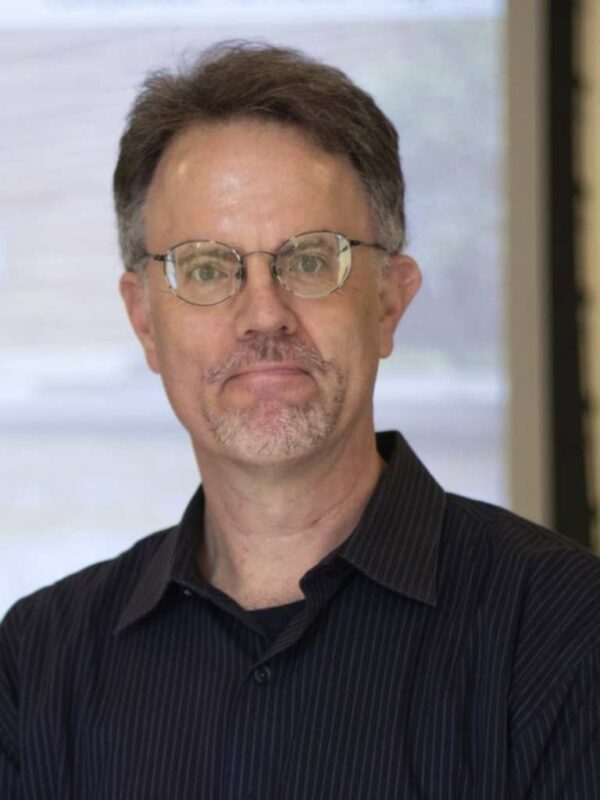
Charles Corbett
· ProfessorVerifiedUniversity of California, Los Angeles · Environmental Science and Policy
Active 1992–2026
About
Charles Corbett, Ph.D., is a professor of Operations Management and Environmental Management at the UCLA Anderson School of Management, with a joint appointment at the UCLA Institute of the Environment and Sustainability. Throughout his career, Corbett has focused on emerging research areas in operations management, particularly modeling the conflicting interests of supply chain participants using game theory and studying environmental issues in operations and supply chains. He is among the pioneers analyzing the carbon footprint in global supply chains of large firms to identify opportunities for cleaner, more sustainable processes, working with organizations such as the Carbon Disclosure Project. Corbett has played a significant role in academic leadership, serving as the founding faculty director of UCLA Anderson’s Easton Technology Leadership Program and the interdisciplinary UCLA Leaders in Sustainability graduate certificate program. He has also held administrative positions including associate dean of the MBA program, faculty chairman, and deputy dean for academic affairs at UCLA Anderson. His research and teaching aim to encourage students to think critically about processes, especially in the context of modern technology where traditional physical processes are transformed into information and ideas. Corbett’s educational background includes a Ph.D. in Production and Operations Management from INSEAD and a Master’s in Operations Research from Erasmus University. He has been recognized with several awards, including election as a Fellow of the Production and Operations Management Society and the Citibank Teaching Award at UCLA.
Research topics
- Business
- Political Science
- Economics
- Computer Science
- Social psychology
- Natural resource economics
- Microeconomics
- Medicine
- Process management
- Public relations
- Law
- Geography
- Industrial organization
- Environmental economics
- Psychology
Selected publications
Building on Sand? Third-Party Sustainability Measures in the Business Literature
SSRN Electronic Journal · 2026-01-01
preprintOpen accessCurrent Opinion in Chemical Engineering · 2026-03-19
articleOpen accessDesigning and evaluating alternative chemicals, materials, processes, or products using a Safe and Sustainable by Design (SSbD) approach can be facilitated by integrating decision support methods like multicriteria decision analysis (MCDA) to evaluate safety, environmental, economic, and social sustainability criteria. Clear guidance is needed to assess chemical, material, or product life cycles on various criteria, especially when a wide range of options is available, and multiple stakeholders’ interests must be accounted for. This study adds to guidance on the implementation of MCDA in SSbD assessments. Reviewing a set of 18 papers addressing MCDA and safety and sustainability assessments, we discuss various decision-making features (MCDA process characteristics) that require development for the application of MCDA in the SSbD framework. We identify six features for further exploration, including defining the decision-maker and problem statement, justifying the set of alternatives under evaluation, defining whether the system should allow for rank reversal, taking a life cycle perspective and defining the assessment scope, justifying the set of criteria used for the assessment, and managing uncertainties. These issues motivate the call for guidance on defining SSbD-specific issues that influence the selection of a suitable MCDA method for a specific problem, to ensure tailored decision-making recommendations. Addressing the identified features should help clear the path toward methodologically sound studies, useful results, and appropriate decision support. • The novel SSbD concept can be facilitated by MCDA methods. • Guidance on implementing MCDA for complex decision-making in SSbD is needed. • Six decision-making features toward sound decision support need further attention. • Addressing these features will pave the way toward methodologically sound studies.
Resources Environment and Sustainability · 2025-08-06 · 2 citations
articleOpen accessFood waste poses significant environmental and societal challenges, with an estimated 30% of global food production lost or wasted along the supply chain, threatening both environmental sustainability and food security. The United Nations’ Sustainable Development Goal 12.3 aims to halve global food waste by 2030, linking waste reduction to hunger alleviation. California sought to address both priorities simultaneously through Senate Bill (SB) 1383, a novel organic waste law. This article contributes to the literature on food loss and waste (FLW) mitigation by examining tensions between SB 1383’s dual goals: diverting organic waste from landfills and redistributing surplus food to communities in need. While SB 1383 is a progressive policy, its implementation has revealed conflicts between these objectives. We assess the impact of SB 1383 on stakeholder compliance with its food waste reduction and recovery requirements. Specifically, we examine the two key objectives of this regulation: (1) mitigating climate change by diverting organic waste from landfills, and (2) addressing food insecurity by redistributing recovered food to communities in need. We interviewed 37 stakeholders, including food recovery organizations, jurisdiction representatives, and edible food generators involved in implementation. Additionally, we analyzed the distribution of Local Assistance Grant funds across California counties and between the policy’s dual goals. Our findings indicate a stronger focus on waste diversion than food recovery, and an uneven distribution of funding, with rural areas facing greater challenges in adapting to SB 1383’s requirements. We conclude by highlighting tensions in FLW policy design that seeks to advance multiple, sometimes competing, goals. • SB 1383 prioritizes waste diversion over food recovery, mirroring trends in U.S. state policies. • Rural areas face greater challenges in implementing SB 1383’s food waste mandates. • Counties with higher food insecurity received less funding for food recovery initiatives. • Clearer regulatory priorities and equity-focused implementation are needed for SB 1383’s success. • Economic factors may be shifting priorities toward waste diversion over food recovery.
Production and Operations Management · 2025-01-31 · 8 citations
articleOpen access1st authorCorrespondingHow we manage operations—the domain of Operations Management (OM)—has important implications for the practice of diversity, equity, and inclusion (DEI) in organizations. Conversely, DEI goals have important implications for organizations’ OM practices. We outline the two-way links between DEI and OM to offer future research opportunities. In particular, we examine interactions between OM and DEI across four broad themes: (1) Workforce, (2) Supply Chains, (3) Health and Society, and (4) Technology, Platforms, and Innovation. We conclude with a discussion of DEI in OM as it relates to research and teaching. This article is a collaborative effort with the Senior Editors involved in the special issue of Production and Operations Management on “DEI in Operations and Supply Chain Management.”
Springer series in supply chain management · 2024-01-01 · 12 citations
bookOpen accessThe second edition of the textbook on sustainable supply chains in business management, industrial engineering and industrial ecology.
The Best of Both Worlds: Machine Learning and Behavioral Science in Operations Management
SSRN Electronic Journal · 2024-01-01
articleOpen accessToo Many Meetings? Scheduling Rules for Team Coordination
Management Science · 2024-03-04 · 8 citations
articleSenior authorWorkers in knowledge-intensive industries often complain of having too many meetings, but organizations still give little thought to deciding when or how often to meet. We investigate the efficiency and robustness of various coordination scheduling rules. We consider workers who are engaged in a common activity (e.g., software programming) that can be divided into largely independent, parallel production tasks, but that necessitates periodic coordination. Coordination enables workers to address issues they have encountered in their independent work but takes time away from production. Using a stylized game-theoretic model, we show that small teams allow a more fluid, that is, worker-driven, approach to scheduling coordination, such as preemptive coordination (or production), under which any worker can impose coordination (or production). In larger teams this becomes inefficient. Several approaches can mitigate this effect. One option is to allocate the decision rights to produce or coordinate to the most productive worker. A more general version is to implement a voting-based scheme, where a minimum number of workers from a predetermined subset choose to coordinate. A third approach is to modify the preemptive coordination and production rules by adding time-based controls, to reserve some minimal amount of productive time or to enforce coordination after some point. Finally, a fixed-interval meeting schedule works well for very large teams. Our research helps formalize the tension between meeting (coordinating) and producing and indicates how to adapt team coordination scheduling rules to the degree of worker heterogeneity and team size. This paper was accepted by Jay Swaminathan, operations management. Supplemental Material: The online appendix and data files are available at https://doi.org/10.1287/mnsc.2021.03227 .
Sustainable Supply Chains: Introduction
Springer series in supply chain management · 2024-01-01 · 4 citations
book-chapterOpen accessOM Forum—The Best of Both Worlds: Machine Learning and Behavioral Science in Operations Management
Manufacturing & Service Operations Management · 2024-07-25 · 19 citations
articleProblem definition: Two disciplines increasingly applied in operations management (OM) are machine learning (ML) and behavioral science (BSci). Rather than treating these as mutually exclusive fields, we discuss how they can work as complements to solve important OM problems. Methodology/results: We illustrate how ML and BSci enhance one another in non-OM domains before detailing how each step of their respective research processes can benefit the other in OM settings. We then conclude by proposing a framework to help identify how ML and BSci can jointly contribute to OM problems. Managerial implications: Overall, we aim to explore how the integration of ML and BSci can enable researchers to solve a wide range of problems within OM, allowing future research to generate valuable insights for managers, companies, and society.
Fairness in crowdwork: Making the human AI supply chain more humane
Business Horizons · 2024-09-21 · 5 citations
articleOpen accessCorrespondingThe vast quantities of data required to build artificial intelligence (AI) technologies are often annotated and processed manually, making human labor a critical component of the AI supply chain. The workers who input this data are sourced through digital labor (“crowdwork”) platforms that often are unregulated and offer low wages, raising concerns about labor standards in AI development. Using the results of a survey, this article aims to shed light on the experiences and perceptions of fair treatment among workers in the AI supply chain. The study reveals significant variability in workers’ experiences, identifies potential drivers of fairness, and highlights how design choices by labor platforms can significantly affect worker welfare. Drawing on lessons from physical supply chains, this article offers practical guidance to managers on how to enhance worker welfare within the AI supply chain and how to ensure that AI technologies are responsibly sourced.
Frequent coauthors
- 19 shared
Felipe Caro
University of California, Los Angeles
- 18 shared
Tarkan Tan
Zurich University of Applied Sciences in Business Administration
- 16 shared
Jan C. Fransoo
Eindhoven University of Technology
- 14 shared
Luk N. Van Wassenhove
- 13 shared
Yann Bouchery
Kedge Business School
- 12 shared
Sarang Deo
University of Hyderabad
- 11 shared
Paul R. Kleindorfer
- 10 shared
Guillaume Roels
INSEAD
Education
Ph.D., Operations Management and Environmental Management
University of California, Los Angeles
Awards & honors
- Elected Fellow of the Production and Operations Management S…
- Citibank Teaching Award, UCLA, June 2008
- EMBA Class of 2006 Outstanding Teaching Award, June 2006
- George Robbins Assistant Professor Teaching Award, 2002
- AT&T Faculty Fellow of Industrial Ecology, 1998–1999
- Resume-aware match score
- Save to shortlist
- AI-drafted outreach
See your match with Charles Corbett
PhdFit ranks faculty by your research interests, methods, and publications — grounded in their actual work, not templates.
- Free to start
- No credit card
- 30-second signup