Resume-aware faculty matching

Find professors who actually fit you

Upload your resume. Four AI agents analyze your background, rank the faculty who fit, inspect their recent research, and help you draft outreach — grounded in their actual work, not templates.

Free to startNo credit cardCancel anytime
Top matches Balanced preset
Dr. Sarah Chen
Stanford · Interpretability · NLP
91
Dr. Marcus Holloway
MIT · Robotics · RL
84
Dr. Aisha Okonkwo
CMU · Fairness · HCI
82
Nova · Professor Researcher · re-ranking top 20…
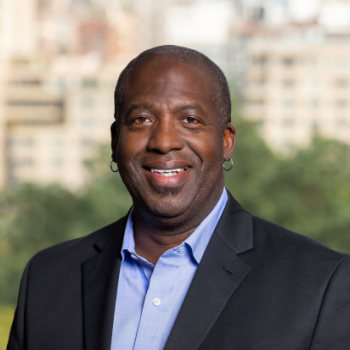
Charlton McIlwain

Charlton McIlwain

· Vice Provost for Faculty Engagement and Development; Professor of Media, Culture, and CommunicationVerified

New York University · Communication Studies

Active 2003–2025

h-index14
Citations1.8k
Papers6510 last 5y
Funding
See your match with Charlton McIlwain — sign in to PhdFit.Sign in

About

Charlton McIlwain is a Professor of Media, Culture, and Communication at NYU’s Steinhardt School of Culture, Education, and Human Development. His scholarly work focuses on the intersections of race, digital media, and racial justice activism. He is the founder of the Center for Critical Race and Digital Studies and has authored the book, Black Software: The Internet & Racial Justice, From the AfroNet to Black Lives Matter, published by Oxford University Press. Additionally, he co-authored the award-winning book, Race Appeal: How Political Candidates Invoke Race In U.S. Political Campaigns. Dr. McIlwain holds a Ph.D. in Communication and a Master's of Human Relations from the University of Oklahoma, and a B.A. in Family Psychology from Oklahoma Baptist University.

Research topics

  • Computer Science
  • Sociology
  • Political Science
  • Artificial Intelligence
  • Computer Security
  • Business
  • World Wide Web
  • Law
  • Gender studies
  • Public relations
  • Accounting
  • Psychology
  • Art
  • Advertising
  • Internet privacy
  • Media studies

Selected publications

  • Algorithmic discrimination: a grounded conceptualization

    Information Communication & Society · 2025-06-19 · 3 citations

    article
  • Beyond the Hashtags: #Ferguson, #Blacklivesmatter, and the Online Struggle for Offline Justice

    ICPSR Data Holdings · 2025-01-01

    datasetOpen access

    This is a dataset of tweets purchased from Twitter as part of the Beyond the Hashtags study. The dataset includes a year of tweets that mention one or more of 45 keywords associated with the BlackLivesMatter movement. This period covers a critical time in which social media was used to raise awareness about police killings of unarmed Black citizens in the United States.

  • Algorithmic Discrimination: A Framework and Approach to Auditing & Measuring the Impact of Race-Targeted Digital Advertising

    SSRN Electronic Journal · 2023-01-01 · 2 citations

    articleOpen access1st authorCorresponding
  • Introducing: the JOC academic posse cut

    Journal of Communication · 2023-12-01 · 2 citations

    article1st authorCorresponding

    Journal Article Introducing: the JOC academic posse cut Get access Charlton McIlwain, Charlton McIlwain Media, Culture, and Communication, Steinhardt School of Culture, Education, and Human Development, New York University, New York, NY, USA Corresponding author: Charlton McIlwain. Email: cdm1@nyu.edu Search for other works by this author on: Oxford Academic Google Scholar Nikki Usher Nikki Usher Department of Communication, College of Arts and Sciences, University of San Diego, San Diego, CA, USA https://orcid.org/0000-0001-7297-4427 Search for other works by this author on: Oxford Academic Google Scholar Journal of Communication, Volume 73, Issue 6, December 2023, Page 620, https://doi.org/10.1093/joc/jqad037 Published: 14 December 2023 Article history Received: 25 September 2023 Accepted: 25 September 2023 Published: 14 December 2023

  • The Police Beat Algorithm:

    Princeton University Press eBooks · 2022-11-15

    book-chapter1st authorCorresponding
  • Targeted Ads and/as Racial Discrimination: Exploring Trends in New York City Ads for College Scholarships

    Proceedings of the ... Annual Hawaii International Conference on System Sciences/Proceedings of the Annual Hawaii International Conference on System Sciences · 2022 · 9 citations

    Senior authorCorresponding
    • Computer Science
    • Political Science
    • Computer Science

    This paper uses and recycles data from a third-party digital marketing firm, to explore how targeted ads contribute to larger systems of racial discrimination. Focusing on a case study of targeted ads for educational searches in New York City, it discusses data visualizations and mappings of trends in the advertisements’ targeted populations alongside U.S census data corresponding to these target zipcodes. We summarize and reflect on the results to consider how internet platforms systemically and differentially target advertising messages to users based on race; the tangible harms and risks that result from an internet traffic system designed to discriminate; and finally, novel approaches and frameworks for further auditing systems amid opaque, black-boxed processes forestalling transparency and accountability.

  • 7. The Police Beat Algorithm: The Code That Launched Computational Policing and Modern Racial Profiling

    Princeton University Press eBooks · 2022-10-01

    book-chapter1st authorCorresponding
  • Targeted Ads and/as Racial Discrimination: Exploring Trends in New York City Ads for College Scholarships

    arXiv (Cornell University) · 2021-09-30 · 1 citations

    preprintOpen accessSenior author

    This paper uses and recycles data from a third-party digital marketing firm, to explore how targeted ads contribute to larger systems of racial discrimination. Focusing on a case study of targeted ads for educational searches in New York City, it discusses data visualizations and mappings of trends in the advertisements' targeted populations alongside U.S census data corresponding to these target zipcodes. We summarize and reflect on the results to consider how internet platforms systemically and differentially target advertising messages to users based on race; the tangible harms and risks that result from an internet traffic system designed to discriminate; and finally, novel approaches and frameworks for further auditing systems amid opaque, black-boxed processes forestalling transparency and accountability.

  • Origins of the Internet (with Charlton McIlwain & Fred Turner)

    2020

    • Computer Science
    • Art
    • World Wide Web

    Two leading scholars of internet history, Charlton McIlwain and Fred Turner, delve into the stories you might not have heard about where the technology came from. Yes, DARPA and IBM played formative roles, but what about back-to-the-land hippies in the 1960s, or a sprawling network of African American engineers, inventors, entrepreneurs, and enthusiasts who helped develop and popularize the web? McIlwain and Turner explain how major decisions about the early internet’s design and usage lead to some of its problems today.

  • Afrotechtopolis

    Cambridge University Press eBooks · 2020 · 11 citations

    1st authorCorresponding
    • Computer Science
    • Computer Science

    This chapter examines the way digital technologies reinforce racialized social hierarchies. Charlton McIlwain argues that cultural histories of the internet typically exclude black history, and that such an oversight makes it difficult to grasp how racial representations and institutional structures have long-shaped computing systems. Sketching a history that extends back at least to the 1960s, he shows that governments and corporations have long sought to develop technologies that would thwart any attempts at challenging racialized hierarchies and that such efforts can be seen today, as in the revelation that IBM used New York Police Department surveillance footage to develop technology that uses skin color to search for criminal suspects. He argues that any effort to challenge racialized social hierarchies have to consider the technological grounds on which their struggles are waged. While acknowledging that digital tools have been immensely useful for recent movements like Black Lives Matter, he argues that any effort to address technologically enabled racialized hierarchies, which he terms “Afrotechtopolis,” must develop its own technologies.

Frequent coauthors

Education

  • Ph.D., Commuication

    University of Oklahoma

    2001
  • Resume-aware match score
  • Save to shortlist
  • AI-drafted outreach

See your match with Charlton McIlwain

PhdFit ranks faculty by your research interests, methods, and publications — grounded in their actual work, not templates.

  • Free to start
  • No credit card
  • 30-second signup