Resume-aware faculty matching

Find professors who actually fit you

Upload your resume. Four AI agents analyze your background, rank the faculty who fit, inspect their recent research, and help you draft outreach — grounded in their actual work, not templates.

Free to startNo credit cardCancel anytime
Top matches Balanced preset
Dr. Sarah Chen
Stanford · Interpretability · NLP
91
Dr. Marcus Holloway
MIT · Robotics · RL
84
Dr. Aisha Okonkwo
CMU · Fairness · HCI
82
Nova · Professor Researcher · re-ranking top 20…
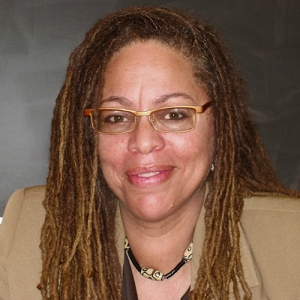
Cheryl I. Harris

Cheryl I. Harris

· Rosalinde & Arthur Gilbert Foundation Chair in Civil Rights & Civil Liberties and African American Studies

University of California, Los Angeles · African American Studies

Active 1992–2023

h-index8
Citations4.1k
Papers324 last 5y
Funding
See your match with Cheryl I. Harris — sign in to PhdFit.Sign in

About

Cheryl I. Harris is the Rosalinde and Arthur Gilbert Foundation Chair in Civil Rights and Civil Liberties at UCLA School of Law, where she teaches courses including Constitutional Law, Civil Rights, Employment Discrimination, Critical Race Theory, and Race Conscious Remedies. She is a graduate of Wellesley College and Northwestern School of Law, and began her teaching career in 1990 at Chicago-Kent College of Law after working for a leading criminal defense firm and serving as a senior legal advisor in the City Attorney’s office during Mayor Harold Washington’s reform administration in Chicago. Her work emphasizes the interconnections between racial theory, civil rights practice, politics, and human rights. Harris has been a key organizer of conferences that fostered dialogue between U.S. legal scholars and South African lawyers during South Africa’s transition to democracy. Since joining UCLA Law in 1998, she has produced groundbreaking scholarship in Critical Race Theory, exploring how racial frames influence the understanding of significant events and policies related to race and equality. Harris has lectured internationally and contributed to media outlets on issues of race and equality, serving as a consultant to the MacArthur Foundation and holding positions on prominent academic societies, including the American Studies Association. She has also served as faculty director for UCLA Law’s Critical Race Studies Program and has been recognized for her contributions to civil rights education with awards such as the ACLU Foundation of Southern California’s Distinguished Professor Award.

Research topics

  • Economics
  • Combinatorics
  • Art
  • Finance
  • Geography
  • Mathematics
  • History
  • Literature
  • Macroeconomics
  • Economic history
  • Art history

Selected publications

  • Race, Racism, and American Law: Leading Cases and Materials

    University of Baltimore Law Forum · 2023-01-10

    article

    Intended for use with the authors’ forthcoming casebook, Race, Racism, and American Law, Seventh Edition (forthcoming), Race, Racism, and American Law: Leading Cases and Materials includes significant historical and contemporary cases and materials edited with an aim to foreground the most relevant sections and passages to illustrate the crucial role of race in the formation of US law. This new edition of Derrick Bell’s groundbreaking textbook Race, Racism, and American Law, like prior versions, eschews a traditional casebook format. The locus of analysis in this text is the struggle for racial justice, and its underlying history and political context as reflected in the ongoing contestation over law, legal reform, and transformation.

  • Three. The Racial Alchemy of Debt: Dispossession and Accumulation in Afterlives of Slavery

    Duke University Press eBooks · 2022

    1st authorCorresponding
    • History
    • Economic history
    • Economics
  • The Racial Alchemy of Debt:

    2022-09-02

    book-chapter1st authorCorresponding
  • The Racial Alchemy of Debt

    Duke University Press eBooks · 2022

    1st authorCorresponding
    • Art
    • Literature
    • Economics
  • Critical Reflections on 4/29/1992 and Beyond

    University of Washington Press eBooks · 2021-12-31

    book-chapter
  • Ricci v. DeStefano: Lost at the Intersection

    Denver law review · 2020

    1st authorCorresponding
    • Mathematics
    • Combinatorics
    • Geography
  • Intersectionality at 30: Mapping the Margins of Anti-Essentialism, Intersectionality, and Dominance Theory

    SSRN Electronic Journal · 2019-06-01 · 28 citations

    articleOpen accessSenior author

    2019 marks thirty years since the publication of Kimberlé Crenshaw’s groundbreaking article, Demarginalizing the Intersection of Race and Sex: A Black Feminist Critique of Antidiscrimination Doctrine, Feminist Theory and Antiracist Politics. While scholars across the disciplines have engaged intersectionality from a range of theoretical and normative vantage points, there has been little effort to analyze intersectionality in relation to two other enormously influential theoretical frameworks: Angela Harris’s critique of gender essentialism and Catharine MacKinnon’s dominance theory. This Essay endeavors to fill that gap. Broadly articulated, our project is to map how anti-essentialism, dominance theory, and intersectionality converge and to articulate the places where they do not. In the context of doing so, we advance three core claims. First, scholars erroneously conflate intersectionality with anti-essentialism and thus erroneously perceive a strong opposition between intersectionality and dominance theory on the view that dominance theory is essentialist and that intersectionality is not. In the context of disaggregating intersectionality from anti-essentialism, we contest the view that feminism and critical theory must always avoid essentialism to achieve normative commitments to social transformation. Second, we argue that scholars have largely overlooked the fact that dominance theory and intersectionality share a critique of conceptions of equality structured around sameness and difference. Third, we contend that while there is an affiliation between dominance theory and intersectionality, there is also at least some tension between their respective framings of race and gender. We explore this tension by examining how intersectionality potentially stages a “soft” critique of MacKinnon’s defense of dominance theory against charges of essentialism in her provocatively titled essay, From Practice to Theory, or What Is a White Woman, Anyway? Our hope is that the Essay will both challenge the prevailing ways in which many scholars, including some feminists and critical race theorists, frame anti-essentialism, intersectionality, and dominance theory, and underscore the critical importance of attending to how racial power is gendered and gender subordination is racialized. Much is at stake with respect to the theoretical terrain we mean to cover. In addition to taking women’s theorizing seriously and facilitating the production of knowledge in historically marginalized areas of legal scholarship, we believe that engagements with anti-essentialism, intersectionality, and dominance theory have profound implications for the substantive form and content of political organizing, civil rights advocacy, and legal reform initiatives. Indeed, underwriting our effort in this Essay is the view that how we theorize social problems, including the subordination of women, necessarily shapes the scope and content of our social justice imaginary — which is to say, our freedom dreams.

  • 9. The New Racial Preferences: Rethinking Racial Projects

    2019-12-31

    book-chapterSenior author
  • An Affirmative Act?

    University of Illinois Press eBooks · 2017-04-20

    book1st authorCorresponding

    This chapter first offers an overview of contemporary debates over affirmative action to situate Obama's position on the issue. Obama's views on affirmative action expressed before and during the presidential campaign laid the foundation for his policies as president. Despite previously expressing support for affirmative action, Obama has eschewed mounting a vigorous defense of race-based remedies because in his assessment they are politically freighted, yield limited gains, and can be replaced by race-neutral measures that reduce overall inequality. The administration's position—which is ambivalent at best—has largely left uncontested the dominant color-blind framework and its affiliated racial narratives about “racial preferences,” thereby narrowing the space for broader social and economic reform.

  • Limiting Equality: The Divergence and Convergence of Title VII and Equal Protection

    2014-01-01 · 1 citations

    articleOpen access1st authorCorresponding

    15 (US filed Dec 19, 1975) (available on Westlaw at 1975 WL 173558) ("Both the professional literature and the legal requirements first articulated by this Court in Griggs . . .and developed in an impressive array of lower court decisions, reject the notion that the use of a test can be sustained, in the face of substantial adverse impact,

Frequent coauthors

  • Devon W. Carbado

    University of Pittsburgh

    11 shared
  • Michael K. Brown

    7 shared
  • Kimberly West-Faulcon

    2 shared
  • William C. Kidder

    1 shared
  • Lani Guinier

    1 shared
  • Gerald Torres

    1 shared
  • Derrick Bell

    1 shared
  • Jerry Kang

    1 shared

Education

  • Ph.D., Law

    University of Wisconsin-Madison

    1991
  • M.A., American Studies

    University of Wisconsin-Madison

    1986
  • B.A., American Studies

    University of California, Berkeley

    1983

Awards & honors

  • ACLU Foundation of Southern California’s Distinguished Profe…
  • Resume-aware match score
  • Save to shortlist
  • AI-drafted outreach

See your match with Cheryl I. Harris

PhdFit ranks faculty by your research interests, methods, and publications — grounded in their actual work, not templates.

  • Free to start
  • No credit card
  • 30-second signup