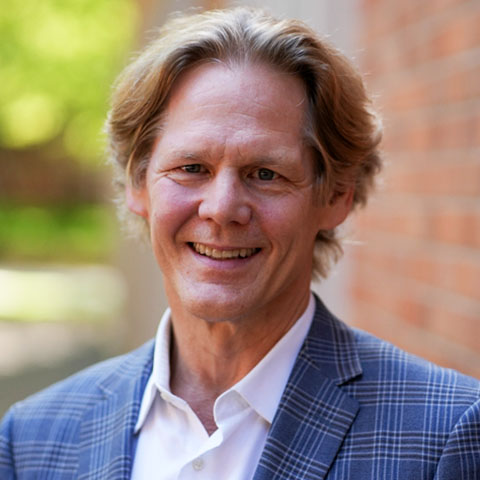
Christopher Uggen
· Affiliate FacultyVerifiedUniversity of Minnesota · Doctor of Philosophy (PhD) in Public Affairs
Active 1993–2026
About
Christopher Uggen is a Regents Professor and Distinguished McKnight Professor of Sociology and Law at the University of Minnesota. He is also a fellow of the American Society of Criminology. His expertise includes social policy, criminology, and law, and he is currently reviewing Ph.D. applicants at the Humphrey School of Public Affairs. His research focuses on issues related to social justice, public policy, and the intersection of law and society, contributing to the academic understanding of these areas through his teaching and scholarly work.
Research topics
- Criminology
- Political science
- Psychology
- Sociology
- Law
Selected publications
Journal of Quantitative Criminology · 2026-03-02 · 1 citations
articleOpen accessSenior authorThis study tests whether the 2020 police murder of George Floyd produced measurable changes in the quantity and qualities of homicide in Hennepin and Ramsey Counties, Minnesota—the epicenter of the ensuing social unrest—and whether these effects were moderated by neighborhood disadvantage or mediated by changes in police activity. We constructed a weekly panel of 472 census tracts from 2018–2022 (N = 123,192) using homicide data from the Minnesota Bureau of Criminal Apprehension. Interrupted time-series (ITS) models estimate post-event effects, controlling for COVID-19 caseloads, policy interventions, mobility, weather, and autoregressive structure. Random-coefficient ITS models assess spatial heterogeneity; a causal mediation sub-analysis of Minneapolis evaluates the contribution of de-policing to post-event homicide changes. The homicide rate increased 2.5-fold—from 0.11 to 0.28 per 100,000 residents—immediately after Mr. Floyd’s murder and remained elevated for 136 weeks, yielding an estimated 183 excess homicides. This effect persisted after adjustment for pandemic covariates. Argument-related killings showed the strongest post-event increase, followed by felony-crime homicides; domestic cases were unchanged. Adult perpetration and victimization rose significantly, while juvenile-involved homicides did not. The post-murder effect varied across space, with larger increases in tracts characterized by higher concentrated disadvantage. In Minneapolis, reduced police stops mediated 25% of the total effect. The police murder of George Floyd triggered a sustained escalation in homicide in the Twin Cities, driven by situational and interpersonal violence concentrated in disadvantaged neighborhoods. De-policing explained part of the increase. Findings highlight how high-profile police violence can generate collateral criminogenic effects and reinforce spatial inequality.
Journal of Urban Health · 2026-05-13
articleCriminology · 2026-04-11
articleSenior authorAbstract Research on racial disparities in the criminal legal system generally examines isolated sentencing decisions, rather than the “package” of punishment that defendants experience. Using Minnesota court administrative data from 2004 to 2017, we specify multivariate and instrumental variables models to simultaneously estimate the outcomes of three elements of racialized punishment: incarceration, probation, and monetary sanctions. We instrument incarceration using jail capacity, which accounts for confounding and the simultaneity of incarceration and other punishment forms. Our results show racial patterning in the “mix” of punishment for similarly situated defendants. Before accounting for this mix, Black, Hispanic, and Native American defendants appear to receive less probation and lower monetary sanctions, but longer incarceration than White defendants. After accounting for instrumented incarceration, monetary sanctions and probation are racialized beyond incarceration in complex ways: Black, Hispanic, and Native American defendants receive lower monetary sanctions as compared to White defendants, and probation for Black and Native American defendants is higher after adjustment. The contours of this racialized package depend critically upon whether the state guidelines recommend a prison sentence. These results show that punishment can be modeled as experienced—as a constitutive package of costs, surveillance, and confinement constrained by structural features of state sentencing guidelines.
Punishment & Society · 2026-04-01
articleThe “danger imperative” in policing, as noted by Sierra-Arévalo, defines how officers perceive both their job and the environment in which they work. It is unclear how this may generalize to others working in the public safety field, including prison staff. Although public perceptions and media narratives suggest a preoccupation with danger in American prisons, other narratives, including that of dynamic security and incarcerated people as future “good neighbors” portrayed in the Scandinavian countries, exist. To gain insight into these contrasting visions, we examine interview data from correctional staff participating in a reform-oriented project in an East Coast state, which provides a lens through which a correctional culture in transition can be viewed. Although we find some degree of adherence to a danger-oriented professional identity, characterized by distrust and othering of prison residents, and to some extent other staff, we also observe resistance to the principles of the danger imperative and expression of humanitarian concern for the welfare of incarcerated people and the communities to which they may eventually return.
Journal of Quantitative Criminology · 2026-05-16
articleOpen accessSenior authorThe Third Shift: The Highs and Lows for Women Gacaca Court Judges in Rwanda
Journal of Genocide Research · 2025-04-03
articleSenior authorCrimRxiv · 2025-09-23
articleOpen accessDiscouraging dignity: Linguistic barriers to transforming the prison environment
International journal of law, crime and justice · 2025-05-29 · 1 citations
articleFelony Status, Political Identity, and Civic Engagement
Justice Quarterly · 2025-11-12 · 1 citations
articleSenior authorDisenfranchisement, Reenfranchisement, and Crime
2025-03-28
book-chapter1st authorCorrespondingAbstract Purpose – This chapter reviews the evidence on disenfranchisement, reenfranchisement, and crime, while also challenging the notion that the franchise should be conditional on its capacity to prevent or control criminal behavior. Methodology/approach – First, we introduce the question of voting rights for people with felony convictions. We briefly review theories of crime and democratic participation and present evidence on the link between voting and subsequent crime. Second, we argue that the question itself is the problem and argue for severing the link between the right to vote and past or subsequent criminal behavior. Findings – Empirical research has not reached a firm consensus on the relationship between felony voting bans and subsequent crime, suggesting that strong causal claims are likely premature. But we also question the question, asking whether to view disenfranchisement through the lens of crime control or the lens of civic inclusion and democratic participation. Originality/value – This chapter challenges the notion that the franchise should rest upon its capacity to prevent or control crime.
Recent grants
Frequent coauthors
- 94 shared
Sarah Esther Lageson
Rutgers, The State University of New Jersey
- 91 shared
Mike Vuolo
The Ohio State University
- 81 shared
Corey Pech
The Ohio State University
- 81 shared
Taekjin Shin
San Diego State University
- 81 shared
Sarah Jenkins
- 81 shared
Ofer Sharone
- 81 shared
Sarah Babb
Boston College
- 81 shared
William Attwood‐Charles
Miami University
Awards & honors
- Humphrey School of Public Affairs Hubert H. Humphrey Public…
- Resume-aware match score
- Save to shortlist
- AI-drafted outreach
See your match with Christopher Uggen
PhdFit ranks faculty by your research interests, methods, and publications — grounded in their actual work, not templates.
- Free to start
- No credit card
- 30-second signup