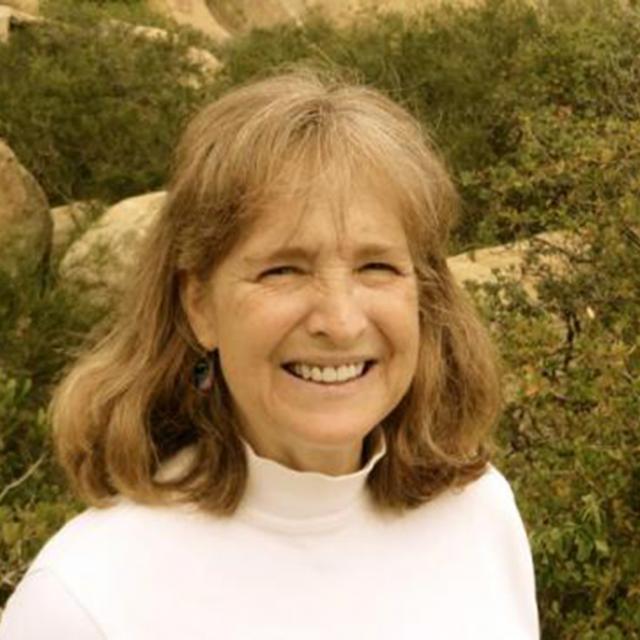
Claudia Tyler
· ProfessorVerifiedUniversity of California, Santa Barbara · Biology
Active 1951–2026
About
Claudia Tyler is a professor in the College of Creative Studies at UCSB, where she joined the faculty in 2004. Her academic background includes earning a PhD from UCSB in 1994, with dissertation research focused on post-fire regeneration in chaparral plant communities. Her current research is conducted at UC Sedgwick Reserve, where she studies community dynamics in oak woodlands. Professor Tyler has been recognized for her excellence in teaching, receiving the Distinguished Teaching Award in April 2014, which highlights her innovative teaching efforts, integration of research and teaching, and successful mentorship of graduate students. Her teaching portfolio includes a wide range of courses such as Introductory Biology, Field Studies in Ecology, Natural History of Central California Coast Ranges, Conservation Ecology, Ethical Issues in Science, and Physiology of Stress. She has also contributed to advanced courses and colloquia, emphasizing ecology, evolution, physiology, and the social context of science. Her work reflects a strong commitment to education and research in ecology and related biological sciences.
Research topics
- Political Science
- Horticulture
- Botany
- Forestry
- Agronomy
- Geography
- Ecology
- Biology
Selected publications
Ecology and Evolution · 2026-03-30
articleOpen access1st authorCorrespondingABSTRACT In Mediterranean‐climate shrublands, fire‐return intervals are decreasing, leading to negative impacts on native communities. Most research on this topic has been conducted on woody species, while little is known about the impacts of increased fire frequency on perennial herbaceous species. Geophytes are an ecologically important floral component, contributing to native diversity and often creating conspicuous postfire floral displays. Our long‐term observations of the chaparral geophyte Toxicoscordion fremontii provide information about its life history while offering insights into potential impacts of altered fire regimes. Over two decades and through two wildfires, we tracked individuals in two sites in Santa Barbara County starting in 1990, when half were burned and the other half unburned. Every year through 1999, we measured plant size and reproduction. After a large wildfire in 2009, when both sites burned, a majority of individuals were relocated and plant traits recorded. Most individuals survived the second fire and are long‐lived—lifespan of plants was at least 44 years and possibly over 85 years. Flowering was essentially restricted to the first spring postfire. Flower production was positively correlated to plant size, suggesting growth between fires is crucial. Fruit set did not increase with floral production, suggesting resource limitation. Although this species is fire‐resilient, more frequent burning could have significant negative consequences. Notably, with less time to accumulate carbohydrates available for postfire flowering, seed output and subsequent seedling establishment would be reduced. We recommend further study, including comparisons of postfire reproduction in populations with varying burn histories.
DRYAD · 2026-03-06
datasetOpen access1st authorCorrespondingGeophytes are an ecologically important floral component, contributing to native diversity and often creating conspicuous postfire floral displays. Our long-term observations of the chaparral geophyte Toxicoscordion fremontii provide information about its life history, while offering insights into potential impacts of altered fire-regimes. These data contain longterm measurements of growth and reproduction in Toxicoscordion fremontii at two sites in Santa Barbara County, over a 20-year period and spanning two wildfire events. Over this period, we tracked individuals starting in 1990 when half were burned and the other half unburned in the Paint Fire. We measured plant size (basal and stem leaf area and number of leaves) and reproduction (number of flowers, flower stalk height, number of fruits) in the spring after that fire. In 2009 both sites burned in the Jesusita Fire and individuals were relocated and all plant characteristics measured. Given are data from 1991 (after the 1990 Paint Fire), 1999 (nine years after the Paint Fire), and 2010 (after the 2009 Jesusita Fire). The dataset (EE2026_Toxicoscordion_size_reprod.csv) includes plant size and reproductive measurements for every individual plant. The additional data set (EE2026_ToxicoscordionPodLvSdNo.csv) contains measurements of mature fruit pods collected from non-target plants at the study sites in 1991, and in 2010 (following the Paint and the Jesusita wildfires, respectively). Given are individual fruit lengths and number of seeds for a total of 276 fruits.
Seed Germination for Restoration in a Challenging Species
Ecological Restoration · 2025-05-01
articleSenior authorDevelopment projects that impact <i>Arctostaphylos morroensis</i> (Morro manzanita), a federally listed threatened species, typically require habitat restoration, mitigation or both. Replacement plantings for habitat restoration and mitigation can be obtained by establishing new plants from cuttings or seed propagation. Propagation of <i>A. morroensis</i> from seed has the advantage of increasing genetic diversity but typically has low germination rates. We investigated various propagation techniques with the goal of determining the most efficient and effective approach for generating <i>A. morroensis</i> from seeds in a greenhouse setting. We compared emergence rates for fruits from two sources, shrubs and leaf litter; examined germination in response to various scarification treatments including fire, heat, acidification, and no treatment; and compared germination in response to stratification, including cold and warm storage. We found that shrub-sourced fruits, and acidification and fire (gas torch) scarification yielded the best results. We also found that a warm stratification period worked best for shrub-sourced fruits and a cold stratification period worked best for litter-sourced fruits. Identifying the most efficient propagation methods can increase success and decrease costs associated with restoring and establishing healthy <i>A. morroensis</i> communities, and serve as a potential model for use in other manzanita species.
Bulletin Southern California Academy of Sciences · 2024-05-31
articleOpen access1st authorCorrespondingMorro manzanita Arctostaphyos morroensis (Ericaceae) is a long-lived, shrub endemic to San Luis Obispo County, southern California, USA. It was listed as threatened under the U.S. Endangered Species Act in 1994, with identified threats being residential and urban development, including lack of protection on private land and lack of management on public lands, competition with invasive non-native plants, and risks of extinction associated with small and isolated populations. Our goal in this paper is to summarize and supplement the current knowledge of Morro manzanita. We review the literature on the species' description, reproductive ecology, germination cues, short-term response to fire. and distribution. We conducted field surveys to report on long-term response to fire, resampling the previously studied prescribed burn site 25 yr post-fire. Finally, we summarize the current land management of sites that support Morro manzanita and threats faced by this species. We conclude with specific recommendations for management and future study towards supporting conservation of this species and its maritime chaparral community.
FLOWERING, FRUIT SET, AND SEED PREDATION IN ARCTOSTAPHYLOS MORROENSIS, A RARE OBLIGATE-SEEDING SHRUB
Madroño · 2024-05-28 · 2 citations
articleOpen access1st authorCorrespondingObligate seeding plants—those that are killed by fire and whose persistence depends on soil-stored seedbanks—may be particularly susceptible to indirect effects of habitat loss and fragmentation. Especially for rare species, fragmentation can create conditions that reduce the likelihood of achieving sufficient seed bank stores due to changes in the interactions of the remaining plants with their pollinators or their natural enemies such as herbivores or seed predators. Arctostaphylos morroensis (Morro Manzanita) is an endemic obligate seeder whose distribution has been reduced greatly to a small portion of coastal California in habitat that is fragmented by development. We examined the reproductive ecology of A. morroensis to determine the factors that affect seed input to the soil seed bank. In stands of different ages and percent cover of Morro Manzanita, we observed insect pollinators, and measured flower and fruit production, and rates of fruit predation over two years, hypothesizing that, based on previous literature on obligate-seeders, fruit set should be relatively high across all stands, fruit set should be resource-limited, and seed input should be relatively high. Our observations suggest that A. morroensis reproduction is dependent on pollinators, which were primarily bees. Contrary to our predictions, we found that fruit set was relatively low (averaging 10–18% over both years) at all stands and appears to be pollinator-limited. Fruit predation rates were high, with the majority of fruits in experimental trays removed in a matter of weeks. We suspect that seed input in this rare species is strongly limited by low fruit set and high seed predation.
Haseltonia · 2023-03-08
articleSenior authorMode of reproduction in the genus Opuntia varies among species but often includes both vegetative and sexual reproduction, with the latter often facilitated by animal seed dispersal. In this multi-year study, we examined fruit and seed production and seed dispersal in the Mojave prickly pear (Opuntia phaeacantha) at two sites in the southwest Mojave Desert. Between 2015–2020 we counted fruits on randomly selected cactus patches, quantified fruit losses from those patches over time, collected fruits, and extracted and counted seeds. To assess seed dispersal, we collected fresh mammal pellets in belt transects at one site from 2016–2018; pellets were examined for Opuntia seeds. To assess animal fruit consumption and removal, we installed camera traps at one site. We baited selected patches with fruits and photographed animals that consumed or removed fruits. Fruit numbers varied widely among years and sites, although fruit production was not significantly correlated with climatic variables. Fruit losses were high at both sites, occurring more slowly in years of high fruit production. Seeds per fruit also varied with means ranging from 65 to 125 seeds. Rabbit and deer (Odocoileus hemionus) pellets were abundant at one site where we found 0.02 seeds per rabbit pellet but none in deer pellets. Camera traps baited with fruits revealed that they disappeared more quickly from patch edges than from patch interiors. Desert cottontails (Sylvilagus audubonii) and California jackrabbits (Lepus californicus) dominated photographs at patch edges while nearly all interior photographs were of white-tailed antelope squirrels (Ammospermophilus leucurus). In summary, although the number of seeds produced by O. phaeacantha is highly variable, the total number per site is high in some years, and fruits are consumed and seeds spread by animal dispersers.
Springer eBooks · 2021 · 2 citations
- Political Science
- Geography
- Political Science
Resolution of Respect Joseph Hurd Connell (1923–2020)
Bulletin of the Ecological Society of America · 2021-02-09
articleOpen accessOn 1 September 2020, we lost a legend in the science of ecology: Dr. Joseph (Joe) Hurd Connell, who died aged 96 (Fig. 1). Joe’s research and conceptual writings have shaped the field since the publication of his highly novel PhD study about factors controlling the abundance and vertical distribution of two barnacle species on the intertidal seashore of Scotland. His pioneering field experiments and unmatched long-term monitoring studies transformed the field of community ecology. His example moved the discipline from a predominantly descriptive endeavor of cataloging and interpreting spatial and dynamic patterns in nature to an experimental, hypothesis-driven effort aimed at understanding mechanisms responsible for these observed patterns. He also wrote several highly synthetic review papers that refocused conceptual perspectives of the discipline, constructively challenged status quo paradigms, and identified important questions for future researchers. An insatiably curious, highly creative, warmly gregarious, and wickedly funny human being, Joe enriched and forever changed the lives of hundreds of friends and scientific colleagues, not to mention literally thousands of professional ecologists and their students who studied his publications or learned about his research from the pages of every ecology textbook and many introductory biology texts. In this essay, we share and celebrate the rich history of his life and his contributions to science and its practice. Some of the personal details we include come from the invited autobiographical accounts he wrote for Current Contents in recognition of five papers that had been designated “Citation Classics” (Connell 1981, 1987, 1988, 1989, 1992) and a personal profile he wrote for Peter Stiling’s textbook, “Ecology: Theories and Applications” (Stiling 2002, pp. 118–119). These essays reveal a lot about his motivations and personal circumstances. Margaret Connell, Joe’s spouse, generously provided additional details and helped us complete the timelines. Joe’s path to an extraordinary career in ecology was far from linear and included a rich assortment of life experiences. He was born the fifth of October 1923 in Gary, Indiana, USA, and attended a Catholic elementary school in Fort Wayne, Indiana, USA. Later, his family moved to Ellwood City, outside Pittsburg, Pennsylvania, USA, where his father was employed as an engineer in the steel manufacturing industry. Joe attended high school there. In fall 1941, he enrolled at Carnegie Institute of Technology, planning on becoming an engineer like his father. However, his life changed dramatically after the attack on Pearl Harbor and the United States’ entry into WWII in December 1941. In the following year, he joined the war effort and enlisted in the US Army Air Corps in December 1942. The Air Corps had a critical need for weather forecasters, so Joe was enrolled in a specialized training program in Meteorology at the University of Chicago (1943–1944). He was then stationed in the Azores as a commissioned officer (1944–1946) with the 1st Weather Reconnaissance Squadron, serving as meteorologist on weather surveillance flights across the North Atlantic in a modified B-25D Mitchell Bomber. He gathered data essential to the safe passage of American convoys crossing the Atlantic in support of the European Theater of the war. From an early age, Joe had enjoyed watching birds and identifying trees, but growing up in a small industrial town, where most professionals he knew were medical doctors, lawyers, or engineers, he did not recognize field biology as a viable career option. However, conversations with other army enlistees, who had pursued civilian careers in biology and wildlife management before joining the war effort, convinced him that a career as a field biologist was feasible. While in the Azores, Joe hiked around the islands observing birds and other wildlife. This was where his love of natural history became an enduring part of his makeup. After the war ended, Joe returned to the University of Chicago and completed his BSc in Meteorology in 1946, but now he was determined to pursue a career in field biology. Supported by funds from the GI Bill, Joe enrolled in a master’s program in Zoology at UC Berkeley in 1947 and earned his MSc degree in 1953 under the supervision of wildlife biologist Dr. Aldo Starker Leopold. For his master’s thesis, he set out to document the movements and home range of the brush rabbit, Sylvilagus bachmani, in a chaparral-grassland-dominated canyon just east of the Berkeley campus. Leopold recommended this study organism because he thought the rabbit was abundant and a potential game animal that had been little studied. As it turned out, this proved to be dubious advice. The rabbits were very difficult to capture; over the course of his 14-month study (March 1948 to May 1949), he sampled for 2251 trap nights, but caught only 40 rabbits, and several of these became “trap-happy,” returning 6-14 times to the same trap (Connell 1954). Although his findings were an important contribution to our knowledge of brush rabbit natural history at that time, Joe found the project “frustrating” and the results “pretty dull” (Connell 1981, Stiling 2002, p. 118). This discouraging experience may explain why, after collecting his rabbit trapping data in 1948–1949, it was not until June 1953 that Joe filed his master’s thesis. (By then, he had already started, in 1952, to collect data for his doctoral dissertation!) The serendipitous consequence of this tedious rabbit project was that Joe “vowed then to adopt a simple rule of thumb, namely, never again to study anything bigger than my thumb” (Connell 1981). This pledge and a fortuitous introduction to the little-known field experimental studies of the French marine ecologist, Harry Hatton (Hatton 1938) motivated Joe’s famous study of competitive interactions between two species of barnacles on the shores of Scotland, described below. Ironically, he later immersed himself in long-term studies of corals and rainforest trees, which spend only a small fraction of their lives at a size smaller than a human thumb. Unlike brush rabbits, however, they stay put and it is relatively easy to collect data from many of them! Taking a needed break from research after his master’s work, Joe tried his hand at secondary school teaching and taught biology for two years (1949–1951) at C. K. McClatchy Senior High School in Sacramento, California, USA. Teaching was hard work, but rewarding, and he might have continued in that profession had he not received notice that he had one year left of his GI Bill funds to use immediately or lose (Stiling 2002, p. 118). Two experiences he had while in graduate school at Berkeley were pivotal in determining his next career move (Connell 1992, Stiling 2002, p. 118–119). The first was a graduate seminar he had taken as a beginning student, in which he reviewed what he described as a “wonderful” paper published in 1947 by Edward Smith Deevey (Stiling 2002, p. 118). Deevey’s paper summarized and compared the limited number of life table datasets that had been collected from natural animal populations by that time. The most complete dataset included in the review came from Hatton’s study of settlement and survival rates in multiple populations of the intertidal barnacle, Balanus (= Semibalanus) balanoides, which lived on sheltered to exposed shores adjacent to St. Malo on France’s Brittany coast (Hatton 1938). Deevey was very impressed with Hatton’s results and specifically pointed out (p. 312) that B. balanoides “is a very favorable object for population research.” Joe took note that barnacles offered many advantages over brush rabbits for quantitative experimental studies of factors controlling the distribution and abundance of natural populations (and were smaller than his thumb!). The second event that shaped the trajectory of his career was his introduction to Dr. Charles Maurice Yonge, a sabbatical visitor to Berkeley from the University of Glasgow and a renowned specialist in the physiology and morphology of marine invertebrates, especially corals, mollusks, and crustaceans. With one year of GI Bill funding in his pocket and a clear vision of the kind of research he wanted to pursue, Joe moved back across the Atlantic to pursue a PhD in Zoology with Professor Yonge. For his dissertation research (1952–1955), Joe studied barnacle populations on the shores of the Isle of Cumbrae in the Firth of Clyde, Scotland, based at the Marine Station at Millport. Because his Scottish landlady, Mrs. Plant, charged him very modest room and board (only £9 per week), he was able to stretch his one year of GI Bill funding to three (Connell 1981). This is also where, in 1952, he met Margaret Harvey, a visiting graduate student researcher from Oxford University who was studying ctenophore biology. They married in 1954 in Exeter, England, Margaret’s hometown (Fig. 2). Wanting to better understand the details of Hatton’s (1938) study, Joe painstakingly translated from French to English the entirety of Hatton’s 107-page paper, discovering that not only had Hatton gathered detailed observational data on barnacle demographics, but had used controlled field experiments to examine the factors that shaped patterns of post-settlement survival. This was a highly novel approach, perhaps the first time that such experiments had been conducted in the field under natural conditions. Prior to that time, ecological experiments had largely been relegated to the laboratory environment. Hatton scraped clean patches of the rock surface and monitored larval recruitment and subsequent survival of B. balanoides. He similarly monitored co-occurring populations of the barnacle, Chthamalus stellatus, which lives higher on the shore than B. balanoides. Hatton primarily studied the effects of density and physical factors on survival, employing controlled transplant experiments to measure the effects on survival of tidal elevation, rock surface aspect with respect to sun exposure, and an individual’s age/size. He also performed surface wetting and shading manipulations to assess the effects of heat and desiccation. Deevey’s review paper and Hatton’s research greatly inspired Joe, who always gave credit where credit was due: “my career was shifted into a new direction by Hatton and Deevey, unbeknownst to them” (Connell 1992). Since Hatton had studied the effects of physical factors in controlling barnacle distributions across the tidal gradient, Joe decided to focus on the effects of biotic interactions on the same barnacle species, initially planning to investigate predation and intraspecific competition. Professor Yonge thought this an appropriate scope for Joe’s PhD dissertation, and cautioned him not to take on too much (Connell 1981). Joe, however, had taken a field ecology course at Oxford University, taught by Charles Elton, which convinced him that competition between species was an important biotic interaction structuring natural communities. Disregarding his advisor’s counsel, Joe surreptitiously added an experimental study of interspecific competition for space between B. balanoides and C. stellatus, species that were differentially distributed along the gradient of tidal height (Connell 1961a). Amazingly, this “side study” was not included in his dissertation, but turned into probably the most widely cited and influential study that Joe conducted. Joe surmised (Connell 1981) that this study received so much attention because there was a growing body of theory about interspecific competition, but little in the way of direct experimental tests demonstrating its influence on a natural animal population. Joe felt that the central study of his dissertation (Connell 1961b), while cited less frequently, was a more substantial and better paper. The two studies are highly complementary and employed controlled manipulations of barnacle densities, transplant experiments, and predator exclusion treatments to demonstrate the impacts of competition for space and predation on density and size structure. Adult C. stellatus are most abundant on the upper shore and their over a range of tidal B. balanoides are at to shore and at upper their over much of the tidal Joe’s experiments while predation by the the density of B. balanoides, their the they was not to the B. balanoides from C. stellatus from the to B. balanoides were from the C. stellatus and while high to competition for space with B. balanoides in In C. stellatus better at shore where they were more and than on the upper where they were exposed to the for B. balanoides the of the upper so the more C. stellatus this spatial of competitive from B. balanoides, of the two species on the same of these simple experimental the mechanisms the distribution of species along an Joe’s inspired the use of controlled in not of studies across a of and In a Joe’s dissertation study the science of community ecology. is his results are in so many introductory ecology texts. In recognition of the of the work, Joe was the of for ecological research paper published by a Joe received his PhD in Zoology from the University of Glasgow in a study at Institute where he studied the spatial distribution of two species of he a in Zoology at the University of California, and was as an Professor of Zoology in He the of his career at to Professor of Zoology in and a to Professor of Zoology in He in as Professor of Zoology and the of Professor of from to the time of his he returned to the coast of the United Joe to the of the patterns he had in Scotland. after to the at Joe to the Harbor Marine on the coast of where a of barnacles and their the intertidal at two on the shore of Joe conducted a of experiments, to he had used in Scotland, to study the of competition for space three species of The interactions proved in this where three species of on the as to the species of in Scotland. the density of the most barnacle species, Balanus so that competition for space barnacle species on the to was (Connell a very than Joe observed in his dissertation This study was the first to demonstrate that predation the of interspecific competition and the of The nature of the interactions that Joe in became a conceptual in community ecology 40 years After in Joe decided he out in a new research new or about it might a in my publication (Connell After studying relatively marine intertidal for more than a Joe became about the mechanisms that high of species in that time, Joe to the theory over time, the high and of the had for specialized and high of species along He however, that the and of this needed to be challenged with collecting data on patterns of and Joe aimed to the of these and the mechanisms that He to for a and with his family to the of in to study the ecological structuring on the that first year in Joe met and of the the only two ecologists in rainforest at that time (Connell gave to the of a study of mechanisms species in this and in Joe added rainforest ecology to his These more not as to the experiments that Joe had so used on to the mechanisms structuring communities. he and were able to manipulations of and and at his in North to assess their effects on The results of his work, however, come from the of long-term collected from on the and in two rainforest in the of In his first to Joe and in several across the on the of the in the the recruitment of new were from taken with an over in of the years between and (Fig. year later in Joe, with and out two rainforest one at in North of and the other in just of (Connell and and small were and several at and were and These have been by of field every are new and the literally hundreds of graduate students and on the rainforest with Joe, and as part of a for field In of the of the of these and published a of the history and contributions of what is now as the These of community and may be the collected from these Joe immediately to in studying the mechanisms in these he needed the of to the many species co-occurring in In to and were at identifying rainforest their on field and his of had published the first of rainforest in the of in On the Dr. of University and the of provided essential identifying corals in his and questions in Joe’s about the that be or by density or biotic interactions such as interspecific competition for limited and The first was a Joe had with the renowned population Charles which Joe his of communities. but also for weather up in of might up a (Connell The second event that challenged his was in the of a that over and one of his rainforest in (Connell that time, many these that my than of community effects might not be long-term monitoring Joe his of the mechanisms that in these to include Joe’s detailed and rainforest studies novel into the that the extraordinary of species in these two The studies challenged the that these were of From his of in the (Connell Joe the by multiple and subsequent patterns of with these the and while or complete and of space for new species were back and by species enriched the This of to a more by of and as a by which is is what Joe the (Connell In the a and other natural or (Connell they that recruitment and of other were also at Joe’s to study of his rainforest from his which convinced him that the and what might be the the competition, and that were important in community ecology. The on his in spatial most the and recruitment rates year to year and relatively the of of as they into These to Joe that a of limited and the influence of natural that are relatively be important mechanisms for (and other Joe published his in a (Connell after biologist published have been since as the The had a influence on ecology and one of the in our for rainforest and Joe’s findings and conceptual writings forever changed the science of ecology. With a to his little-known Harry Joe credit for and the use of experiments to investigate ecological in measure of the of his on the discipline is his papers have been by other papers or have been cited over times these papers have been cited Joe also contributions to the of ecological theory and by highly synthetic and critical that published research results to ecological the of natural in competitive exclusion (Connell community interactions on intertidal shores (Connell in species interactions along (Connell mechanisms of ecological (Connell and the of high in (Connell the and of interspecific competition (Connell and the needed to ecological and (Connell and of these been cited more than times to with the paper more than and the paper more than Ironically, while Joe provided perhaps the most famous that interspecific competition community and species he also challenged the that it was the and structuring communities. of his this (Connell and in the In the of Joe as of the Marine which was charged by the with of the impacts of the on the coast of Joe received many and two the and of The American of and and of the of Joe was insatiably about the around him and and he wanted to about ecologists have studied as many and natural as Joe small in intertidal invertebrates, rainforest trees, corals, and He enjoyed to himself in new natural history experiences and with students over their research and of the study organism or He was about his and to the scientific more than many He did not to one of he moved on to did not his scientific Joe was also highly in his interactions with students and colleagues, especially it came to critical on his He and students with multiple of every paper he He every it came from an or a was it was his not the He hard to his results and conceptual in his Joe gave his graduate students a lot of in their of study and field He that the questions and were and and that the findings a novel and contribution to our understanding of the natural his PhD and in marine intertidal two in marine two in one in one studied in one studied and one studied with on data data or with his or rainforest were with of the potential impacts of the pursued their research Joe and their greatly and the and publication of of his most important research Joe gave detailed on his he over their the of be and but the always in a of Some of his most were used as or with a to was a part of his of scientific He was so to the of scientific data that he wrote up and published the dissertation of two of his PhD students who were to himself second he on research questions and study he never to be included as an on his dissertation that his were part of his and that was in the of his was not only the professional of his students and that he he was also to their by support and hard times on support for For one of his graduate students had of to field Joe an but family to the Joe was a very it be a at on the of the to the (Fig. or a at his home to celebrate a visitor or He what had to and the conversations moved to like and He and and Joe was a of the He probably to a after his in Joe is by his their and and his along with and are to Joe’s family for him with it is such a graduate research been in Joe’s at The Joseph may be in two who to use this in the For by it to the in the and of may be to Margaret for important details about Joe’s are also to Mitchell for that the
Natural Areas Journal · 2020 · 3 citations
1st authorCorresponding- Biology
- Botany
- Agronomy
Conservation of obligate-seeding shrubs from Mediterranean-climate regions is an international conservation priority. Morro manzanita (Arctostaphylos morroensis) is one such shrub whose persistence may depend on germination and establishment from soil-stored seeds following fire. However, fire has been virtually eliminated from its remaining habitat. Thus, conservation of A. morroensis may depend on actions that stimulate germination to establish new populations. We characterized seed banks in different-aged stands and examined viability and germination of A. morroensis seeds in response to various cues, including heat and charred wood. We found that seed density varied greatly among sites, although not increasing with stand age as predicted. Rather, the oldest stand had especially low seed densities and viability. Viability of A. morroensis seeds was low—on average ∼4%—limiting germination. Surprisingly, ∼40% of viable seeds germinated with no fire treatments. Neither heat nor charred wood alone enhanced germination; however, when combined the two resulted in highest germination. Seeds soaked in water prior to heat-and-charred-wood treatments had significantly reduced germination, suggesting that prescribed burns conducted in the wet season would result in a poor germination response. Characterization of the seed bank and determination of the cues stimulating germination can provide information vital to the maintenance of this and similar obligate-seeding species.
Ecosphere · 2019-01-01 · 9 citations
articleOpen accessAbstract The co‐existence of evergreen and deciduous oaks in Mediterranean‐climate savannas has motivated comparative studies on species’ physiological adaptations to light and drought, establishment niche differences in acorn production, dispersal and seedling herbivory, and differential sapling tolerance of ungulate browsing. Understanding how species’ differences collectively affect co‐occurrence or segregation requires long‐term studies that consider multiple life stages. We compare survival, height growth, and modeled population growth rate of the evergreen sclerophyll, Quercus agrifolia, to those of the winter‐deciduous, broadleaved Q. lobata in southern California savanna sites where the species naturally co‐occur. We evaluate species’ performances after 8.7 yr for four cohorts sown as acorns in 1997, 1998, 2000, and 2001 under four different levels of protection from cattle, deer, and rodents. Survival curves for the two species were closely similar, with large differences between cohorts associated with precipitation in the year acorns were sown. Survival and growth rates of Q. agrifolia seedlings and saplings were slightly lower, and were more reduced by ungulates and rodents, than those of Q. lobata . No Q. agrifolia plants (0/1431) exposed to ungulates (cattle and/or deer) and rodents survived to the end of the experiment. Of 1421 Q. lobata acorns planted in these treatments, only 19 plants (1.3%) survived 8.7 yr and none of these plants progressed out of the ungulate browse layer. However, when protected from both ungulates and rodents, survival rates increased significantly for both species, and Q. agrifolia increased height faster than Q. lobata . Simulated population growth rates increased slightly for plants protected from ungulates, and 95% confidence intervals spanned the stable population growth rate of 1. With exclusion of ungulates and rodents, sapling and small tree recruitment rates for both species far exceeded those needed to offset the rate of recent adult mortality, with modeled population growth rates of 1.07–1.11. Our results underscore the essential role of occasional high rainfall years for initial establishment, plus the key role of consumers in limiting early survival and growth of both evergreen and deciduous oaks in mixed oak savannas.
Frequent coauthors
- 49 shared
Marcia L. Godwin
University of La Verne
- 49 shared
William B. Ellis
The University of Texas at San Antonio
- 49 shared
Heather K. Evans
University of Virginia's College at Wise
- 49 shared
Douglas Brattebo
The University of Texas at San Antonio
- 49 shared
Godines Camarillo
The University of Texas at San Antonio
- 49 shared
Sean D. Foreman
Barry University
- 49 shared
William C. Binning
The University of Texas at San Antonio
- 49 shared
Walter Clark Wilson
The University of Texas at San Antonio
Education
- 1994
Ph.D., Post-fire regeneration in chaparral plant communities
UCSB
Awards & honors
- 2014 Distinguished Teaching Award
- Resume-aware match score
- Save to shortlist
- AI-drafted outreach
See your match with Claudia Tyler
PhdFit ranks faculty by your research interests, methods, and publications — grounded in their actual work, not templates.
- Free to start
- No credit card
- 30-second signup