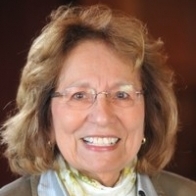
Concepcion Valadez
· Research ProfessorUniversity of California, Los Angeles · American Indian Studies
Active 1977–2014
About
Concepcion Valadez is a retired research professor at UCLA, with a focus on language education, bilingualism, literacy, curriculum design, testing, and linguistic minorities. She earned her Ph.D. in Education from Stanford University in 1976. Her work emphasizes the importance of understanding linguistic diversity and developing educational strategies that support linguistic minorities. Her contributions include research and expertise in the fields of language education and curriculum development, particularly in relation to bilingual and minority language communities.
Research topics
- Psychology
- Linguistics
- Pedagogy
- Mathematics education
- Sociology
Selected publications
Current Issues in Language Planning · 2014-09-09 · 13 citations
article1st authorCorrespondingIn the Basque Country, Northern Spain, Basque (Euskera) and Spanish are official languages. In recent decades, Basque language revitalization and the efforts to make this an unmarked language (normalization) have co-existed with the rapid increase in immigration from outside the Basque region, and most recently from outside Spain. Given the critical role of schools and teachers in the incorporation of newcomers, this study examines 201 teachers' and 96 education students' (pre-service teachers, university students who will be teachers. Informants were practicing teachers and future teachers.) perceptions of normalization and the new immigrants in the Basque Country. The issues addressed in this article are the following: (i) the rate of normalization (movement toward universal usage and high prestige across domains) of the Basque language; (ii) acquisition rates of Spanish and Basque languages by the children of new immigrants; and (iii) likely maintenance of the immigrant students' home language. Results indicate slow advancement toward normalization of the Basque language. Immigrant students are expected to obtain higher levels of fluency in Spanish and their home language than in the Basque language. Important differences in perceptions are found related to the linguistic profiles of the informants. Based on the findings, language policy recommendations are advanced. These recommendations might be applicable to the Basque region and wherever similar challenges and opportunities may be found.
Identity, Power and Writing Skills: The Case of the : Hispanic Bilingual Student
2013-12-16
article1st authorCorrespondingConference on Information Technology Education · 2012-01-01
article1st authorCorrespondingAn eCommununity of Learners: A model for preparing teacher mentors
Conference on Information Technology Education · 2012-01-01
articleSenior authorFostering Candidate Spanish Language Development
2011-01-04 · 17 citations
articleSenior authorTeachers College Press eBooks · 2010-01-25
book-chapter1st authorCorrespondingEl profesor principiante en las aulas escolares en Estados Unidos: retos y posibilidades
Dialnet (Universidad de la Rioja) · 2009-01-01 · 3 citations
article1st authorCorrespondingDialnet (Universidad de la Rioja) · 2005-01-01
article1st authorCorrespondingProblemática do ensino bilingüe e a súa avaliación
Dialnet (Universidad de la Rioja) · 2002-01-01
articleSenior authorLenguas minoritarias y lenguas minorizadas en Estados Unidos, con especial atención al castellano
Dialnet (Universidad de la Rioja) · 2002-01-01
article1st authorCorresponding
Frequent coauthors
- 2 shared
Amado M. Padilla
Stanford University
- 2 shared
Halford H. Fairchild
- 2 shared
Clementina P. Gregoire
- 1 shared
John D. McNiel
- 1 shared
Feli Etxeberria
University of the Basque Country
- 1 shared
Michael D. Guerrero
Biocat
- 1 shared
Belinda Bustos Flores
- 1 shared
Xosé Cajide Val
Labs
UCLA American Indian StudiesPI
- Resume-aware match score
- Save to shortlist
- AI-drafted outreach
See your match with Concepcion Valadez
PhdFit ranks faculty by your research interests, methods, and publications — grounded in their actual work, not templates.
- Free to start
- No credit card
- 30-second signup