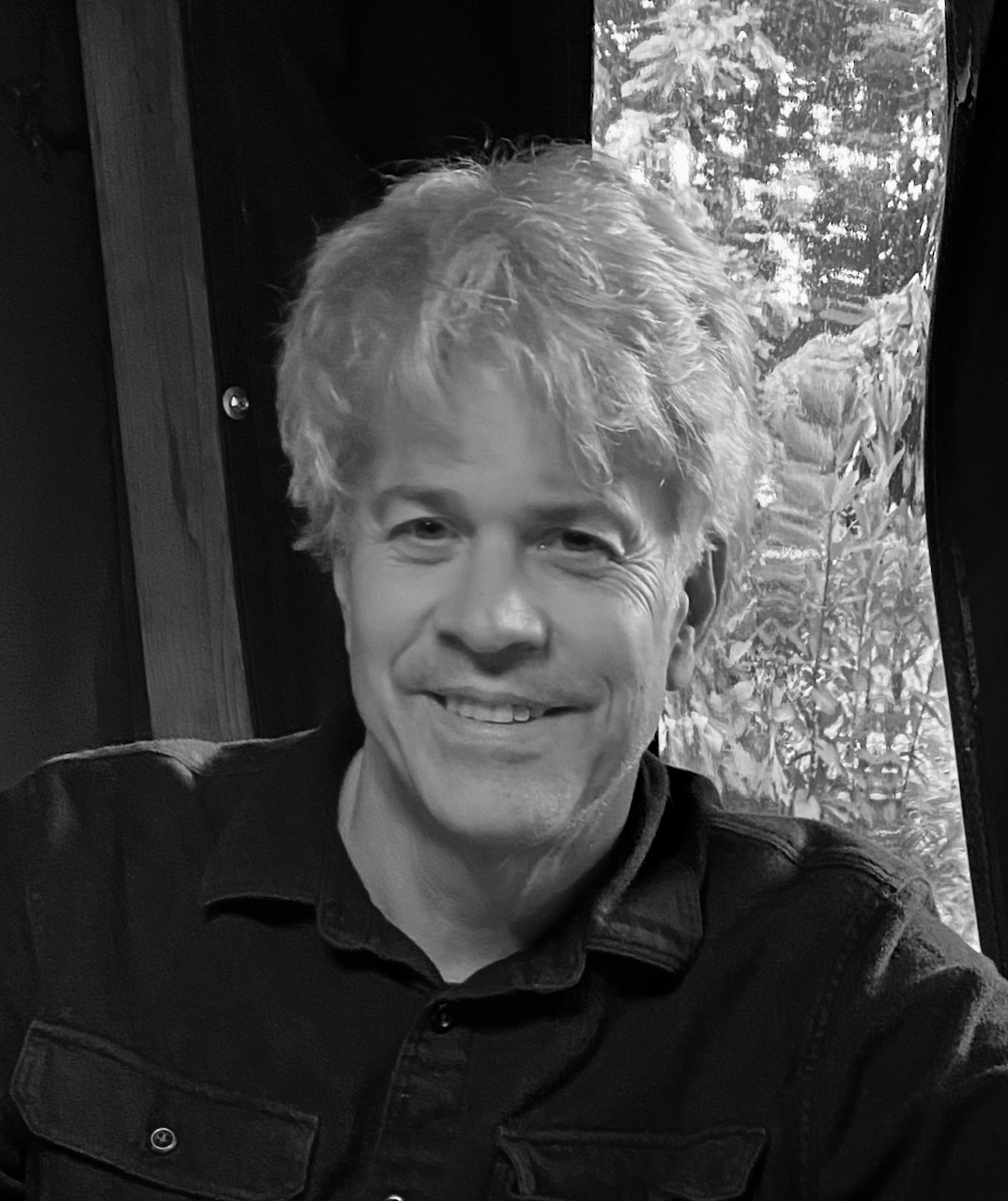
Charles F. Harvey
· ProfessorMassachusetts Institute of Technology · Civil & Environmental Engineering
Active 1890–2024
About
Charles F. Harvey is a Professor in the Department of Civil and Environmental Engineering at MIT. His research focuses on reactive transport, carbon capture, coastal groundwater, peatlands, and arsenic. As a faculty member, he is involved in advancing understanding of subsurface processes and developing methods for environmental remediation and sustainable resource management. His work contributes to addressing critical environmental challenges related to groundwater contamination, climate change mitigation, and ecosystem health.
Research topics
- Environmental science
- Geology
- Ecology
- Geomorphology
- Geography
- Chemistry
- Physical geography
- Environmental engineering
- Oceanography
- Earth science
- Environmental chemistry
Selected publications
Biogeosciences · 2020 · 43 citations
- Environmental chemistry
- Environmental science
- Chemistry
Abstract. Worldwide, peatlands are important sources of dissolved organic matter (DOM) and trace metals (TMs) to surface waters, and these fluxes may increase with peatland degradation. In Southeast Asia, tropical peatlands are being rapidly deforested and drained. The blackwater rivers draining these peatland areas have high concentrations of DOM and the potential to be hotspots for CO2 release. However, the fate of this fluvial carbon export is uncertain, and its role as a trace metal carrier has never been investigated. This work aims to address these gaps in our understanding of tropical peatland DOM and associated elements in the context of degraded tropical peatlands in Indonesian Borneo. We quantified dissolved organic carbon and trace metal concentrations in the dissolved and fine colloidal (<0.22 µm) and coarse colloidal (0.22–2.7 µm) fractions and determined the characteristics (δ13C, absorbance, fluorescence: excitation-emission matrix and parallel factor – PARAFAC – analysis) of the peatland-derived DOM as it drains from peatland canals, flows along the Ambawang River (blackwater river) and eventually mixes with the Kapuas Kecil River (whitewater river) before meeting the ocean near the city of Pontianak in West Kalimantan, Indonesia. We observe downstream shifts in indicators of in-stream processing. An increase in the δ13C of dissolved organic carbon (DOC), along with an increase in the C1∕C2 ratio of PARAFAC fluorophores, and a decrease in SUVA (specific UV absorbance) along the continuum suggest the predominance of photo-oxidation. However, very low dissolved oxygen concentrations also suggest that oxygen is quickly consumed by microbial degradation of DOM in the shallow layers of water. Blackwater rivers draining degraded peatlands show significantly higher concentrations of Al, Fe, Pb, As, Ni and Cd compared to the whitewater river. A strong association is observed between DOM, Fe, As, Cd and Zn in the dissolved and fine colloid fraction, while Al is associated with Pb and Ni and present in a higher proportion in the coarse colloidal fraction. We additionally measured the isotopic composition of lead released from degraded tropical peatlands for the first time and show that Pb originates from anthropogenic atmospheric deposition. Degraded tropical peatlands are important sources of DOM and trace metals to rivers and a secondary source of atmospherically deposited contaminants.
Widespread subsidence and carbon emissions across Southeast Asian peatlands
Nature Geoscience · 2020 · 138 citations
Senior authorCorresponding- Environmental science
- Physical geography
- Earth science
Recent grants
NSF · $351k · 2006–2010
NSF · $428k · 2005–2009
NSF · $150k · 2015–2019
NSF · $346k · 2019–2024
NSF · $286k · 2011–2015
Frequent coauthors
- 148 shared
Laure Gandois
Centre de Recherche sur la Biodiversité et l'Environnement
- 81 shared
Gottfried Krodel Ginzburg
Princeton Theological Seminary
- 81 shared
Patrick Henry
Hôpital Lariboisière
- 81 shared
Marvin Bergman
- 81 shared
Ann Elizabeth
- 81 shared
Christian Church
Union Theological Seminary
- 81 shared
Robert C. Grant
Princess Margaret Cancer Centre
- 81 shared
Reliques Martyrs
Princeton Theological Seminary
Labs
Education
- 1990
Ph.D., Civil Engineering
Massachusetts Institute of Technology
- 1986
M.S., Civil Engineering
Massachusetts Institute of Technology
- 1984
B.S., Civil Engineering
University of California, Berkeley
Awards & honors
- Fellow of the American Geophysical Union (AGU)
- Fellow of the American Geological Society (GSA)
- Meinzer Award, Geological Society of America
- Prince Sultan bin Abdulaziz International Prize for Water
- M. King Hubbert Award for Hydrology
Similar researchers at Massachusetts Institute of Technology
- Resume-aware match score
- Save to shortlist
- AI-drafted outreach
See your match with Charles F. Harvey
PhdFit ranks faculty by your research interests, methods, and publications — grounded in their actual work, not templates.
- Free to start
- No credit card
- 30-second signup