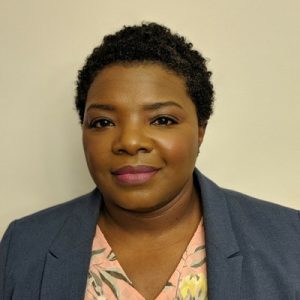
Christina Haynes
· Assistant Professor of African American StudiesPennsylvania State University · African American Studies
Active 2005–2022
About
Dr. Christina S. Haynes received her B.S. from Louisiana State University in History and English. She earned a M.A. in African American and African Studies and a Ph.D. in Education and Human Ecology from Ohio State University. Broadly, her primary area of study is race, gender, and their intersections in higher education. She is specifically interested in the experiences of Black women in predominantly White universities and colleges and how they navigate these often-biased spaces to achieve academic success.
Research topics
- Political Science
- Sociology
- Social Science
- Psychology
- Gerontology
- Anthropology
- Psychotherapist
- History
- Pedagogy
- Gender studies
- Social psychology
- Medicine
Selected publications
International Journal of Multicultural Education · 2022 · 1 citations
1st authorCorresponding- Sociology
- Gender studies
- Sociology
Chronicling my research on academically successful Black women attending predominately white institutions (PWIs), I reflect upon the anxiety, anger, and disillusionment that I personally experienced in graduate school. I discovered while completing the dissertation that other Black women at PWIs navigate similar challenges. Using narrative inquiry, I explore how this research program developed and how the high-achieving women interviewed shaped my ideas about gender, race, and belongingness and the complexity of coping with racism. I wish for other women of color to realize they are not alone in their frustrations; I hope my research helps these women understand that their presence is both needed and valued in the academy.
The Journal of Race Ethnicity and Politics · 2020
1st authorCorresponding- Political Science
- Sociology
- Gerontology
An abstract is not available for this content so a preview has been provided. Please use the Get access link above for information on how to access this content.
EXPLORING THE ORAL HISTORIES OF AFRICAN AMERICANS WHO SUPPORT DONALD TRUMP
Purdue University Press eBooks · 2020 · 2 citations
Senior authorCorresponding- Political Science
- History
- Political Science
Role-Model-In-Chief: Understanding a Michelle Obama Effect
Politics & Gender · 2019-02-04 · 15 citations
article1st authorCorrespondingBecause of the national conversation about her status as a role model, the former First Lady of the United States (FLOTUS) presents an opportunity to analyze an Obama effect—particularly, the idea that Michelle Obama's prominence as a political figure can influence, among other things, citizens’ impressions of black women in America. Using evidence from the 2011 Henry J. Kaiser Family Foundation/ Washington Post survey, we demonstrate that Michelle Obama's status as a role model operates as a “moderated mediator”: it transmits the effect of the former FLOTUS’ media activities to respondents’ racial attitudes, and the degree to which role model status functions as a mediating variable differs by race (and, to a lesser degree, by gender). Thus, our research provides both a theoretical and an empirical contribution to the Obama-effect literature.
The Journal of African American History · 2019-09-01
article1st authorCorrespondingInternational Journal of Qualitative Studies in Education · 2019-07-09 · 7 citations
article1st authorCorrespondingHigh achieving Black female students attending predominately-White institutions (PWIs) are stereotyped as being strong willed and celebrated for their resilience. On the surface, these narratives seem to compliment African American students for doing well. However, strong-Black-woman depictions trivialize the racism and sexism these women experience. Utilizing Black feminist geographic theory, I argue that colleges and universities can be "paradoxical spaces" for academically successful Black women: The sense of accomplishment that comes from performing at peak levels often gets undercut by the marginalization these women face on campus. Qualitative, open-ended interviews of 20 participants attending a large Midwestern PWI demonstrate that high achieving African American women relish the intellectual challenges of their academic pursuits, yet they also deal with intense feelings of isolation and frustration.
Gender and Education · 2018-10-11 · 23 citations
article1st authorCorrespondingDespite an increase in scholarship exploring the challenges African American women face in the classrooms of predominantly White institutions, there is surprisingly little research on the experiences of these women as they navigate the social spaces of PWIs. I address this shortcoming by investigating how African American women navigate socio-spatial interactions in residence halls. I use qualitative evidence from interviews with academically successful African American women at a Midwestern PWI. While I find that African American women do not have an aversion to developing friendships with White students, racial and gender tensions motivate African American women to self-segregate. Because they are marginalized both inside and outside the classroom, African American women develop socio-spatial practices that insulate them from White students in the dorms.
2017-09-29 · 4 citations
book-chapterSenior authorIn an attempt to broaden her appeal among mainstream voters, Michelle Obama took to the airwaves to transform her persona from an assertive career woman to that of an “everymom,” who is more reminiscent of Jackie Onassis than Hillary Clinton. The “Michelle Obama Image Transformation” (MOIT) hypothesis—that is, the idea that perceptions of Mrs. Obama have changed since the First Lady took over the airwaves—is a point of debate among journalists, survey designers, political pundits, and academics. This chapter utilizes the MOIT hypothesis to what is thus far its most comprehensive test. A careful reading of the MOIT literature helps us to construct an aggregate-level model of Michelle Obama perceptions, one that considers the importance of both the frequency and the type of television appearances on favorability ratings. The circumstances necessitating the MOIT date back to the 2008 Democratic Party presidential primaries, when opponents constructed narratives about Mrs. Obama that portrayed her as unconventional, anti-American, and/or unladylike.
2016-01-01 · 2 citations
articleSenior author“MOM-IN-CHIEF” RHETORIC AS A LENS FOR UNDERSTANDING POLICY ADVOCACY:
Purdue University Press eBooks · 2015-11-15 · 1 citations
book-chapterSenior author
Frequent coauthors
- Resume-aware match score
- Save to shortlist
- AI-drafted outreach
See your match with Christina Haynes
PhdFit ranks faculty by your research interests, methods, and publications — grounded in their actual work, not templates.
- Free to start
- No credit card
- 30-second signup