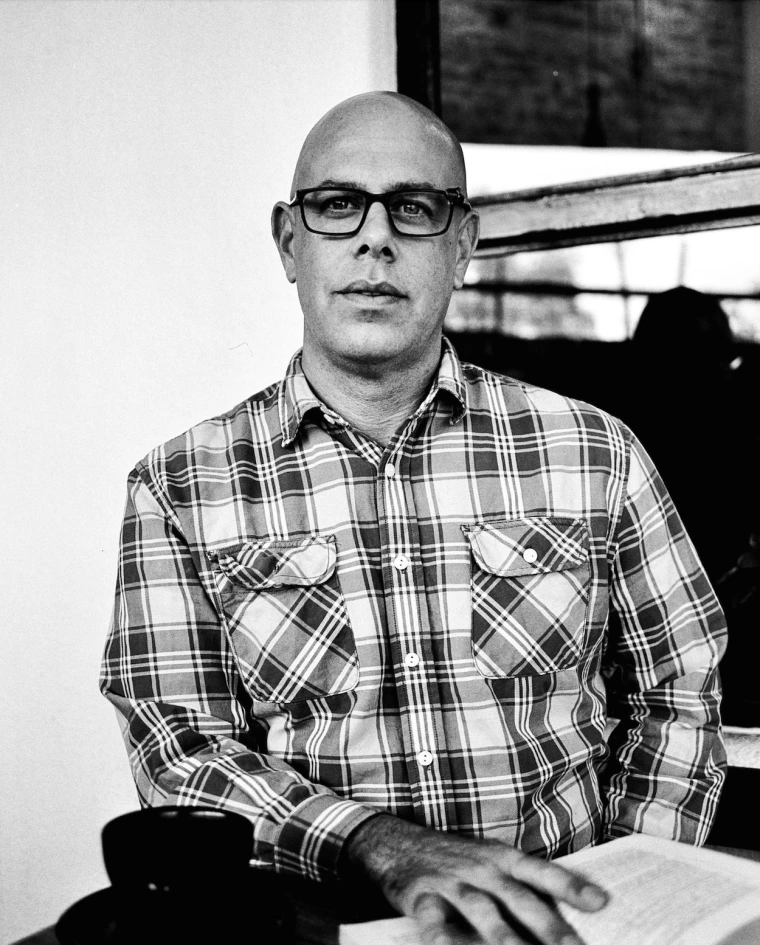
Stefano Bloch
· Associate Professor Graduate Program in Social, Cultural & Critical Theory Trial Expert: gangs, graffiti, crimeVerifiedUniversity of Arizona · Geography and Development Studies
Active 2008–2025
About
Stefano Bloch is an associate professor in the Graduate Program in Social, Cultural & Critical Theory at the School of Geography, Development & Environment. He is a cultural geographer who conducts research on neighborhood change, criminality and criminalization, policing, prisons, and identity, with particular expertise in LA-based gangs, graffiti, and the use of ethnographic and autoethnographic research methods. Bloch has authored the book 'Going All City: Struggle and Survival in LA's Graffiti Subculture,' published by the University of Chicago Press in 2019, and is working on his second book, 'An Urban Autopsy of an LA Gang Killing.' He regularly teaches courses such as 'Crime and the City,' 'Cultural Geography,' an Honors College Seminar, 'Cultural and Urban Geography' at the graduate level, and the Oaxaca Study Abroad Spring Break Course. He can be contacted via email for expert witness cases involving gangs, gang identity, graffiti, or related issues.
Research topics
- Sociology
- Political Science
- Criminology
- Gender studies
- Engineering
- Law
- Psychoanalysis
- Geography
- Architectural engineering
- History
- Psychology
- Aesthetics
- Anthropology
Selected publications
Crime as Relational Concept in Political Geography
Geography Compass · 2025-08-01 · 1 citations
article1st authorCorrespondingABSTRACT I call on geographers and other social scientists, including critical criminologists, to continue theorizing crime as a relational concept shaped by political narratives and politicized perceptions of place. Building on the literature in geography, I propose a relational ontology of crime—viewing it not as a fixed set of illicit acts, incidents of victimization, or violations of legal code, but as a political concept that influences how people and places are imagined. By shifting focus from crime as events to crime as an ontological category, scholars can better understand its role in advancing ideological perceptions of place, the incitement of fear, and uninformed calls for social control and increased criminalization.
Spatially contingent racialization: A prison site ontology
Environment and Planning D Society and Space · 2025-11-06
article1st authorCorrespondingThis paper examines the racialization processes within the US prison system through the lens of site ontology. We argue that racial formation in prison cannot be understood through universalizing or structuralist notions of race alone. Rather, the prison as a site of racialization demonstrates that such processes are spatially contingent and actively negotiated. Drawing in part on personal experience, we reveal how prisoners engage in “running” race; that is, opting into specific racial affiliations as social and existential survival strategies that reflect both individual agency and site-specific prison “politics.” In elucidating this process, we contend that hierarchical conceptualizations and structuralist theories do not sufficiently account for spatially contingent racial categorization experienced by prisoners. We instead advance an ontologically flat, theoretically grounded, and relational understanding of racialization that is informed by experiential data and agentic discourse. Beyond this present paper, we argue that this ontological approach can also be applied to understanding processes of racialization and other forms of identity construction in sites far afield from the prison.
Banging them out: An affective politics of prison sound
Geoforum · 2025-07-01 · 1 citations
article1st authorCorresponding2025-01-01
book-chapter1st authorCorrespondingContexts · 2025-02-01
article1st authorCorrespondingStefano Bloch on Sons, Daughters, and Sidewalk Psychotics and The Marvelous Ones.
Centering Urban Autoethnographies on the Margins
2025-04-25 · 2 citations
other1st authorCorresponding2024-01-01
book-chapter1st authorCorrespondingPrison geographies: Nine disciplinary approaches
Geography Compass · 2024-03-01 · 5 citations
article1st authorCorrespondingAbstract Motivated by a critical concern for state‐sanctioned coercion, control, and containment across “free society,” geographers have extended Foucault's concept of “the carceral” to more and increasingly diffuse spaces and processes. In this paper, however, we aim to re‐center the prison in the carceral geographies literature, reasserting it as the sine qua non of the subfield. In doing so, we organize geographers' analysis of prisons into nine conceptual categories based on this journal's areas of geographical exploration: cultural, development, economic, environment, geographic information systems & quantitative, historical, political, social, and urban. In addition to providing a review of existing prison research in geography, we illustrate the diversity of disciplinary approaches to that most “complete and austere” of institutions.
A Legal Geography of Prison and Other Carceral Spaces
Antipode · 2024-01-30 · 15 citations
article1st authorCorrespondingAbstract As scholars apply the concept of “the carceral” to more and increasingly diffuse spaces of containment, displacement, and cordoning across free society, I call for a means by which “carcerality” is measured and understood as a productive force in the denial of constitutional rights and protections. I therefore provide a legal reading of carcerality, which establishes prisons as the sine qua non of the carceral landscape, preceded by an analysis of how the reliance on civil law, nuisance ordinances, and other methods of constitutional circumvention in the absence of criminal procedure works within the public sphere to punish residents residing within what Foucault called the carceral archipelago. Along the way I provide vignettes about my own experience with the legal and insidious forms of criminalisation and non‐criminal punishment that comprise the carceral continuum.
Oxford University Press eBooks · 2024-01-23 · 1 citations
book-chapter1st authorCorrespondingAbstract Research on place-making and place-taking coming out of the discipline of geography remains an untapped intellectual resource for research on gangs. Part of the reason for this is that geographers have not sufficiently included gangs and gang members in their theories of space and place. This may be surprising given what is known about gangs and their place-oriented penchant for territoriality and neighborhood demarcation as part of their expressed raison d’être. This chapter brings geography further into the conversation on gangs that criminologists and sociologists have been having for decades, concluding with personal reflection and a discussion about how to make geography a home for gang studies.
Frequent coauthors
- 4 shared
Enrique Alan Olivares‐Pelayo
University of Arizona
- 3 shared
Dugan Meyer
University of Arizona
- 3 shared
Susan A. Phillips
Pitzer College
- 2 shared
Daniel E. Martínez
University of Arizona
- 1 shared
Ann Westmore
University of Melbourne
- 1 shared
Anna C Clarke Patricia Fitzpatrick
- 1 shared
William Norton
NHS Greater Glasgow and Clyde
- 1 shared
Paolo Giaccaria
Education
- 2013
Ph.D, Geography and the Environment
University of Minnesota
- 2005
MA, Urban Planning
University of California Los Angeles
- 2001
BA, Literature
University of California Santa Cruz
- Resume-aware match score
- Save to shortlist
- AI-drafted outreach
See your match with Stefano Bloch
PhdFit ranks faculty by your research interests, methods, and publications — grounded in their actual work, not templates.
- Free to start
- No credit card
- 30-second signup