Resume-aware faculty matching

Find professors who actually fit you

Upload your resume. Four AI agents analyze your background, rank the faculty who fit, inspect their recent research, and help you draft outreach — grounded in their actual work, not templates.

Free to startNo credit cardCancel anytime
Top matches Balanced preset
Dr. Sarah Chen
Stanford · Interpretability · NLP
91
Dr. Marcus Holloway
MIT · Robotics · RL
84
Dr. Aisha Okonkwo
CMU · Fairness · HCI
82
Nova · Professor Researcher · re-ranking top 20…
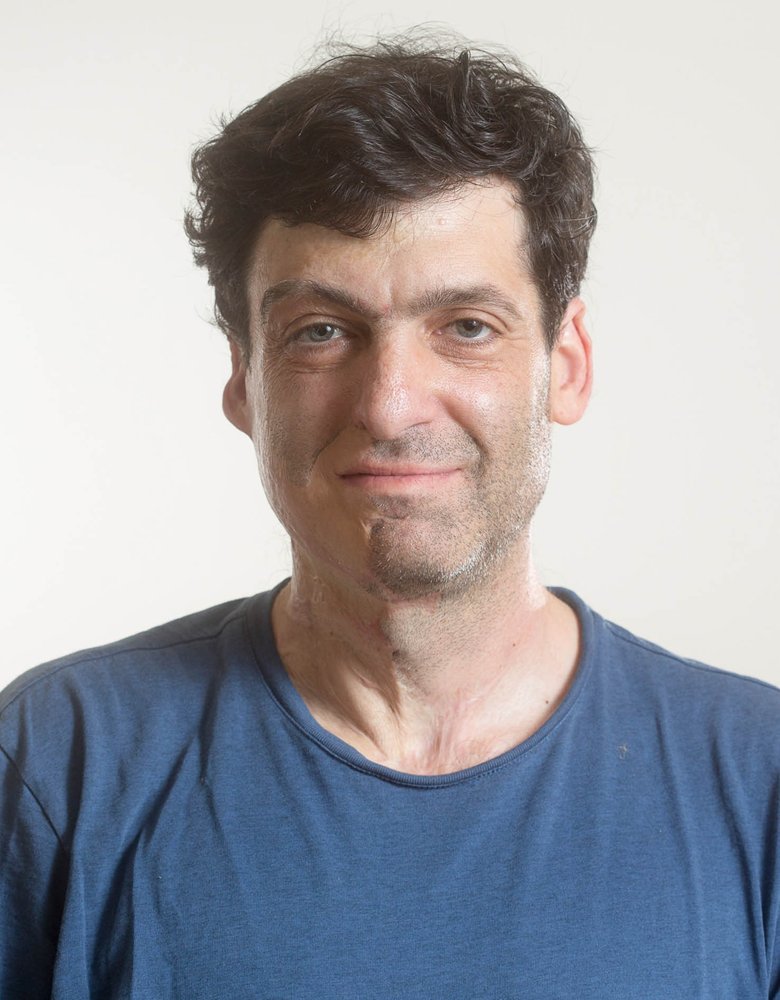
Dan Ariely

Dan Ariely

· Clinical Professor of MarketingVerified

Duke University · Operations Management

Active 1995–2025

h-index97
Citations43.9k
Papers42752 last 5y
Funding$432k
See your match with Dan Ariely — sign in to PhdFit.Sign in

About

Dan Ariely is a Professor of Business Administration at Duke University's Fuqua School of Business and a founding member of the Center for Advanced Hindsight. His research focuses on behavioral economics, specifically on the irrational ways people behave, which he describes in plain language. His interest in irrationality was sparked by his personal experience of overcoming injuries sustained in an explosion, during which he observed irrational behaviors in medical treatments. This led him to investigate how to better deliver painful and unavoidable treatments to patients. Ariely's work explores how individuals repeatedly and predictably make wrong decisions in many aspects of life, and he believes that research can help change some of these patterns. He has authored several books, including 'Irrationally Yours,' 'Predictably Irrational,' 'The Upside of Irrationality,' and 'The (Honest) Truth About Dishonesty,' aiming to communicate his research findings to a broader audience. His efforts include a movie titled 'Dishonesty' and a card game called 'Irrational Game,' both designed to make behavioral economics accessible and engaging for the general public.

Research topics

  • Medicine
  • Computer Science
  • Internal medicine
  • Psychology
  • Social psychology
  • Emergency medicine
  • Nursing
  • Intensive care medicine
  • Family medicine
  • Physical therapy

Selected publications

  • Unmasking Conspiracy Theorists: Personality Differences and Recruitment Challenges in Online Environments

    2025-03-26

    preprintOpen accessSenior author

    The growing prevalence of conspiracy theories, fueled by misinformation and declining trust, has raised concerns about their societal impact. Thus, it has become increasingly necessary to determine the antecedents to conspiratorial beliefs. While existing literature links some personality traits with conspiracist ideation and beliefs, the findings remain disparate and with limited field research. To better understand the associated traits, we conducted a field study where we recruited both conspiracy theorists and non-conspiracy theorists through social media ads and posts. In the survey, they completed a conspiracist ideation scale (the Generic Conspiracist Beliefs Scale) and up to 70 validated scales measuring varying psychological traits. We saw moderate conspiratorial ideation and significant differences in traits between conspiracy theorists and non-conspiracy theorists. These specific traits are largely rooted in epistemic and social motives, and include preferences for individualism and hierarchy, belief in the purpose of events, precognition, rigid and stereotyped views, psi beliefs, experiences of discrimination, lack of open-mindedness, and entitlement rage. Furthermore, we found that conspiracy theorists were more difficult to recruit on social media when targeting based on expected engagement features (e.g., keywords; platform). Despite reaching over 2.7 million people online, high attrition resulted in a survey completion rate of 0.09% (N = 2,359) and only engaging 0.03% of the targeted individuals with conspiratorial content. This study provides insights into the personality traits prevalent among conspiracy theorists and highlights challenges in recruiting them online.

  • Unmasking Conspiracy Theorists: Personality Differences and Recruitment Challenges in Online Environments

    2025-11-15

    articleOpen accessSenior author

    The growing prevalence of conspiracy theories, fueled by pervasive misinformation (1) and declining trust (2), has raised concerns about their societal impact. Thus, it has become increasingly necessary to determine the antecedents to conspiratorial beliefs. While existing literature links some personality traits with conspiracist ideation and beliefs, the findings remain disparate and with limited field research. To better understand the associated traits, we conducted a field study in which we recruited both conspiracy theorists and non-conspiracy theorists through social media ad targeting and posts. In the survey, they completed a conspiracist ideation scale (the Generic Conspiracist Beliefs Scale) and up to 70 validated scales measuring varying psychological traits. We saw moderate conspiratorial ideation and significant differences in key traits between conspiracy theorists and non-conspiracy theorists. These include the belief in the purpose of events, precognition, entitlement rage, open-mindedness, rigid and stereotyped views, higher levels of perceived stress, the occurrence of more stressful life events, and individualism and hierarchy. Conspiracy theorists were also more difficult to recruit on social media when targeting based on expected engagement features. Despite reaching over 2.7 million people online, high attrition resulted in a survey completion rate of 0.09% (N = 2,359). This study provides insights into the personality traits prevalent among conspiracy theorists and highlights challenges in recruiting them online.

  • Green Wolf Optimization for Hybrid Energy Systems: Improving Income and Battery Efficiency

    SSRN Electronic Journal · 2025-01-01

    preprintOpen access1st authorCorresponding
  • Is the Department of Government Efficiency (DOGE) a curse or a blessing for universities?

    Medical Research Archives · 2025-01-01

    articleOpen access1st authorCorresponding

    As faculty members many of us are experiencing a period of uncertainty and stress about the future of academia. In this short opinion piece, I reflect on my own journey. Similar to the different stages of grief, I have gone through my own stages of dealing with the clash between academia and the Trump administration. My first step was academic curiosity about the proposed changes by the administration. My second step was worry and stress. I then understood some of the ways in which academic institutions have been complicit in creating the current state of affairs. Finally, my current stage is hopefulness that the new rules imposed by DOGE could help universities reinvent themselves in a way that is more useful for institutions of higher education and for society as a whole.

  • Irrational Attachment (Why We Love What We Own)

    2025-01-01

    book-chapter1st authorCorresponding
  • Dishonest behavior can transition to continuous ethical transgressions

    Scientific Reports · 2025-07-08 · 4 citations

    articleOpen accessSenior author

    Ethical decision-making research often focuses on singular events. However, in our daily lives we are regularly tempted to behave dishonestly, and little is known about whether and how repeated ethical deviations can worsen over time. Building upon research on dishonesty and moral disengagement, we test the effect of repeated transgressions on dishonesty. Across six experiments we provide evidence that repeated transgressions can lead to a transition to continuous dishonesty. Individual dishonest acts are thus not independent events, but rather can compound and perpetuate pervasive unethical behavior. We find that making one's self-interested actions more salient hinders the transition to continuous cheating, while unfair financial deprivation, self-serving rewards, and gradual change -- factors that previous research has shown to facilitate moral disengagement - all facilitate the transition to continuous cheating. Moreover, we show that moral disengagement mediates the effect of gradual change on the transition to continuous dishonesty.

  • Corrigendum to “How pledges reduce dishonesty: The role of involvement and identification” [Journal of Experimental Social Psychology 113(2024) 104614]

    Journal of Experimental Social Psychology · 2024-06-05

    erratumOpen accessSenior author
  • Effectiveness of ex ante honesty oaths in reducing dishonesty depends on content

    Nature Human Behaviour · 2024-10-21 · 12 citations

    articleOpen access
  • Access to Mobile Health Interventions Among Patients Hospitalized With Heart Failure: Insights Into the Digital Divide From the CONNECT-HF mHealth Substudy

    Circulation Heart Failure · 2024-02-01 · 5 citations

    article
  • Navigating uncertainty: Exploring consumer acceptance of artificial intelligence under self-threats and high-stakes decisions

    Technology in Society · 2024-10-19 · 16 citations

    articleOpen accessSenior author

    In an era of transformation fueled by Artificial Intelligence (AI), human resistance to adopt this powerful technology has emerged as one of its most critical barriers. In a series of four studies involving almost 4,000 consumers, this research explores factors that contribute to consumer reluctance toward AI through theories related to algorithm aversion, decision-making under risk, and compensatory decision-making. The results underscore the impact of decision stakes and their adverse outcomes on AI service agent adoption across decision domains. These effects can be attributed to the self-threat experienced by consumers in high-stakes decision scenarios. Together, the current findings advance our understanding of consumer responses in the context of AI adoption, illustrating how perceived stakes and self-threats foster reluctance to rely on AI agents for advice. From a practical standpoint, the results emphasize the need of a hybrid approach—combining AI and human agents—for a successful transition toward AI-powered service industries. • Consumers show persistent bias against advice from AI agents. • High decision stakes lead consumers to prefer human advice over AI advice. • This effect is more (less) pronounced in medical (legal, retail) decisions. • Perceived self-threat influences AI advice acceptance, particularly in high-stakes decisions. • AI combined with human agents shows mixed but more positive results.

Recent grants

Frequent coauthors

  • Nina Mažar

    57 shared
  • Janet Schwartz

    53 shared
  • Francesca Gino

    Harvard University

    40 shared
  • Michael I. Norton

    39 shared
  • Joel Huber

    33 shared
  • George Loewenstein

    32 shared
  • Thomas Emerick

    LEK Consulting (United States)

    26 shared
  • Nortin M. Hadler

    26 shared

Education

  • Ph.D., Psychology

    Massachusetts Institute of Technology (MIT)

    1994
  • M.S., Psychology

    Carnegie Mellon University

    1991
  • B.S., Psychology

    Tel Aviv University

    1988
  • Resume-aware match score
  • Save to shortlist
  • AI-drafted outreach

See your match with Dan Ariely

PhdFit ranks faculty by your research interests, methods, and publications — grounded in their actual work, not templates.

  • Free to start
  • No credit card
  • 30-second signup