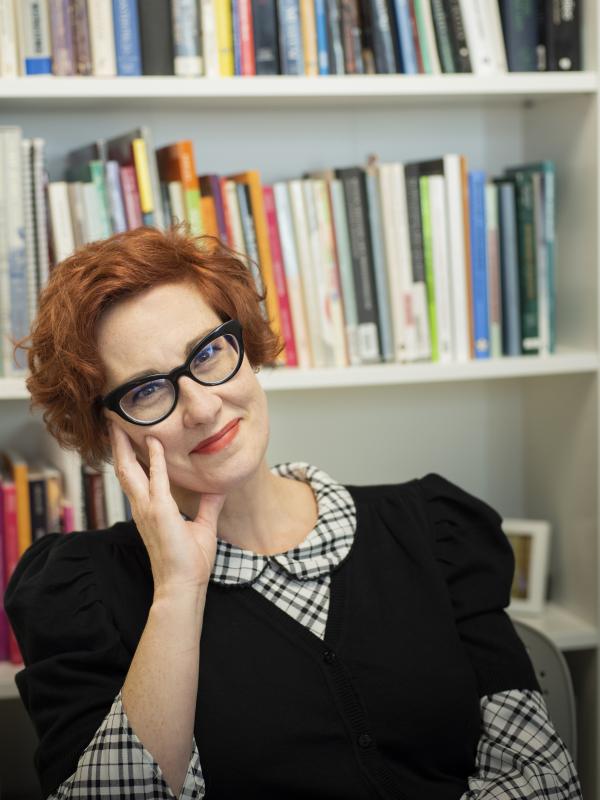
Dana Carlisle Kletchka
· Associate Professor, Graduate Studies ChairVerifiedOhio State University · Art
Active 2000–2025
About
Dana Carlisle Kletchka is an Associate Professor of Art Museum Education in the Department of Arts Administration, Education and Policy at The Ohio State University. She serves as the Faculty Director for the Museum Education and Administration Specialization. Her research areas include post-critical art museum education theory, professional development for PreK–12 teachers in art museum contexts, the use of social media and digital technologies on interpretation and engagement in the art museum, and the professional positionality of art museum educators within the paradigmatic shifts of art museums over the last 40 years. With over 20 years of museum career experience, she has held positions such as Curator of Education at the Palmer Museum of Art at The Pennsylvania State University, Coordinator of Docent and Interpretive Programs at the Philbrook Museum of Art, and a Curatorial Intern in Art Museum Education at the Spencer Museum of Art, University of Kansas. She earned her Bachelor of Arts degrees in English and Art History from the University of Kansas, an M.A. in art education from the same institution, and a Ph.D. in art education from The Pennsylvania State University in 2010. Her scholarly work has been published in numerous journals and books, and she has co-edited a book on professional development in art museums. Her teaching includes undergraduate and graduate courses in art museum education, contemporary museology, arts management, and arts policy.
Research topics
- Sociology
- Political Science
- Pedagogy
- History
- Gender studies
- Law
- Art
- Public relations
- Art history
- Visual arts
- Aesthetics
- Archaeology
Selected publications
Editorial: Art museum education in the wake of COVID-19
Arts Education Policy Review · 2025-06-24
editorial1st authorCorrespondingArt Education · 2024-01-02
articleSenior authorPrograms and Art Education: Becoming Socially Responsive
Sociology of the arts · 2023-01-01
book-chapter1st authorCorrespondingMuseum Education for Disability Justice and Liberatory Access
Journal of Museum Education · 2022 · 11 citations
Senior authorCorresponding- Sociology
- Sociology
- Political Science
This article engages crip theory and concepts from Critical Disability Studies to frame museum education through critical access and disability justice to center disabled, Mad, and neurodiverse audiences in public practice. The authors introduce and define key concepts and ask questions to cultivate liberatory access for museum education. Theoretical concepts include (1) critical access and “leadership of those most impacted,” (2) crip time and flexibility, and (3) curatorial care and collective responsibility. By engaging the work of crip knower-makers, we elucidate the ways in which these three areas can inform a politics of relation and pedagogical practices. In essence, we propose liberatory access and a pedagogy in solidarity with the disability justice movement, as a reorientation through which disabled people are not invited to participate in an able-bodied, inaccessible space, but where we all venture toward a world of solidarity to inhabit alongside one another.
Socially Responsive Museum Pedagogy
IGI Global eBooks · 2021-12-16
book-chapter1st authorCorrespondingArt museums in the United States have long been called upon to provide educational and engaging experiences for their visitors; more recently, this expectation has expanded to address the most salient needs of local communities and respond to issues of social inequality. At The Ohio State University's Wexner Center for the Arts, these collaborations are woven into the mission of the institution and serve as a foundation of its educational framework. In this chapter, the authors highlight specific community collaborations between the Wexner Center for the Arts, the Department of Arts Administration, Education, and Policy at Ohio State, and the Columbus, Ohio, community. They suggest that these programs not only individually serve as examples for other institutions and university students engaged in museum education scholarship, but also collectively form a socially responsive museum pedagogy enacted in an ongoing cycle of collaborative inquiry.
Museum Management and Curatorship · 2021 · 6 citations
1st authorCorresponding- Sociology
- Sociology
- Aesthetics
Art museum educators have long occupied a lower rank than their curatorial counterparts in the institutional hierarchies of their organizations. This manuscript provides an overview of research that attempted to make sense of art museum educator/curator positionalities by suggesting a sexed and gendered binary of museum work. I turn to queer theory to trouble and expand that analysis by situating education/curation as one of many contradictory discourses within a larger Western epistemological tradition that fueled myriad binaries and cast specific bodies in sexed and gendered ways. I utilize the physical structure of basement – the location of many art museum education departments and offices – as a corollary to the queer closet, a space to interrogate the charged education/curation pairing, explore the habitus of contemporary art museum educators, and evoke queer orientations that consider the basement a point of departure rather than a final point of physical and institutional situatedness.
Art Museum Educators: Who Are They <i>Now</i>?
Curator The Museum Journal · 2021 · 10 citations
1st authorCorresponding- Sociology
- Sociology
- Visual arts
Abstract “Art Museum Educators: Who Are They?” is one of the earliest published studies about individuals in the profession of art museum education. Zeller’s questions elicited responses about their demographics, education, experience, professional involvement, and level of status in art museum professional hierarchies. The results showed that most respondents were upper‐middle class, married women with degrees in art history; had professional involvements with art historical associations and scholars; and existed on a relatively low rung of the professional ladder. The quest to understand more about these individuals is just as relevant 35 years later, as the field navigates a profound paradigmatic shift intent on investing in diverse communities and individual visitors over strictly art‐historical interpretations of objects . This study asks who art museum educators are now and shares the result of a nationwide questionnaire on the personal and professional entanglements of AMEs; critically examines the collected data on those individuals who envision and enact a public curriculum on behalf of their institutions; and suggests broader implications for the field and for art museums that are vastly different than ones Zeller knew.
Studies in Art Education · 2020-01-02 · 1 citations
article1st authorCorrespondingArt Museum Education: Facilitating Gallery Experiences, by Olga Hubard, is a meditation on the potential between works of art and audiences facilitated by dialogue. As such, this book is firmly ens...
The Personal Is Pedagogical: Manifesting Queerness in an Academic Department
Visual Arts Research · 2020-06-09 · 2 citations
article1st authorCorrespondingAbstract University visual art education departments are often regarded as having disciplinary strengths in certain areas of scholarship or research, which in turn foster specific research directions with graduate students and programs or coursework for undergraduates. In this article for a special queer-centered issue of Visual Arts Research, lead author Dana Carlisle Kletchka identifies an explicitly queer-affirming academic department that manifests particular social relations through individual politics and identities in relation to queerness, the ways in which queerness is treated throughout pedagogies and curricula, and openness to continually re-examining the ways in which power relationships are constructed and deployed in classrooms and academic spaces. She has faculty write about what it means to work in an explicitly queer-affirming environment: how it impacts their positionalit(ies) as professors, their critical pedagogical practices, and their research. Themes of equity, emancipatory teaching and learning, intersectionality, and critical social justice echoed through their responses.
The International Journal of the Inclusive Museum · 2020-01-01 · 1 citations
articleSenior author
Frequent coauthors
- 2 shared
Joni Boyd Acuff
- 2 shared
Shannon Thacker Cregg
- 2 shared
Shelly Casto
Highland Community College - Kansas
- 1 shared
Eunjung Choi
- 1 shared
Logan Ward
Argonne National Laboratory
- 1 shared
Rhonda Friday
- 1 shared
James H. Sanders
Utrecht University
- 1 shared
Shari L. Savage
The Ohio State University
Education
- 2010
Ph.D., Art Education
Pennsylvania State University
- 1997
Master of Arts, Visual Art Education
University of Kansas
Awards & honors
- National Art Education Association’s Art Educator of the Yea…
- Resume-aware match score
- Save to shortlist
- AI-drafted outreach
See your match with Dana Carlisle Kletchka
PhdFit ranks faculty by your research interests, methods, and publications — grounded in their actual work, not templates.
- Free to start
- No credit card
- 30-second signup