Resume-aware faculty matching

Find professors who actually fit you

Upload your resume. Four AI agents analyze your background, rank the faculty who fit, inspect their recent research, and help you draft outreach — grounded in their actual work, not templates.

Free to startNo credit cardCancel anytime
Top matches Balanced preset
Dr. Sarah Chen
Stanford · Interpretability · NLP
91
Dr. Marcus Holloway
MIT · Robotics · RL
84
Dr. Aisha Okonkwo
CMU · Fairness · HCI
82
Nova · Professor Researcher · re-ranking top 20…
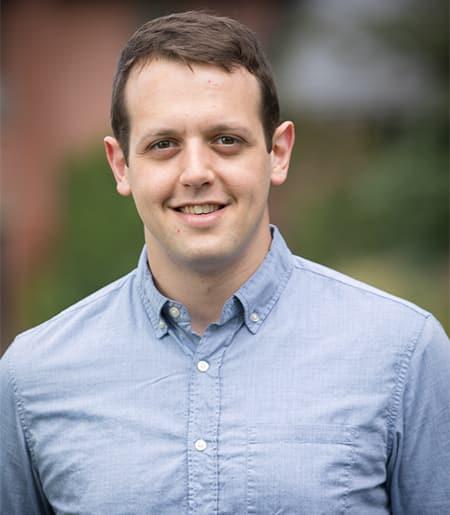
Daniel Halpern-Leistner

Daniel Halpern-Leistner

· Associate ProfessorVerified

Cornell University · Mathematics

Active 2010–2025

h-index14
Citations698
Papers4422 last 5y
Funding$550k1 active
See your match with Daniel Halpern-Leistner — sign in to PhdFit.Sign in

About

Daniel Halpern-Leistner is an Associate Professor in the Department of Mathematics at Cornell University. He earned his Ph.D. from the University of California, Berkeley in 2013. His research focuses on analysis and topology, with particular emphasis on algebraic geometry, homological algebra, mathematical physics, and representation theory. His work involves incorporating modern methods such as the theory of algebraic stacks, derived algebraic geometry, and homological algebra into classical problems related to moduli spaces and geometric invariant theory. His main project, the 'beyond geometric invariant theory' program, extends classical geometric invariant theory and has been applied to questions about derived categories, including the D-equivalence conjecture, as well as classical topics like the Verlinde formula.

Research topics

  • Computer Science
  • Mathematical analysis
  • Mathematics
  • Pure mathematics
  • Artificial Intelligence
  • Physics
  • Algorithm
  • Discrete mathematics
  • Quantum mechanics
  • Combinatorics

Selected publications

  • A categorical perspective on non-abelian localization

    ArXiv.org · 2025-09-28

    preprintOpen access1st authorCorresponding

    In equivariant geometry, a localization (a.k.a., concentration) theorem is typically interpreted as a relationship between the equivariant geometry of a space with a group action and the geometry of its fixed locus. We take a different perspective, that of non-abelian localization: a localization theorem relates the geometry of an algebraic stack that is equipped with a $Θ$-stratification to the geometry of the centers of this stratification. We establish a ``virtual'' $K$-theoretic non-abelian localization formula, meaning it applies to algebraic derived stacks with perfect cotangent complexes. We also establish a categorical upgrade of this theorem, by introducing a category of ``highest weight $K$-homology cycles'' with respect to the stratification, and relating the category of highest weight cycles on the stack to those on the centers of its $Θ$-stratification. We apply these results to prove a universal wall-crossing formula, and establish a new finiteness theorem for the cohomology of tautological complexes on the stack of one-dimensional sheaves on an algebraic surface.

  • The space of augmented stability conditions

    arXiv (Cornell University) · 2025-01-01

    preprintOpen access1st authorCorresponding

    Given a triangulated category $\mathcal{C}$, we construct a partial compactification, denoted $\mathcal{A}\mathrm{Stab}(\mathcal{C})$, of the quotient of its stability manifold by $\mathbb{C}$. The purpose of $\mathcal{A}\mathrm{Stab}(\mathcal{C})$ is to shed light on the structure of semiorthogonal decompositions of $\mathcal{C}$. A point of $\mathcal{A}\mathrm{Stab}(\mathcal{C})$, called an augmented stability condition on $\mathcal{C}$, consists of a newly introduced homological structure called a multiscale decomposition, along with stability conditions on subquotient categories of $\mathcal{C}$ associated to this multiscale decomposition. A generic multiscale decomposition corresponds to a semiorthogonal decomposition along with a configuration of points in $\mathbb{C}$. We give a conjectural description of open neighborhoods of certain boundary points, called the "manifold-with-corners conjecture," and we prove it in a special case. We show that this conjecture implies the existence of proper good moduli spaces of Bridgeland semistable objects in $\mathcal{C}$ when $\mathcal{C}$ is smooth and proper, and discuss some first examples where the manifold-with-corners conjecture holds.

  • Full exceptional collections of vector bundles on rank-two linear GIT quotients

    Advances in Mathematics · 2025-10-29

    article1st authorCorresponding
  • Moduli spaces of sheaves via affine Grassmannians

    Journal für die reine und angewandte Mathematik (Crelles Journal) · 2024-02-20 · 2 citations

    article1st authorCorresponding

    Abstract We develop a new method for analyzing moduli problems related to the stack of pure coherent sheaves on a polarized family of projective schemes. It is an infinite-dimensional analogue of Geometric Invariant Theory. We apply this to two familiar moduli problems: the stack of Λ-modules and the stack of pairs. In both examples, we construct a Θ-stratification of the stack, defined in terms of a polynomial numerical invariant, and we construct good moduli spaces for the open substacks of semistable points. One of the essential ingredients is the construction of higher-dimensional analogues of the affine Grassmannian for the moduli problems considered.

  • Projectivity of the moduli of equidimensional branchvarieties

    arXiv (Cornell University) · 2024-10-14

    preprintOpen access1st authorCorresponding

    We resolve an open problem posed by Alexeev-Knutson on the projectivity of the moduli of branchvarieties in the equidimensional case. As an application, we construct projective moduli spaces of reduced equidimensional varieties equipped with ample linear series and subject to a semistability condition.

  • Artin algebraization for pairs with applications to the local structure of stacks and Ferrand pushouts

    Forum of Mathematics Sigma · 2024-01-01 · 7 citations

    articleOpen access

    Abstract We give a variant of Artin algebraization along closed subschemes and closed substacks. Our main application is the existence of étale, smooth or syntomic neighborhoods of closed subschemes and closed substacks. In particular, we prove local structure theorems for stacks and their derived counterparts and the existence of henselizations along linearly fundamental closed substacks. These results establish the existence of Ferrand pushouts, which answers positively a question of Temkin–Tyomkin.

  • On the structure of equivariant derived categories

    arXiv (Cornell University) · 2024-10-14

    preprintOpen access1st authorCorresponding

    In this expository note, we discuss some results of the author on the structure of derived categories of equivariant coherent sheaves and the derived categories of geometric invariant theory quotients. We take a recent perspective, emphasizing the theory of restricted local cohomology. We also discuss several applications and concrete examples: studying the effects of birational modification on derived categories, constructing categorical completions of equivariant derived categories, and constructing actions of generalized braid groups on derived categories of GIT quotients. This is a contribution to the proceedings of the International Congress of Basic Science, held in July 2024.

  • Existence of moduli spaces for algebraic stacks

    Inventiones mathematicae · 2023 · 67 citations

    • Mathematics
    • Pure mathematics
    • Mathematical analysis
  • The noncommutative minimal model program

    arXiv (Cornell University) · 2023-01-30

    preprintOpen access1st authorCorresponding

    This note aims to clarify the deep relationship between birational modifications of a variety and semiorthogonal decompositions of its derived category of coherent sheaves. The result is a conjecture on the existence and properties of canonical semiorthogonal decompositions, which is a noncommutative analog of the minimal model program. We identify a mechanism for constructing semiorthogonal decompositions using Bridgeland stability conditions, and we propose that through this mechanism the quantum differential equation of the variety controls the conjectured semiorthogonal decompositions. We establish several implications of the conjectures: one direction of Dubrovin's conjecture on the existence of full exceptional collections; the $D$-equivalence conjecture; the existence of new categorical birational invariants for varieties of positive genus; and the existence of minimal noncommutative resolutions of singular varieties. Finally, we verify the conjectures for smooth projective curves by establishing a previously conjectured description of the stability manifold of $\mathbb{P}^1$.

  • The structure of the moduli of gauged maps from a smooth curve

    arXiv (Cornell University) · 2023-05-16

    preprintOpen access1st authorCorresponding

    For a reductive group $G$, Harder-Narasimhan theory gives a structure theorem for principal $G$ bundles on a smooth projective curve $C$. A bundle is either semistable, or it admits a canonical parabolic reduction whose associated Levi bundle is semistable. We extend this structure theorem by constructing a $Θ$-stratification of the moduli stack of gauged maps from $C$ to a projective-over-affine $G$-variety $X$. The open stratum coincides with the previously studied moduli of Mundet semistable maps, and in special cases coincides with the moduli of stable quasi-maps. As an application of the stratification, we provide a formula for K-theoretic gauged Gromov-Witten invariants when $X$ is an arbitrary linear representation of $G$. This can be viewed as a generalization of the Verlinde formula for moduli spaces of decorated principal bundles. We establish our main technical results for smooth families of curves over an arbitrary Noetherian base. Our proof develops an infinite-dimensional analog of geometric invariant theory and applies the theory of optimization on degeneration fans.

Recent grants

Frequent coauthors

  • Jarod Alper

    8 shared
  • Jochen Heinloth

    University of Duisburg-Essen

    5 shared
  • Steven V Sam

    University of California, San Diego

    4 shared
  • Chenyang Xu

    4 shared
  • Andres Fernandez Herrero

    Columbia University

    4 shared
  • Trevor Jones

    3 shared
  • Bhargav Bhatt

    3 shared
  • Harold Blum

    University of Utah

    3 shared

Awards & honors

  • Ten A&S faculty honored with endowed professorships
  • Four assistant professors win 2022 Sloan fellowships
  • Resume-aware match score
  • Save to shortlist
  • AI-drafted outreach

See your match with Daniel Halpern-Leistner

PhdFit ranks faculty by your research interests, methods, and publications — grounded in their actual work, not templates.

  • Free to start
  • No credit card
  • 30-second signup