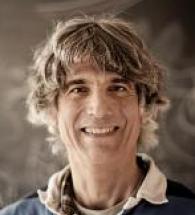
David Gabai
· ProfessorPrinceton University · Mathematics
Active 1983–2026
About
David Gabai is a mathematician whose research focuses on hyperbolic 3-manifolds, 3-manifold topology, and related geometric methods. His work includes significant contributions to the understanding of hyperbolic geometry, the topology of 3-manifolds, and the classification of Heegaard splittings. Gabai has collaborated on topics such as shrinkwrapping techniques, the taming of hyperbolic 3-manifolds, and the enumeration of Kleinian groups. His research also explores the Whitehead manifold, ending lamination space, and the properties of hyperbolic manifolds with low cusp volume. Throughout his career, Gabai has engaged in advanced studies involving geometric methods in topology, the structure of hyperbolic 3-manifolds, and the topology of 4-manifolds. His work often involves collaboration with other prominent mathematicians, contributing to the broader understanding of geometric topology and hyperbolic geometry.
Research topics
- Mathematics
- Mathematical analysis
- Pure mathematics
- Physics
- Combinatorics
- Anatomy
- Biology
- Geometry
Selected publications
Pseudo-isotopies of simply connected 4-manifolds
Forum of Mathematics Pi · 2026-01-01
articleOpen access1st authorAbstract Perron and Quinn gave independent proofs in 1986 that every topological pseudo-isotopy of a simply-connected, compact topological 4-manifold is isotopic to the identity. Another result of Quinn is that every smooth pseudo-isotopy of a simply-connected, compact, smooth 4-manifold is smoothly stably isotopic to the identity. From this he deduced that $\pi _4(\operatorname {\mathrm {TOP}}(4)/\operatorname {\mathrm {O}}(4)) = 0$ . A replacement criterion is used at a key juncture in Quinn’s proofs, but the justification given for it is incorrect. We provide different arguments that bypass the replacement criterion, thus completing Quinn’s proofs of both the topological and the stable smooth pseudo-isotopy theorems. We discuss the replacement criterion and state it as an open problem.
Pseudo-Isotopy and Diffeomorphisms of the 4-Sphere I: Loops of Spheres
ArXiv.org · 2025-05-17
preprintOpen access1st authorCorrespondingWe introduce new methods in pseudo-isotopy and embedding space theory. As an application we introduce an invariant that detects nontrivial loops of embedded 2-spheres in $S^{2} \times S^{2}$ and in connected sums of $S^{2} \times S^{2}$. that cannot be homotoped to a loops of spheres dual to the standard horizontal sphere. In the sequel [GGH], we will use these techniques to expand upon the applicability of the invariant and prove $\operatorname{Diff}^{+}(S^{4})$ has an exotic element.
On the Automorphism Groups of Hyperbolic Manifolds
International Mathematics Research Notices · 2025-04-01 · 2 citations
articleSenior authorAbstract Let ${\mathrm{Diff}}_{0}(N)$ represent the subgroup of diffeomorphisms that are homotopic to the identity. We show that if $N$ is a closed hyperbolic 4-manifold, then $\pi _{0}{\mathrm{Diff}}_{0}(N)$ is not finitely generated with similar results holding topologically. This proves in dimension-4 results previously known for $n$-dimensional hyperbolic manifolds of dimension $n\ge 11$ by Farrell and Jones in 1989 and $n\ge 10$ by Farrell and Ontaneda in 2010. Our proof relies on the technical result that $\pi _{0}{\mathrm{Homeo}}(S^{1}\times D^{3})$ is not finitely generated, which extends to the topological category smooth results of the authors. We also show that $\pi _{n-4} {\mathrm{Homeo}}(S^{1} \times D^{n-1})$ is not finitely generated for $n \geq 4$ and in particular $\pi _{0}{\mathrm{Homeo}}(S^{1}\times D^{3})$ is not finitely generated. These results are new for $n=4, 5$ and $7$. We also introduce higher dimensional barbell maps and establish some of their basic properties.
Doubles of Gluck twists: A five-dimensional approach
Advances in Mathematics · 2025-07-30
articleOpen access1st authorCorrespondingContemporary mathematics - American Mathematical Society · 2023-01-01
other1st authorCorrespondingIn this manuscript, we give an overview of the tools and techniques needed for successfully classifying “low-complexity” Kleinian groups. In particular, we focus on extracting topological and geometric properties of discrete Kleinian groups, such as bounds on tube radii, cusp geometry, volume, relators in group presentation, and similar quantities. A key point of this manuscript is to explain how a discrete set of solutions (or their closure) can be found using continuous methods, in particular by searching over a continuous parameter space of groups. These methods provide an effective avenue for studying and classifying hyperbolic 3-manifolds that satisfy some geometric or topological constraints.
On the automorphism groups of hyperbolic manifolds
arXiv (Cornell University) · 2023-03-09
preprintOpen accessSenior authorLet Diff(N) and Homeo(N) denote the smooth and topological group of automorphisms respectively that fix the boundary of the n-manifold N, pointwise. We show that the (n-4)-th homotopy group of Homeo(S^1 \times D^{n-1}) is not finitely-generated for n >= 4 and in particular the topological mapping-class group of S^1\times D^3 is infinitely generated. We apply this to show that the smooth and topological automorphism groups of finite-volume hyperbolic n-manifolds (when n >= 4) do not have the homotopy-type of finite CW-complexes, results previously known for n >= 11 by Farrell and Jones. In particular, we show that if N is a closed hyperbolic n-manifold, and if Diff_0(N) represents the subgroup of diffeomorphisms that are homotopic to the identity, then the (n-4)-th homotopy group of Diff_0(N) is infinitely generated and hence if n=4, then π_0\Diff_0(N) is infinitely generated with similar results holding topologically.
Pseudo-isotopies of simply connected 4-manifolds
ENLIGHTEN (Jurnal Bimbingan dan Konseling Islam) · 2023-11-19
preprintOpen access1st authorCorrespondingPerron and Quinn gave independent proofs in 1986 that every topological pseudo-isotopy of a simply-connected, compact topological 4-manifold is isotopic to the identity. Another result of Quinn is that every smooth pseudo-isotopy of a simply-connected, compact, smooth 4-manifold is smoothly stably isotopic to the identity. From this he deduced that $π_4(\operatorname{TOP}(4)/\operatorname{O}(4)) =0$. A replacement criterion is used at a key juncture in Quinn's proofs, but the justification given for it is incorrect. We provide different arguments that bypass the replacement criterion, thus completing Quinn's proofs of both the topological and the stable smooth pseudo-isotopy theorems. We discuss the replacement criterion and state it as an open problem.
Doubles of Gluck twists: a five dimensional approach
arXiv (Cornell University) · 2023-07-12
preprintOpen access1st authorCorrespondingUsing a 5-dimensional perspective, we balance algebraic and geometric handle cancellation to show that doubles of Gluck twists of certain 2-spheres with two minima are standard. This includes all 2-spheres which are unions of ribbon discs, one of which has undisking number one. As an application, we produce new examples of Schoenflies balls not known to be standard.
3-Spheres in the 4-Sphere and Pseudo-Isotopies of $S^1\times S^3$
arXiv (Cornell University) · 2022-12-05
preprintOpen access1st authorCorrespondingWe offer an approach to the smooth 4-dimensional Schoenflies conjecture via pseudo-isotopy theory.
The Two-Eyes Lemma: A Linking Problem for Table-Top Necklaces
Graphs and Combinatorics · 2022-02-01
article1st authorCorresponding
Recent grants
Low Dimensional Topology and Hyperbolic Geometry
NSF · $511k · 2005–2012
NSF · $667k · 2016–2022
NSF · $505k · 2020–2024
Problems in Low Dimensional Geometry and Topology
NSF · $791k · 2010–2017
FRG: Collaborative Research: Understanding Low Volume Hyperbolic 3-Manifolds
NSF · $398k · 2006–2010
Frequent coauthors
- 9 shared
Peter Milley
- 8 shared
Robert Meyerhoff
Duke University
- 8 shared
William Kazez
University of Georgia
- 8 shared
Tobias Colding
Maryland Department of Natural Resources
- 7 shared
G. Robert Meyerhoff
Boston College
- 6 shared
Daniel Ketover
- 4 shared
Maria Trnková
University of California, Davis
- 4 shared
Nathaniel Thurston
Education
- 1986
Ph.D., Mathematics
Princeton University
- 1981
B.A., Mathematics
Harvard University
- Resume-aware match score
- Save to shortlist
- AI-drafted outreach
See your match with David Gabai
PhdFit ranks faculty by your research interests, methods, and publications — grounded in their actual work, not templates.
- Free to start
- No credit card
- 30-second signup