Resume-aware faculty matching

Find professors who actually fit you

Upload your resume. Four AI agents analyze your background, rank the faculty who fit, inspect their recent research, and help you draft outreach — grounded in their actual work, not templates.

Free to startNo credit cardCancel anytime
Top matches Balanced preset
Dr. Sarah Chen
Stanford · Interpretability · NLP
91
Dr. Marcus Holloway
MIT · Robotics · RL
84
Dr. Aisha Okonkwo
CMU · Fairness · HCI
82
Nova · Professor Researcher · re-ranking top 20…
David Jackson

David Jackson

· Professor of Music

University of Michigan · Department of Chamber Music

Active 1975–2024

h-index10
Citations378
Papers324 last 5y
Funding
See your match with David Jackson — sign in to PhdFit.Sign in

About

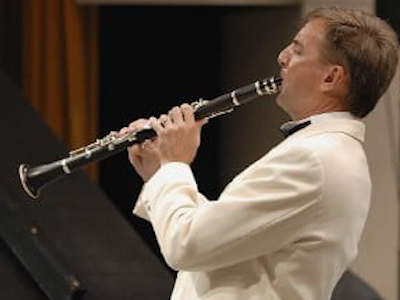
David Jackson is a professor of trombone at the University of Michigan School of Music, Theatre & Dance. He enjoys an active career as a performer and teacher, with a strong support for new music, having commissioned and premiered numerous compositions for the trombone, including Angel of Dreamers by Eric Ewazen and John Henry’s Big by Adolphus Hailstork. Jackson has performed as a guest with various orchestras such as the Detroit Symphony, Pittsburgh Symphony, Dallas Symphony, Chicago Symphony, Fort Worth Symphony, Grand Rapids Symphony, New World Symphony, as well as with the Michigan Opera Theatre and the Cabrillo Music Festival. He is also a member of the Detroit Chamber Winds. In addition to his performance career, Jackson is a sought-after guest clinician and performer, having presented recitals and master classes at prestigious institutions including the Juilliard School, Yale University, UCLA, University of Minnesota, Cincinnati College-Conservatory, and conservatories in Shanghai and Beijing. His former students hold performing and teaching positions worldwide. Jackson has served on the faculties of Baylor University, Eastern Michigan University, the University of Toledo, the Interlochen Arts Camp, and the Idyllwild ChamberFest. During summers, he teaches and performs at the Brevard Music Center. He is an S. E. Shires artist and clinician.

Research topics

  • Ecology
  • Geology
  • Environmental science
  • Fishery
  • Oceanography
  • Computer Science
  • Biology
  • Psychology
  • Psychoanalysis
  • Linguistics
  • Geography
  • Philosophy

Selected publications

  • Individual-Based Ecological Particle Tracking Model (ECO-PTM) for Simulating Juvenile Chinook Salmon Migration and Survival Through the Sacramento–San Joaquin Delta

    San Francisco Estuary and Watershed Science · 2024-12-09

    articleOpen access

    Recovery of endangered salmon species in the Central Valley of California amidst prolonged drought and climate change necessitates innovative water management actions that balance species recovery and California's water demands. We describe an individual-based ecological particle tracking model (ECO-PTM) that can be used to assess the efficacy of proposed actions. Based on a random walk theory, the model tracks individual particles’ travel time, routing and survival in a flow field simulated by the Delta Simulation Model 2 hydrodynamic module (DSM2 HYDRO). The random walk particles are parameterized to have fish-like swimming behaviors, including upstream/downstream swimming, probabilistic holding behaviors, and stochastic swimming velocities. Particle routing at key junctions is based on well-established statistical models, and route-specific survival is calculated using the XT mean free-path length model. Behavioral parameters were estimated by fitting several competing models to a multiyear dataset of travel times from acoustic tagged juvenile salmon. The model’s baseline simulations under historical flow conditions from 1991 to 2016 successfully replicated essential relationships between salmon outmigration survival and hydrodynamic conditions, consistent with previous studies and the STARS (Survival Travel Time and Routing Simulation) statistical simulation model. Simulation results for management scenarios revealed multifaceted influences on fish survival, including Delta flow, flow at key junctions, route alterations, seasons, and water availability characteristics. Importantly, these results highlight ECO-PTM’s potential to predict fish survival outcomes of proposed actions, serving as a foundation for informed future research, decision-making, and effective management strategies to enhance the survival prospects of outmigrating salmonids within the Sacramento-San Joaquin Delta ecosystem.

  • Chinook salmon depth distributions on the continental shelf are shaped by interactions between location, season, and individual condition

    Movement Ecology · 2024 · 7 citations

    • Fishery
    • Oceanography
    • Geography

    BACKGROUND: Ecological and physical conditions vary with depth in aquatic ecosystems, resulting in gradients of habitat suitability. Although variation in vertical distributions among individuals provides evidence of habitat selection, it has been challenging to disentangle how processes at multiple spatio-temporal scales shape behaviour. METHODS: acoustically tagged adult Chinook salmon Oncorhynchus tshawytscha, spanning multiple seasons and years. We used these data to parameterize a machine-learning model to disentangle the influence of spatial, temporal, and dynamic oceanographic variables while accounting for differences in individual condition and maturation stage. RESULTS: The top performing machine learning model used bathymetric depth ratio (i.e., individual depth relative to seafloor depth) as a response. We found that bathymetry, season, maturation stage, and spatial location most strongly influenced Chinook salmon depth. Chinook salmon bathymetric depth ratios were deepest in shallow water, during winter, and for immature individuals. We also identified non-linear interactions among covariates, resulting in spatially-varying effects of zooplankton concentration, lunar cycle, temperature and oxygen concentration. CONCLUSIONS: Our results suggest Chinook salmon vertical habitat use is a function of ecological interactions, not physiological constraints. Temporal and spatial variation in depth distributions could be used to guide management decisions intended to reduce fishery impacts on Chinook salmon. More generally, our findings demonstrate how complex interactions among bathymetry, seasonality, location, and life history stage regulate vertical habitat selection.

  • Simulating the migration dynamics of juvenile salmonids through rivers and estuaries using a hydrodynamically driven enhanced particle tracking model

    Ecological Modelling · 2023 · 7 citations

    • Computer Science
    • Environmental science
    • Fishery

    • Spatially-explicit agent-based model of fish movement in response to hydrodynamic flows. • Data and theory-driven model testbed to study fish behaviors in complex water systems. • Decision support tool for modeling complex surface water flow operations subject to environmental conservation under novel conditions. Juvenile salmonids migrate hundreds of kilometers from their natal streams to mature in the ocean. Throughout this migration, they respond to environmental cues such as local water velocities and other stimuli to direct and modulate their movements, often through heavily modified riverine and estuarine habitats. Management strategies in an uncertain future of climate change and altered land use regimes depend heavily on being able to reliably predict their ocean entry timings, route use, and survival rates through rivers and estuaries. We developed a spatially-explicit agent-based model of fish movement in response to hydrodynamic flows that uses movement dynamics gleaned from multi-dimensional tracking datasets of acoustically tagged juveniles moving through an urbanized, branched tidal estuary. We demonstrate how such models can be calibrated, and we apply it to the Sacramento-San Joaquin Delta in Central California. The quality of the out-of-sample validation of the model to predict juvenile salmon survival and route selection indicates that the model is versatile and flexible enough to be used in novel hydroclimatological conditions.

  • Review of The A-Z of C. S. Lewis: An Encyclopedia of His Life, Thought, andWritings

    Sehnsucht The C S Lewis Journal · 2023

    1st authorCorresponding
    • Philosophy
    • Psychoanalysis
    • Psychology

    Review of Colin Duriez, The A-Z of C. S. Lewis: An Encyclopedia of His Life, Thought, and Writings (Oxford, 2013). 352 pages. $24.95. ISBN 9780745955865.

  • Stabilizing intransitive loops: self‐organized spatial structure and disjoint time frames in the coffee agroecosystem

    Ecosphere · 2018-12-01 · 11 citations

    articleOpen accessSenior author

    Abstract It is familiar knowledge that population dynamics occur in both time and space. In this work, we incorporate three distinct but related theoretical schemata to qualitatively interrogate the complicated structure of part of a real agroecosystem. The three schemata are first, local dynamics translated into intransitive oscillators through spatial movement, second, stabilizing the system through spatial pattern, and third, formation of a self‐organized spatial pattern. The real system is the well‐studied autonomous pest control in the coffee agroecosystem, in which five insect species (one of which is a pest) are involved in creating a complex community structure that keeps the pest under control (the five species are an ant, Azteca sericeasur , a phorid fly parasitoid, Pseudacteon sp., a hymenopteran parasitoid, Coccophagus sp., a beetle predator, Azya orbigera , and the pest itself, the green coffee scale, Coccus viridis ). We use the qualitative framing of the three theoretical schemata to develop a cellular automata model that casts the basic predator/prey (natural enemy/pest) system as an intransitive oscillator, and then explore the interaction of the two basic predator/prey systems as coupled oscillators within this model framework. We note that Gause's principle of competitive exclusion is not violated with this basic framing (i.e., the two control agents cannot coexist theoretically), but that with a change in the spatial structure of the background habitat, coexistence can be maintained through the tradeoff between regional dispersal and local consumption. Finally, we explore how the other oscillator in the system (the ant and its phorid parasitoid) can act as a pilot system, creating the spatial structure in which the other two oscillators operate, but only in the context of disjoint time frames (between the two control agents and the pilot subsystem).

  • Real-world exhaust temperature profiles of on-road heavy-duty diesel vehicles equipped with selective catalytic reduction

    The Science of The Total Environment · 2018-04-11 · 81 citations

    articleSenior author
  • Stabilizing intransitive loops: self‐organized spatial structure and disjoint time frames in the coffee agroecosystem

    Deep Blue (University of Michigan) · 2018-12-01

    articleSenior author

    It is familiar knowledge that population dynamics occur in both time and space. In this work, we incorporate three distinct but related theoretical schemata to qualitatively interrogate the complicated structure of part of a real agroecosystem. The three schemata are first, local dynamics translated into intransitive oscillators through spatial movement, second, stabilizing the system through spatial pattern, and third, formation of a self‐organized spatial pattern. The real system is the well‐studied autonomous pest control in the coffee agroecosystem, in which five insect species (one of which is a pest) are involved in creating a complex community structure that keeps the pest under control (the five species are an ant, Azteca sericeasur, a phorid fly parasitoid, Pseudacteon sp., a hymenopteran parasitoid, Coccophagus sp., a beetle predator, Azya orbigera, and the pest itself, the green coffee scale, Coccus viridis). We use the qualitative framing of the three theoretical schemata to develop a cellular automata model that casts the basic predator/prey (natural enemy/pest) system as an intransitive oscillator, and then explore the interaction of the two basic predator/prey systems as coupled oscillators within this model framework. We note that Gause’s principle of competitive exclusion is not violated with this basic framing (i.e., the two control agents cannot coexist theoretically), but that with a change in the spatial structure of the background habitat, coexistence can be maintained through the tradeoff between regional dispersal and local consumption. Finally, we explore how the other oscillator in the system (the ant and its phorid parasitoid) can act as a pilot system, creating the spatial structure in which the other two oscillators operate, but only in the context of disjoint time frames (between the two control agents and the pilot subsystem).

  • Real-world exhaust temperature and engine load distributions of on-road heavy-duty diesel vehicles in various vocations

    Data in Brief · 2018-04-18 · 7 citations

    articleOpen accessSenior author

    Real-world vehicle and engine activity data were collected from 90 heavy-duty vehicles in California, United States, most of which have engine model year 2010 or newer and are equipped with selective catalytic reduction (SCR). The 90 vehicles represent 19 different groups defined by a combination of vocational use and geographic region. The data were collected using advanced data loggers that recorded vehicle speed, position (latitude and longitude), and more than 170 engine and aftertreatment parameters (including engine load and exhaust temperature) at the frequency of one Hz. This article presents plots of real-world exhaust temperature and engine load distributions for the 19 vehicle groups. In each plot, both frequency distribution and cumulative frequency distribution are shown. These distributions are generated using the aggregated data from all vehicle samples in each group.

  • Species complementarity in two myrmecophilous lady beetle species in a coffee agroecosystem: implications for biological control

    BioControl · 2018-01-18 · 4 citations

    article
  • Fine-scale spatial genetic structure of a fungal parasite of coffee scale insects

    Journal of Invertebrate Pathology · 2016-07-20 · 8 citations

    article1st authorCorresponding

Frequent coauthors

  • John Vandermeer

    University of Michigan–Ann Arbor

    16 shared
  • Ivette Perfecto

    University of Michigan–Ann Arbor

    9 shared
  • Andrew M. Hein

    Cornell University

    3 shared
  • Kate Zemenick

    University of California, Davis

    3 shared
  • Adam C. Pope

    3 shared
  • Steven T. Lindley

    NOAA National Marine Fisheries Service Southwest Fisheries Science Center

    3 shared
  • Eric M. Danner

    National Oceanic and Atmospheric Administration

    3 shared
  • Sandeep Kishan

    2 shared
  • Resume-aware match score
  • Save to shortlist
  • AI-drafted outreach

See your match with David Jackson

PhdFit ranks faculty by your research interests, methods, and publications — grounded in their actual work, not templates.

  • Free to start
  • No credit card
  • 30-second signup