Resume-aware faculty matching

Find professors who actually fit you

Upload your resume. Four AI agents analyze your background, rank the faculty who fit, inspect their recent research, and help you draft outreach — grounded in their actual work, not templates.

Free to startNo credit cardCancel anytime
Top matches Balanced preset
Dr. Sarah Chen
Stanford · Interpretability · NLP
91
Dr. Marcus Holloway
MIT · Robotics · RL
84
Dr. Aisha Okonkwo
CMU · Fairness · HCI
82
Nova · Professor Researcher · re-ranking top 20…
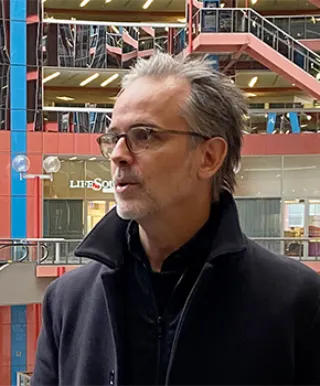
David L. Hays

David L. Hays

· ProfessorVerified

University of Illinois Urbana-Champaign · Department of Landscape Architecture

Active 1974–2024

h-index18
Citations2.1k
Papers697 last 5y
Funding
See your match with David L. Hays — sign in to PhdFit.Sign in

About

Professor David L. Hays is the Brenton H. and Jean B. Wadsworth Head of the Department of Landscape Architecture at the University of Illinois Urbana-Champaign. His interests in landscape architecture emerged through the study of art history and design, leading him to focus on both historical and contemporary situations. His historical research concentrates on the invention and reception of new landscape types in early modern Europe, exploring how innovative designs were created and how people responded to them. His work extends this inquiry to the present through his research, teaching, and creative projects, with a particular fascination for design curiosities such as landscapes inside buildings and interfaces between architecture and landscape architecture, including structures that respond to environmental changes. Prof. Hays approaches landscape as a relationship between humans and nature, emphasizing how this relationship is negotiated through various media, with landscape architecture being one part of this broader dialogue. His creative work includes curatorial projects and exhibitions, and he actively researches and publishes on topics related to landscape aesthetics, history, and practice. His teaching portfolio encompasses courses on landscape architecture fundamentals, design studios, and seminars on historical and contemporary landscapes, and he advises students at the doctoral and master's levels, contributing to the development of future landscape architects and scholars.

Research topics

  • Computer Science
  • Data science
  • Bioinformatics
  • Biology
  • World Wide Web
  • Computational biology
  • Archaeology
  • Geography
  • Database

Selected publications

  • Naturalezas futuras: abordando el diorama de hábitat como medio de y para la arquitectura de paisajes.

    A&P Continuidad · 2024-12-11

    articleOpen access1st authorCorresponding
  • Challenges in Bioinformatics Workflows for Processing Microbiome Omics Data at Scale

    Frontiers in Bioinformatics · 2022-01-17 · 25 citations

    reviewOpen access

    The nascent field of microbiome science is transitioning from a descriptive approach of cataloging taxa and functions present in an environment to applying multi-omics methods to investigate microbiome dynamics and function. A large number of new tools and algorithms have been designed and used for very specific purposes on samples collected by individual investigators or groups. While these developments have been quite instructive, the ability to compare microbiome data generated by many groups of researchers is impeded by the lack of standardized application of bioinformatics methods. Additionally, there are few examples of broad bioinformatics workflows that can process metagenome, metatranscriptome, metaproteome and metabolomic data at scale, and no central hub that allows processing, or provides varied omics data that are findable, accessible, interoperable and reusable (FAIR). Here, we review some of the challenges that exist in analyzing omics data within the microbiome research sphere, and provide context on how the National Microbiome Data Collaborative has adopted a standardized and open access approach to address such challenges.

  • Metadata curation to ensure cross lab interoperability and data discovery of multi-omics data in the National Microbiome Data Collaborative

    Faculty of 1000 Research Ltd · 2022-01-01

    otherOpen access
  • Prototyping and the Critical Practice of Landscape Architecture

    Intellect Books · 2021-09-17

    book-chapter1st authorCorresponding

    Prototyping across the Disciplines - Designing Better Futures; Looks at the use of prototyping in design research across a range of disciplines. Uses case studies to demonstrate theoretical and methodological transferability among disciplines not typically thought to be related to one another. This is an important contribution to the emerging field of integrative design. 89 col. illus.

  • Microbiome Metadata Standards: Report of the National Microbiome Data Collaborative’s Workshop and Follow-On Activities

    mSystems · 2021 · 72 citations

    • Computer Science
    • Computer Science
    • Data science

    Microbiome samples are inherently defined by the environment in which they are found. Therefore, data that provide context and enable interpretation of measurements produced from biological samples, often referred to as metadata, are critical. Important contributions have been made in the development of community-driven metadata standards; however, these standards have not been uniformly embraced by the microbiome research community. To understand how these standards are being adopted, or the barriers to adoption, across research domains, institutions, and funding agencies, the National Microbiome Data Collaborative (NMDC) hosted a workshop in October 2019. This report provides a summary of discussions that took place throughout the workshop, as well as outcomes of the working groups initiated at the workshop.

  • Correction for Vangay et al., “Microbiome Metadata Standards: Report of the National Microbiome Data Collaborative’s Workshop and Follow-On Activities”

    mSystems · 2021-05-10 · 8 citations

    erratumOpen access

    Volume 6, no. 1, e01194-20, 2021, https://doi.org/10.1128/mSystems.01194-20. The article byline and affiliation line should read as given in this correction.

  • The National Microbiome Data Collaborative Data Portal: an integrated multi-omics microbiome data resource

    Nucleic Acids Research · 2021 · 50 citations

    • Computer Science
    • Computer Science
    • Data science

    The National Microbiome Data Collaborative (NMDC) Data Portal (https://data.microbiomedata.org) supports microbiome multi-omics data exploration and access through an integrated, distributed data framework aligned with the FAIR (Findable, Accessible, Interoperable and Reusable) data principles (1). The NMDC Data Portal currently hosts 10.2 terabytes of multi-omics microbiome data, spanning five data types (metagenomes, metatranscriptomes, metaproteomes, metabolomes, and natural organic matter characterizations), generated at

  • The National Microbiome Data Collaborative: enabling microbiome science

    Nature Reviews Microbiology · 2020 · 58 citations

    • Computer Science
    • Data science
    • Biology
  • Knowing and Not Knowing, Moving and Not Moving, in Alain Resnais’s L’Année dernière à Marienbad (1961)

    Polysèmes · 2018-01-01 · 1 citations

    articleOpen access1st authorCorresponding

    Selon le critique et théoricien du cinéma André Bazin, la photographie “tire avantage” de son aspect mécanique, à savoir le processus par lequel chaque objet donne forme à sa propre représentation. C’est ainsi que les photographies et autres médias indexicaux, y compris les films, opèrent la jonction entre le passé et le présent et ont en cela un pouvoir étrangement inquiétant. Dans le film d’Alain Resnais, L’Année dernière à Marienbad (1961), la photographie présente un intérêt particulier du fait de la relation que ces éléments entretiennent avec le trauma. La protagoniste est traumatisée en découvrant une photo d’elle-même, ce qui brouille les frontières entre mémoire et perception et la place, non pas dans l’incertitude, mais à la croisée du savoir et du non-savoir. De manière similaire, la reconstruction mémorielle et les blocages hantent Marienbad en mettant en évidence le paradoxe cinématographique du mouvement et de l’absence de mouvement. Des formes de corps humain sont mises en miroir à l’écran dans des prises de vue où évoluent d’autres éléments visuels, et les comédiens mettent en scène cet effet de temps suspendu en se figeant tels des statues, comme s’ils étaient pétrifiés. À travers ces procédés, et avec à l’esprit l’idée de transformer le cinéma, Resnais testait la relation entre représentation, histoire, et corps humain, exploration déjà menée dans ses films précédents. Dans le film Marienbad, les deux paradoxes pertinents pour cette réflexion – le savoir et le non-savoir, le mouvement et le non-mouvement – se chevauchent dans le plan emblématique, très près du milieu du film, dans lequel la caméra s’avance pour révéler neuf silhouettes qui se tiennent dans l’axe “vide” d’un jardin à la française et dont l’agencement énigmatique correspond à la conception type du jardin japonais : le jardin de la méditation à Ryoan-ji, temple zen important de Kyoto, au Japon.

  • Crossing scales / Escalas cruzadas

    A&P Continuidad · 2018-06-01

    articleOpen access1st authorCorresponding

    Este artículo intenta diseminar el pensamiento de David Hays -su contribución intelectual, científica y académica a la disciplina de la arquitectura del paisaje. La conversación está orientada a visibilizar y reflexionar sobre su producción individual como artista e investigador en Analog Media Lab, una plataforma de trabajo en el borde entre la ciencia y el arte, que desarrolla experimentaciones y productos originados sobre la base del estudio de las transformaciones que sufren los materiales afectados por las condiciones cambiantes del medio ambiente. A partir de la producción de Analog Media Lab se reflexiona acerca de la relación entre artefactos y naturaleza, los parámetros establecidos por el Movimiento Moderno y el valor de la experimentación a escala 1:1 en la teoría y la práctica contemporáneas en la arquitectura del paisaje y la arquitectura.

Frequent coauthors

  • K. Helbing

    Clark Atlanta University

    40 shared
  • W. Rhode

    38 shared
  • C. McParland

    37 shared
  • A. R. Jones

    37 shared
  • G. C. Hill

    Providence College

    37 shared
  • G. M. Spiczak

    37 shared
  • H. S. Matis

    Variable Energy Cyclotron Centre

    37 shared
  • K.-H. Sulanke

    Deutsches Elektronen-Synchrotron DESY

    36 shared

Labs

  • Resume-aware match score
  • Save to shortlist
  • AI-drafted outreach

See your match with David L. Hays

PhdFit ranks faculty by your research interests, methods, and publications — grounded in their actual work, not templates.

  • Free to start
  • No credit card
  • 30-second signup