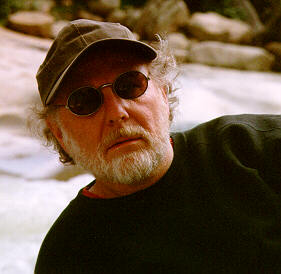
David Sabean
VerifiedUniversity of California, Los Angeles · History
Active 1964–2024
About
David Sabean is a Distinguished Research Professor at UCLA, with a focus on social history, cultural history, and the history of kinship and selfhood in Europe. His academic journey began with studies in cultural and intellectual history at the University of Wisconsin-Madison, and he has engaged extensively with social history, anthropology, and interdisciplinary approaches throughout his career. Sabean has conducted significant research on early modern Germany, including a dissertation on the German Peasant War of 1525, and has published works such as 'Landbesitz und Gesellschaft am Vorabend des Bauernkriegs' and 'Power in the Blood: Popular Culture and Village Discourse in Early Modern Germany.' His research explores themes of popular culture, village discourse, kinship, and the production of self and identity, integrating insights from cultural studies, gender, and historical demography. Sabean has held academic positions at the University of East Anglia, University of Pittsburgh, Max-Planck-Institut für Geschichte in Göttingen, and UCLA, where he currently holds the Henry J. Bruman Endowed Chair in German History. His ongoing projects include studies on narrativity in bureaucratic writing, the long-term history of kinship in Europe, and incest discourse since the sixteenth century. Recognized for his contributions, he has received fellowships from the Guggenheim Foundation, the Wissenschaftskolleg in Berlin, and the Alexander J. Humboldt Foundation, and has been elected to the American Academy of Arts and Sciences.
Research topics
- Political Science
- History
- Law
- Sociology
- Aesthetics
- Art
- Ancient history
- Genealogy
- Classics
- Anthropology
Selected publications
Rezension von: Sabean, David Warren, Landbesitz und Gesellschaft am Vorabend des Bauernkriegs
Württembergisch Franken · 2024-04-12
articleOpen accessSenior authorDavid Warren Sabean: Landbesitz und Gesellschaft am Vorabend des Bauernkriegs. (Quellen und Forschungen zur Agrargeschichte Bd. 26). Stuttgart: Fischer 1972. 175 S. DM 36.-.
Chapter 4 The Search for the Same: Familial/Familiar
2023-10-09
book-chapterOpen access1st authorCorrespondingChapter 5 Lineage and Alliance in the Seventeenth Century
2023-10-09
book-chapterOpen access1st authorCorrespondingIn many cases there can be probably no more prudent marriages than these [with the wife's sister or brother's wife], both in consideration of the persons marrying and for the children they bring to each other.Such persons have had freer interaction with those from among their kin and already discovered many things unknown to others than the closest relatives as well as intimate accounts from the deceased spouse about their circumstances, faults of temperament and virtues, and therefore have much better knowledge about them than about others.They can also better know if they are suited to each other or not, and here there is much less danger for both partners to be misled than when one has to believe the calculated report of proxies.-Pastor Max Conrad Hummel, 1780 1The link between two clans or lineages or descent groups or families during the seventeenth century had to be substantial enough to provide a foundation for continuous exchanges over the long term.Any particular marriage was only the starting point for a series of reciprocities expected to outlast the lives of the coupled individuals, and the resultant traffic between a line and its affines could be so heavy that women of an associated family could become off limits as objects of sexual desire or for reproduction.The thesis I want to explore here is this: that behind the force of this idea lay the many valuable services provided by close allies. 2Allied males could act as guardians for chil-1 Stadtarchiv Ulm, Bestand A, Akten 1780-81, Nr. 12, report (Bericht) by Max Conrad Hummel, pastor in the Dreifaltigkeitskirche, supporting the petition of a man to marry his deceased brother's wife. 2 Jonathan Edwards (1745-1801), pastor of a church in New Haven, made the point in general terms, arguing that apart from divine commandment, this was the most practical concern.To allow such marriages with any close affines as with the wife's sister would contract the "kind offices" that affines provided.He was against abrogating the Connecticut law prohibiting marriage with a sister-in-law: Jonathan Edwards, The Marriage of a Wife's Sister Considered in a Sermon Delivered in the Chapel of YaleCollege On the Evening after the Commencement, September 12, 1792 (New Haven, [1792]), p. 5, cited hereafter as Edwards, Marriage.A Dutch Reformed pastor from New York and New Jersey, John Henry Livingston (1746-1825), entered the lists twice.His first book, published under the pseudonym Eudoxius, was The Marriage of a Deceased Wife's Sister (New York, 1798).The second book, A Dissertation on the Marriage of a Man with his SisterinLaw (New Brunswick, NJ, 1816), contained a long passage, pp.25-34, on the characteristics of affinity, which remarked (p.29) that a sister-in-law was truly a sister.The logic of the argument was important, since, of course, the incest prohibition brought the relationship under the sign of sex and potential desire.Livingston started with the divine prohibition, the motives for which were not open to human judgment.But the consequences were clear.The prohibition allowed the same kind of intimacy between a man and his wife's sister as he had with his own sister.So she was a "real" sister, but then again there was a difference, as with all affinal kin.The husband could be more open in a way (although this was only implied here) because what was called for was the use of time and the offer of due diligence with no potential conflict over inherited property and no memory of competition for parental favor.These writers participated in a considerable debate about church discipline and legal proscriptions.In the early years of the new republic, there was a tendency among legislators to repeal laws against sister-in-law marriages, just as on the European continent.For example, already in 1750,
Chapter 4 Kinship Structures at the Turn of the Century
2023-10-09
book-chapterOpen access1st authorCorrespondingMuch finer, more complex and mysterious than the connection of husband and wife is the connection between mother and son . . . .One of the strongest material feelings of mothers is the possession of their children . . . .They want to rule their children and steer them as they will.Much more clearly than paternal power, that is actually rapidly disappearing, in our time maternal power asserts itself, indeed in all classes . . . .They submit themselves to their adult son in those things which he should decide over as man, but they seek to hold him in submission so long as possible . . . .The authority of the father is fading while the authority of the mother is self-consciously on the rise.-LauraMarholm (1900)1 2 I have found useful to my thinking about this material, the notions that Raymond T. Smith developed for Guyanese society.See Raymond T. Smith, The Matrifocal Family: Power, Pluralism, and Politics (New York and London, 1996), pp.13-15, 43-45.The idea of matrifocality is not a concept denoting female-headed households.Indeed, the husband/father may be dominant in marital relationships and act as head of the household, while in reality the mother-child relations are strong.With segregated conjugal roles, there is likely to be a matrilateral stress on kinship ties.Such ties originate in the domestic domain and radiate from there."They are rooted in the identity of interests and activities of women whose principle role is that of mothers," p. 45.I will not dwell here on issues of conceptual apparatus: if the notion of "matrifocality" suggests some things to focus on or offers the possibility of summarizing a set of findings, then it is useful, if only in a loose sense.I also will not spend time here looking at men as husbands and fathers, because my intent is not to offer a complex history of the family.It is enough to figure out what sons were doing and to explore some of the aspects of domestic politics during the period.3 On the Courtaulds, see D. C. Coleman,
Chapter 2 The Family Spun in a Web of Power
2023-10-09
book-chapterOpen access1st authorCorrespondingNo one could view this huge test tube of man power, tried and found wanting, without realizing that an extremely important factor was the inability or unwillingness of the American mom and her surrogates to grant the boon of emotional emancipation."Rebecca Jo Plant, Mom: The Transformation of Motherhood in Modern America (Chicago and London, 2010), reported that two medical officers in 1944 wrote in the New England Journal of Medicine that the "single most important factor in predisposing servicemen to psychological breakdown was not traumatic combat experience but rather 'distorted' familial relations," p. 99.Ellen Herman, The Romance of American Psychology: Political Culture in the Age of Experts (Berkeley and Los Angeles, 1995), p. 115: "Insisting that all war neuroses were psychoneuroses was simply another way of saying that war was mentally unbalancing not in and of itself but because it mobilized old, often unconscious, emotional conflicts residing in the individual psyche, conflicts that were the most fundamental and authentic sources of mental symptoms."9 See
Chapter 2 Introduction to the Brother/Sister Imaginary
2023-10-09
book-chapterOpen access1st authorCorrespondingThe term "sibling archipelago" is Christopher Johnson's, from his monograph
Age of Genetics, Age of Siblings, 1995–2020
2023-10-09
book-chapterOpen access1st authorCorrespondingI propose that the present day genetic determinism molds people into an idealized form of family and kinship, contrary to changing practices and despite the redefinition of family and kin in contemporary society.-Kaja Finkler, 2000 If you start trying to conceal someone's identity, sooner or later the truth will come out.And if you don't know you are biologically related to someone, you may become attracted to them and tragedies like this will occur.-David Alton, Lord Alton of Liverpool, 2008 The other day I realized I've never met an elderly person that was cared for by their friends. . . .Where are your friends?Your friends are probably not going to be there when it really counts. . . .When my dad was dying in the hospital, where were his friends?My grandmother, where were her friends? . . .Enjoy them while you have them.But if you think your friends are your long-term solution to loneliness, you're an idiot.-Chris Rock, 20201 3 In "Ideas and Trends-Matrimony: The Magic's Still Gone," New York Times, May 20, 2001, Jane Fritsch noted that a recent report from the US Census Bureau revealed that less than a quarter of American households were "traditional nuclear families."For a review of American kinship trends, see Frank.F.
Chapter 3 Moral Sentiment: A New Language of Cultural Meaning and Foundation for Law
2023-10-09
book-chapterOpen access1st authorCorrespondingA New Language of Cultural Meaning and Foundation for LawLet us proceed to another source of happiness or misery, our sympathy or social feelings with others, by which we derive joys or sorrows from their prosperity or adversity. . . .While there's any life or vigour in the natural affections of the social kind, scarce any thing can more affect our happiness or misery than the fortunes of others.-Francis Hutcheson, 17421 I have already pointed out that each of the periods in this book was dominated by its own particular discipline.As I proceed, it will become apparent that the discourses of each succeeding epoch are like palimpsests, replete with half erasures from by-gone eras.In the period under consideration here, stretching from approximately 1750 to 1850, law surely did not disappear, nor did fierce arguments about the best way to regulate marriage and sexual relations.2Nonetheless, with gathering cogency, moral philosophy in one form or another worked its way into the seams and channels of political, legal, and social discourses.The voluntarist idea of law as an arbitrary expression of will lost its persuasive power as theologians, jurists, economists, philosophers, and state officials, reconsidering the legitimacy and practical effect of statutes and ordinances, put them to the test of human happiness and moral sentiment.Henceforth the route between the state and the individual ran through the passions.No matter what the debate about near and far marriages, practices were changing everywhere in Europe, at least among the property-holding, professional, and merchant classes.For the last thirty or forty years of the eighteenth century, couplings with near kin, and if not with near kin, then with neighbors, close friends, or individuals of the same class, were building up steam.3Even writers who, like Hegel, encouraged complementarity and difference in marriage selection had class similarities in mind, but they were whistling in the dark when it came to suggesting that marrying strangers was the best way to create lifelong attachments.The culture encouraged alliances of like with like and developed practices that supported the construction of intricate networks and novel political, religious, and social milieus.4Emotional connections and aesthetic
Rezension von: Sabean, David Warren, Das zweischneidige Schwert
Württembergisch Franken · 2023-10-11
articleOpen accessSenior authorDavid Warren Sabean: Das zweischneidige Schwert. Herrschaft und Widerspruch im Württemberg der frühen Neuzeit. (Originaltitel: Power in the Blood. - Aus dem Amerikan. übersetzt von Brigitte Luchesi). Berlin: Reimer 1986. 274 S., Abb.
Chapter 4 Psychoanalysis and Psychotherapy as Hegemonic Discourses
2023-10-09
book-chapterOpen access1st authorCorrespondingThey fuck you up, your mum and
Frequent coauthors
- 145 shared
William W. Hagen
- 144 shared
Ursula Marcum
University of California, Riverside
- 144 shared
Volker R. Berghahn
- 144 shared
Kenneth Barkin
University of California, Riverside
- 144 shared
Atina Grossmann
Cooper Union
- 144 shared
Kees Gispen
University of Mississippi
- 144 shared
Jonathan Applegate
University of California, Irvine
- 144 shared
Peter Hayes
Central Queensland University
Education
B.A.
Houghton College
M.A., cultural and intellectual history
University of Wisconsin-Madison
Awards & honors
- Guggenheim Fellow
- Fellow of the Wissenschaftskolleg in Berlin
- Research prize from the Alexander J. Humboldt Foundation
- Berlin Prize from the American Academy in Berlin
- Elected to the American Academy of Arts and Sciences
- Resume-aware match score
- Save to shortlist
- AI-drafted outreach
See your match with David Sabean
PhdFit ranks faculty by your research interests, methods, and publications — grounded in their actual work, not templates.
- Free to start
- No credit card
- 30-second signup