Resume-aware faculty matching

Find professors who actually fit you

Upload your resume. Four AI agents analyze your background, rank the faculty who fit, inspect their recent research, and help you draft outreach — grounded in their actual work, not templates.

Free to startNo credit cardCancel anytime
Top matches Balanced preset
Dr. Sarah Chen
Stanford · Interpretability · NLP
91
Dr. Marcus Holloway
MIT · Robotics · RL
84
Dr. Aisha Okonkwo
CMU · Fairness · HCI
82
Nova · Professor Researcher · re-ranking top 20…
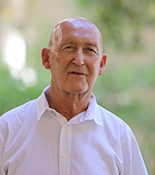
David Theo Goldberg

David Theo Goldberg

· Distinguished ProfessorVerified

University of California, Irvine · Anthropology

Active 1951–2025

h-index50
Citations16.7k
Papers25815 last 5y
Funding$119.2M
See your match with David Theo Goldberg — sign in to PhdFit.Sign in

About

David Theo Goldberg is a professor associated with the University of California Humanities Research Institute (UCHRI). His work involves making humanistic research and grant information more accessible through social media, in-person, and online programming for UC faculty and graduate students. He is also an Assistant Director of UC Irvine’s Global Asias Research Cluster, contributing to the promotion and development of research in Asian and Asian American studies.

Research topics

  • Political Science
  • Sociology
  • Law
  • Gender studies
  • Criminology
  • Epistemology
  • Psychology
  • Philosophy

Selected publications

  • Mission failure: too much is never enough

    Sikh Formations · 2025-04-03

    articleOpen access1st authorCorresponding
  • Situating dread

    2025-05-01

    book-chapter1st authorCorresponding

    In this chapter, David Theo Goldberg rehearses arguments supporting the central claim that “dread” has become a central feature of our time. It offers a conceptual account of what dread means and amounts to, its emergence and taking hold as algorithmic culture has become dominant and enables a form of social arrangement that the author marks as “tracking capitalism.” This has enabled the tracking of all people in their everyday activities and online activity, in turn enabling corporations to target subjects with promoting as their own desires those actually molded by the tracking. The chapter suggests that this in turn leads to a heightened condition of civil warring, understood as contesting conceptions of how to be and live in the world. The author closes with some reflections on contrasting conceptions of “Refusal.”

  • The dread of dread

    Identities · 2024-01-30

    article1st authorCorresponding
  • Beyond a world of dread: a conversation with David Theo Goldberg

    2024-12-19 · 1 citations

    book-chapter1st authorCorresponding

    It is difficult to put one’s finger on the unease that now characterizes embodied life. There is a broadly shared intuition that things are out of control. There is also widespread pessimism, even resignation, that there isn’t much to be done about it. In Dread: Facing Futureless Futures, David Theo Goldberg suggests that it is dread that perhaps best captures this ineffable sensibility. Dread is an ambient affective condition that resists efforts to name. Dread is a symptom. It afflicts the spirit and shapes the underlying conditions of possibility. Goldberg, who is a renowned scholar of race, racism, culture, technology, and politics, tracks the experience of dread in late neoliberal societies across a wide range of phenomena. This includes how decades of neoliberal privatization and commodification of all aspects of life have produced a dreadful social form that is perpetually at war with itself; how 24/7 surveillance, digital tracking, and corporate AI and algorithms are shattering privacy, truth, and shared reality; how the toxification of land and water, species extinction, and climate breakdown can no longer be ignored or denied, and are reshaping politics in new and urgent ways; and how a resurgence of virulent racism, nationalism, and authoritarianism has manifested out of weaponized ignorance and uncertainty.

  • Beyond a world of dread: A conversation with David Theo Goldberg

    The Review of Education Pedagogy & Cultural Studies · 2023-07-30 · 2 citations

    article1st authorCorresponding
  • Meta-racial conditions: on the limits of racial pessimism

    Ethnic and Racial Studies · 2023 · 2 citations

    1st authorCorresponding
    • Sociology
    • Political Science
    • Epistemology

    “Racial pessimism” is the set of views that “antiblackness” is uniquely an excess of racism, universal, univocal, and unavoidable in its formation and reach. Rei Terada’s recent book, Metaracial: Hegel, Antiblackness and Political Identity, is an undertaking to provide a critical philosophical grounding to the claim of racial pessimism. Key to her argument is that core enlightenment and post-enlightenment commitments to equality, anti-essentialism, openness, and relationality is a constitutive antiblackness. In readily taking up these principles, radical, progressive, and leftist antiracists today problematically inherit this constitutive antiblackness. I critically examine the account’s misreadings of Hegel, Rousseau, and Kant, slippages and leaps in the book’s argumentation, and the limits that these failures represent for any retreat into unavoidable racial pessimism more generally.

  • Vanishing Points

    McGill-Queen's University Press eBooks · 2023-11-15

    book-chapter1st authorCorresponding
  • Vanishing Points

    McGill-Queen's University Press eBooks · 2023-11-09

    book-chapter1st authorCorresponding
  • The War on Critical Race Theory

    Routledge eBooks · 2022 · 30 citations

    1st authorCorresponding
    • Sociology
    • Political Science
    • Sociology

    Philosopher Pierre-Andre Taguieff, whose earlier work tracked the history of anti-Semitism, indicts contemporary anti-racist critics of the French state as guilty of “anti-white racism.” An assistant attorney general in Australia insisted an anti-racism program should not be funded because “taxpayer funds” were being used “to promote critical race theory”. Like “diversity” over the past decade and “multiculturalism” before that, critical race theory is being made the bag now carrying the load long critical of racism. CRT and more nuanced work in CRS offer an invaluable resource for this work. They take seriously what the conservative attack too readily looks away from. They try to account for what it is in our culture, in the social infrastructure and institutional shaping and the order to which they give rise, that reproduces the undeniable inequality, the lived violence and trauma, that people of color experience in the United States and Europe.

  • Moving Up, Moving Out: The Rise of the Black Middle Class in Chicago

    Journal of American History · 2021-06-14

    article1st authorCorresponding

    In The Truly Disadvantaged (1987) William Julius Wilson posited that Black middle-class abandonment and a corresponding lack of “role models” was, in part, responsible for urban poverty and the proliferation of an African American “underclass.” In Moving Up, Moving Out, Will Cooley forcefully challenges this notion, arguing that attempts to saddle the Black middle class with the blame and responsibility for urban poverty obscures its racial and economic causes, feeds “white hopes for racial peace-on-the-cheap,” and renders invisible the racially distinctive, protracted struggles the Black middle class waged and the obstacles they overcame to “move up” (p. 3). Cooley suggests instead that the progress made by Chicago's middle class, despite being repeatedly marginalized and positioned as compradors by whites, kept the city from collapsing under the weight of structural racism, deindustrialization, neglect, austerity, and neoliberalism during the late twentieth and early twenty-first centuries. Focused largely on the collective and...

Recent grants

Frequent coauthors

  • Marshall Bern

    34 shared
  • Vinod M. Menon

    32 shared
  • Xiaoze Liu

    13 shared
  • Anne Dell

    Imperial College London

    12 shared
  • Arnon Samueloff

    Ten Chen Hospital

    10 shared
  • V. Sery

    Shaare Zedek Medical Center

    10 shared
  • Maayan Bas Lando

    Hebrew University of Jerusalem

    10 shared
  • Marie-Danielle Dionne

    Université de Montréal

    9 shared

Labs

  • UCHRIPI

Education

  • PhD, Mathematics

    Princeton University

    1978
  • BS, Mathematics

    University of Wisconsin Madison

    1974
  • Resume-aware match score
  • Save to shortlist
  • AI-drafted outreach

See your match with David Theo Goldberg

PhdFit ranks faculty by your research interests, methods, and publications — grounded in their actual work, not templates.

  • Free to start
  • No credit card
  • 30-second signup