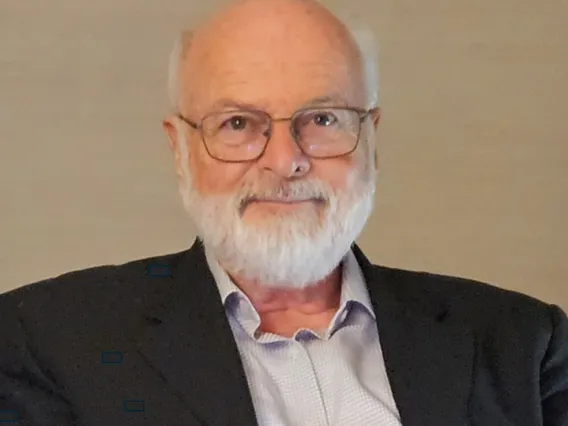
Arthur C. Nelson
· Professor Emeritus of Urban Planning and Real Estate DevelopmentVerifiedUniversity of Arizona · Urban Planning
Active 1906–2024
Research topics
- Geography
- Business
- Political Science
- Engineering
- Civil engineering
- Transport engineering
- Astrobiology
- Environmental planning
- Forensic engineering
- Economy
- Finance
- Architectural engineering
- History
Selected publications
Routledge eBooks · 2022 · 5 citations
1st authorCorresponding- Geography
- Business
This chapter discusses the survey conducted in 2019 of impact fees from a sample of jurisdictions across the country, including where impact fees appear to be most common, how much jurisdictions in various states are charging, the types of facilities for which fees are being charged, and how fees vary by land use. The multitude of names used to refer to impact fees is one obstacle to developing an accurate survey of such fees. Common terms used to refer to impact fees include “capacity fees,” “facility fees,” “system development charges,” and “capital recovery fees.” Water and wastewater connection fees that are used to fund growth-related capital improvements should be classified as impact fees. However, connection fees often mix impact fee components with service fees that cover other types of costs, such as the purchase of a water meter, the inspection of the connection, or the administrative cost of establishing a new customer account.
New towns for the twenty-first century: A guide to planned communities worldwide
Journal of Urban Design · 2021 · 12 citations
1st authorCorresponding- Political Science
- Architectural engineering
- Engineering
Thousands of new towns were built in every corner of the habitable planet during the twentieth century. What have we learned from them, and not? What is the role of new towns in meeting the needs o...
Transportation Research Record Journal of the Transportation Research Board · 2021 · 7 citations
1st authorCorresponding- Geography
- Business
- Transport engineering
Between 2020 and 2050, all states comprising the Mountain Mega-Region (MMR—Arizona, Colorado, Nevada, New Mexico, and Utah) will be among the top 10 fastest growing U.S. states. They also have among the nation’s largest shares of land area in federal, state, public, and tribal land ownership. This has led to concentrations of populations in their metropolitan areas. Indeed, in 2020, the metropolitan areas of more than one million residents—Albuquerque, Las Vegas, Phoenix, Salt Lake City, and Tucson—comprise more than 70% of their states’ populations. With rapid growth combined with land constraints, many of these metropolitan areas are using rail transit systems to help meet transportation needs while also influencing development patterns in intended ways. If they are effective, these rail transit systems will: (a) create commercial real estate rent premiums; (b) attract jobs; and (c) attract households to areas near rail stations. We report the effectiveness of MMR rail transit systems in each of these respects. We also present a surprise: Contrary to conventional wisdom, it is households with children that locate closest to rail stations than single persons and childless households. We reason that improved planning is needed to meet the market demand for development throughout the half-mile circle around transit stations in the MMR’s metropolitan areas. If this can be done, all development in these MMR metropolitan areas may occur near rail transit stations.
Frequent coauthors
- 52 shared
James C. Nicholas
- 41 shared
Julian C. Juergensmeyer
- 32 shared
Reid Ewing
- 31 shared
Robert E. Lang
Universität Innsbruck
- 24 shared
Robert Hibberd
- 17 shared
Clancy Mullen
- 13 shared
Casey J. Dawkins
University of Maryland, College Park
- 13 shared
Thomas W. Sanchez
Texas A&M University
Education
Ph.D. in Urban Studies, School of Urban and Public Affairs
Portland State University
Similar researchers at University of Arizona
- Resume-aware match score
- Save to shortlist
- AI-drafted outreach
See your match with Arthur C. Nelson
PhdFit ranks faculty by your research interests, methods, and publications — grounded in their actual work, not templates.
- Free to start
- No credit card
- 30-second signup