Resume-aware faculty matching

Find professors who actually fit you

Upload your resume. Four AI agents analyze your background, rank the faculty who fit, inspect their recent research, and help you draft outreach — grounded in their actual work, not templates.

Free to startNo credit cardCancel anytime
Top matches Balanced preset
Dr. Sarah Chen
Stanford · Interpretability · NLP
91
Dr. Marcus Holloway
MIT · Robotics · RL
84
Dr. Aisha Okonkwo
CMU · Fairness · HCI
82
Nova · Professor Researcher · re-ranking top 20…
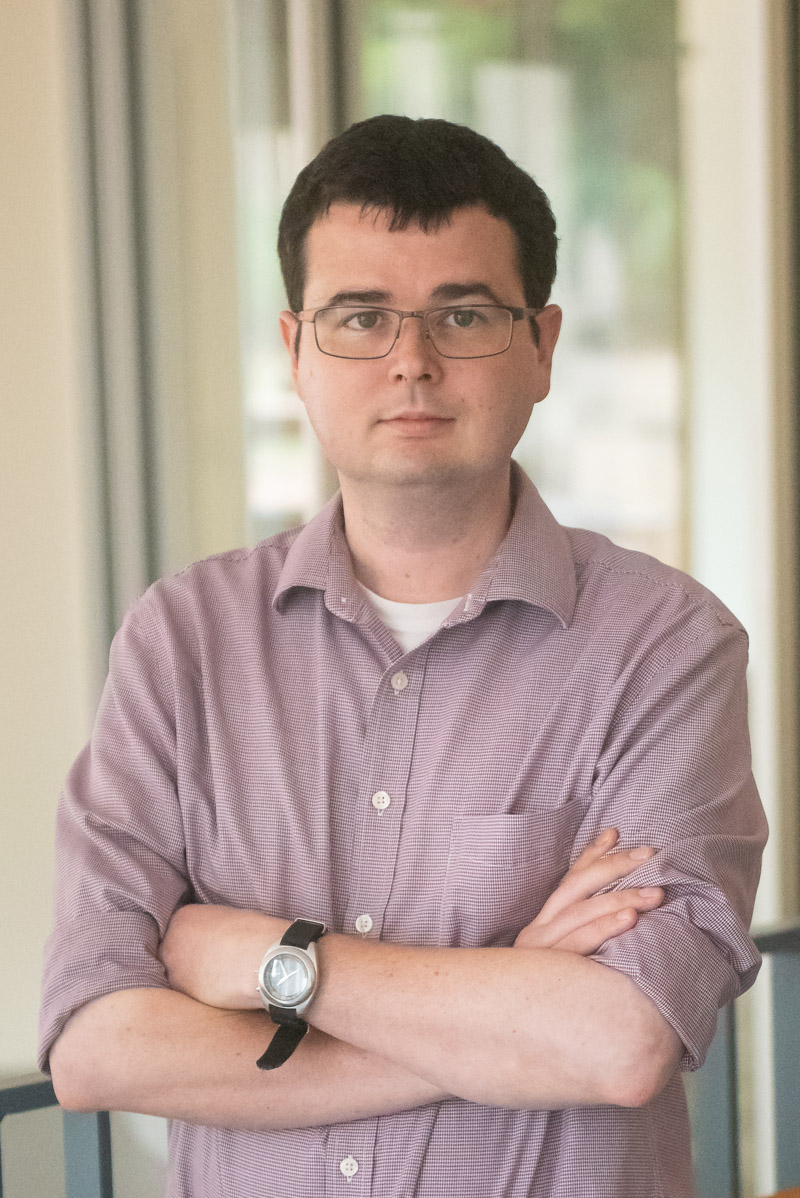
Dean Baskin

Dean Baskin

· ProfessorVerified

Texas A&M University · Mathematics

Active 2009–2025

h-index12
Citations481
Papers5512 last 5y
Funding$711k
See your match with Dean Baskin — sign in to PhdFit.Sign in

About

Dean R. Baskin is a professor in the Department of Mathematics at Texas A&M University. His office is located in Blocker 614B. The provided information indicates his role as a faculty member within the department, but does not include specific details about his research focus, background, or key contributions.

Research topics

  • Mathematics
  • Pure mathematics
  • Mathematical analysis
  • Physics
  • Quantum mechanics
  • Geometry
  • Mathematical physics
  • Quantum electrodynamics
  • Chemistry

Selected publications

  • The Klein-Gordon equation on asymptotically Minkowski spacetimes: the Feynman propagator

    ArXiv.org · 2025-07-02

    preprintOpen access1st authorCorresponding

    We develop a theory of Feynman propagators for the massive Klein--Gordon equation with asymptotically static perturbations. Building on our previous work on the causal propagators, we employ a framework based on propagation of singularities estimates in Vasy's 3sc-calculus. We combine these estimates to prove global spacetime mapping properties for the Feynman propagator, and to show that it satisfies a microlocal Hadamard condition. We show that the Feynman propagator can be realized as the inverse of a mapping between appropriate $L^2$-based Sobolev spaces with additional regularity near the asymptotic sources of the Hamiltonian flow, realized as a family of radial points on a compactified spacetime.

  • Price’s law for the massless Dirac–Coulombsystem

    Pacific Journal of Mathematics · 2025-04-18

    articleOpen access1st authorCorresponding

    We consider the pointwise decay of solutions to wave-type equations in two model singular settings.Our main result is a form of Price's law for solutions of the massless Dirac-Coulomb system in (3+1)-dimensions.Using identical techniques, we prove a similar theorem for the wave equation on Minkowski space with an inverse square potential.One novel feature of these singular models is that solutions exhibit two different leading decay rates at timelike infinity in two regimes, distinguished by whether the spatial momentum along a curve which approaches timelike infinity is zero or nonzero.An important feature of our analysis is that it yields a precise description of solutions at the interface of these two regions which comprise the whole of timelike infinity.

  • Singularities of Dirac-Coulomb propagators

    ArXiv.org · 2025-07-21

    preprintOpen access1st authorCorresponding

    In this paper we study singularities of propagators and $N$-point functions for Dirac fields in a Coulomb potential, possibly with a $t$-dependent smooth part for $|t|

  • Propagation of Singularities for the Wave Equation

    MATRIX book series · 2024-01-01

    book-chapter1st author
  • The Klein-Gordon equation on asymptotically Minkowski spacetimes: causal propagators

    arXiv (Cornell University) · 2024-09-02

    preprintOpen access1st authorCorresponding

    We construct the causal (forward/backward) propagators for the massive Klein-Gordon equation perturbed by a first order operator which decays in space but not necessarily in time. In particular, we obtain global estimates for forward/backward solutions to the inhomogeneous, perturbed Klein-Gordon equation, including in the presence of bound states of the limiting spatial Hamiltonians. To this end, we prove propagation of singularities estimates in all regions of infinity (spatial, null, and causal) and use the estimates to prove that the Klein-Gordon operator is an invertible mapping between adapted weighted Sobolev spaces. This builds off work of Vasy in which inverses of hyperbolic PDEs are obtained via construction of a Fredholm mapping problem using radial points propagation estimates. To deal with the presence of a perturbation which persists in time, we employ a class of pseudodifferential operators first explored in Vasy's many-body work.

  • Diffraction for the Dirac–Coulomb Propagator

    Annales Henri Poincaré · 2023 · 2 citations

    1st authorCorresponding
    • Physics
    • Mathematical physics
    • Quantum electrodynamics
  • Riemann moduli spaces are quantum ergodic

    Journal of Differential Geometry · 2023-03-01 · 1 citations

    article1st authorCorresponding

    In this note we show that the Riemann moduli spaces $M_{\gamma,n}$ equipped with the Weil–Petersson metric are quantum ergodic for $3 \gamma + n \geq 4$. We also provide other examples of singular spaces with ergodic geodesic flow for which quantum ergodicity holds.

  • Asymptotics of the radiation field for the massless Dirac–Coulomb system

    Journal of Functional Analysis · 2023-07-31 · 2 citations

    articleOpen access1st authorCorresponding
  • The radiation field on product cones

    Advances in Mathematics · 2022 · 7 citations

    1st authorCorresponding
    • Mathematics
    • Mathematical analysis
    • Pure mathematics
  • Price's law on Minkowski space in the presence of an inverse square potential

    arXiv (Cornell University) · 2022-07-13

    preprintOpen access1st authorCorresponding

    We consider the pointwise decay of solutions to wave-type equations in two model singular settings. Our main result is a form of Price's law for solutions of the massless Dirac-Coulomb system in (3+1)-dimensions. Using identical techniques, we prove a similar theorem for the wave equation on Minkowski space with an inverse square potential. One novel feature of these singular models is that solutions exhibit two different leading decay rates at timelike infinity in two regimes, distinguished by whether the spatial momentum along a curve which approaches timelike infinity is zero or non-zero. An important feature of our analysis is that it yields a precise description of solutions at the interface of these two regions which comprise the whole of timelike infinity.

Recent grants

Frequent coauthors

  • Jared Wunsch

    Northwestern University

    20 shared
  • András Vasy

    Stanford University

    8 shared
  • Jeremy L. Marzuola

    7 shared
  • Euan A. Spence

    University of Bath

    7 shared
  • Jesse Gell‐Redman

    6 shared
  • Antônio Sá Barreto

    Purdue University West Lafayette

    6 shared
  • Kiril Datchev

    2 shared
  • Xiaolong Han

    2 shared

Awards & honors

  • NSF CAREER grant DMS-1654056
  • Resume-aware match score
  • Save to shortlist
  • AI-drafted outreach

See your match with Dean Baskin

PhdFit ranks faculty by your research interests, methods, and publications — grounded in their actual work, not templates.

  • Free to start
  • No credit card
  • 30-second signup