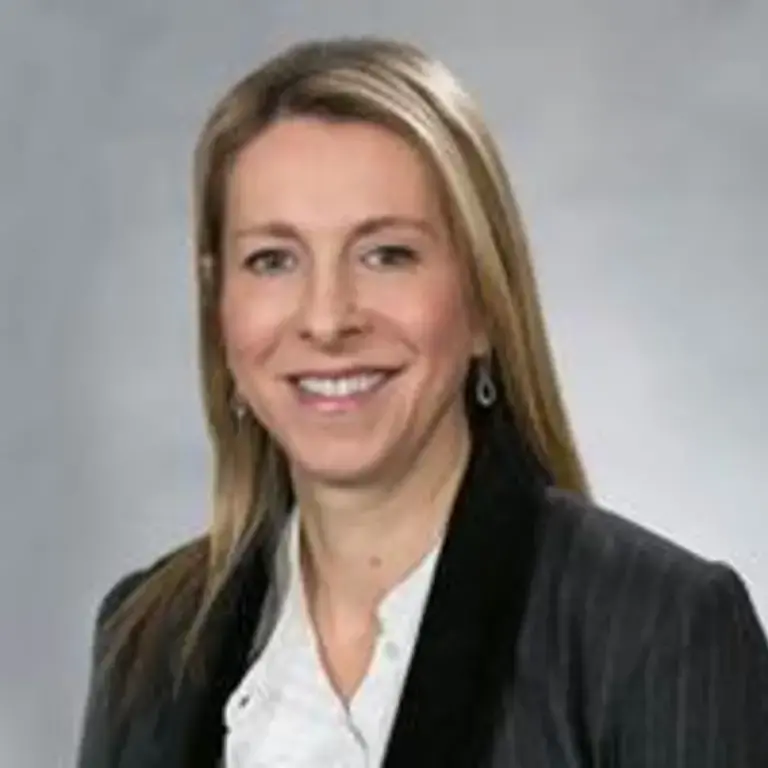
Debbie Schwartz
· Advisory Board Member, Wealth Management; Financial Advisor, Morgan StanleyVerifiedColumbia University · Wealth Management
Active 1956–2025
About
Debbie Schwartz is a financial advisor at Morgan Stanley, specializing in providing customized advice and investment strategies to high-net-worth individuals and families. She brings over 15 years of experience in investment banking and legal practice to her advisory work. Her investment banking career includes roles as a vice president at Merrill Lynch, a senior vice president at HSBC Securities (USA), and a director at Credit Suisse. In these roles, she advised executives of public companies, private-equity firms, and closely held businesses on mergers and acquisitions and corporate finance, with extensive experience working with private companies and their founders to raise capital and navigate strategic options. Prior to her career in investment banking, Debbie practiced corporate law as an attorney in New York City. She holds a B.A. in economics from Barnard College, a J.D. from NYU Law School, and an M.B.A. with honors in finance from Columbia Business School. During her time at Columbia Business School, she served as a microeconomics teaching assistant and was elected to the Beta Gamma Sigma Honor Society.
Research topics
- Medicine
- Internal medicine
- Surgery
- Urology
- General surgery
Selected publications
Efficient Navigation in Unknown Indoor Environments with Vision-Language Models
ArXiv.org · 2025-10-06
preprintOpen access1st authorCorrespondingWe present a novel high-level planning framework that leverages vision-language models (VLMs) to improve autonomous navigation in unknown indoor environments with many dead ends. Traditional exploration methods often take inefficient routes due to limited global reasoning and reliance on local heuristics. In contrast, our approach enables a VLM to reason directly about occupancy maps in a zero-shot manner, selecting subgoals that are likely to yield more efficient paths. At each planning step, we convert a 3D occupancy grid into a partial 2D map of the environment, and generate candidate subgoals. Each subgoal is then evaluated and ranked against other candidates by the model. We integrate this planning scheme into DYNUS \cite{kondo2025dynus}, a state-of-the-art trajectory planner, and demonstrate improved navigation efficiency in simulation. The VLM infers structural patterns (e.g., rooms, corridors) from incomplete maps and balances the need to make progress toward a goal against the risk of entering unknown space. This reduces common greedy failures (e.g., detouring into small rooms) and achieves about 10\% shorter paths on average.
Case Reports in Infectious Diseases · 2016-01-01 · 1 citations
articleOpen accessInfections from Streptococcus dysgalactiae ssp. equisimilis (SDSE) can cause a wide variety of infections, ranging from mild cellulitis to invasive disease, such as endocarditis and streptococcal toxic shock-like syndrome (TSLS). Despite prompt and appropriate antibiotics, mortality rates associated with shock have remained exceedingly high, prompting the need for adjunctive therapy. IVIG has been proposed as a possible adjunct, given its ability to neutralize a wide variety of superantigens and modulate a dysregulated inflammatory response. We present the first reported cases of successful IVIG therapy for reversing shock in the treatment of SDSE TSLS.
Journal of Intensive Care Medicine · 2016-07-03 · 91 citations
articleSenior authorPURPOSE: Enteral nutrition (EN) is often held in patients receiving vasopressor support for septic shock. The rationale for this practice is to avoid mesenteric ischemia. The objective of this study is to evaluate the tolerability of EN in patients with septic shock who require vasopressor support and determine factors associated with tolerance of EN. MATERIALS AND METHODS: This was a single-center retrospective review of adult patients admitted to the intensive care unit with a diagnosis of septic shock and an order for EN. The primary outcome was EN tolerance. Secondary outcomes included time to initiation of EN from the start of vasopressor(s), length of stay, and mortality. RESULTS: A total of 120 patients were included. Sixty-two percent of patients tolerated EN. The most common reason for intolerance of EN was gastric residuals > 250 mL (74%). No reports of mesenteric ischemia were observed. A multivariate analysis demonstrated that patients with septic shock initiating EN within 48 hours and receiving norepinephrine-equivalent doses of 0.14 μg/kg/min or less were more likely to tolerate EN. CONCLUSION: Based on our observation, early EN may be tolerated and safely administered in patients with septic shock who are adequately fluid resuscitated and receive doses of < 0.14 μg/kg/min of norepinephrine equivalents.
False‐negative Interpretations of Cranial Computed Tomography in Aneurysmal Subarachnoid Hemorrhage
Academic Emergency Medicine · 2016-02-26 · 15 citations
articleOpen accessOBJECTIVES: Prior studies examining the sensitivity of cranial computed tomography (CT) for the detection of subarachnoid hemorrhage (SAH) have used the final radiology report as the reference standard. However, optimal sensitivity may have been underestimated due to misinterpretation of reportedly normal cranial CTs. This study aims to estimate the incidence of missed CT evidence of SAH among a cohort of patients with aneurysmal SAH (aSAH). METHODS: We performed a retrospective chart review of emergency department (ED) encounters within an integrated health delivery system between January 2007 and June 2013 to identify patients diagnosed with aSAH. All initial noncontrast CTs from aSAH cases diagnosed by lumbar puncture (LP) and angiography following a reportedly normal noncontrast cranial CT (CT-negative aSAH) were then reviewed in a blinded, independent fashion by two board-certified neuroradiologists to assess for missed evidence of SAH. Reviewers rated the CT studies as having definite evidence of SAH, probable evidence of SAH, or no evidence of SAH. Control patients who underwent a negative evaluation for aSAH based on cranial CT and LP results were also included at random in the imaging review cohort. RESULTS: A total of 452 cases of aSAH were identified; 18 (4%) were cases of CT-negative aSAH. Of these, seven (39%) underwent cranial CT within 6 hours of headache onset, and two (11%) had their initial CTs formally interpreted by board-certified neuroradiologists. Blinded independent CT review revealed concordant agreement for either definite or probable evidence of SAH in nine of 18 (50%) cases overall and in five of the seven (71%) CTs performed within 6 hours of headache onset. Inter-rater agreement was 83% for definite SAH and 72% for either probable or definite SAH. CONCLUSIONS: CT evidence of SAH was frequently present but unrecognized according to the final radiology report in cases of presumed CT-negative aSAH. This finding may help explain some of the discordance between prior studies examining the sensitivity of cranial CT for SAH.
Trimethoprim-Sulfamethoxazole-Induced Subcutaneous Sweet's Syndrome Masquerading as Septic Shock
CHEST Journal · 2016-10-01 · 1 citations
articleOpen accessSenior authorResidual Roots as an Anatomical Guide for Implant Placement: Case Series With Two-Year Follow-up
Journal of Oral Implantology · 2015-09-21 · 3 citations
articleAs placement of implants into immediate sites involves management of the remaining root structure, these residual roots may be used as a guide for the development of osteotomy. This aids in implant positioning and prevents drill slippage into the residual root spaces during osteotomy drilling. Following completion of the osteotomy, the remaining root structure is extracted prior to implant placement into the site. The aim of this study is to assess the success rate of implants when the residual roots were used as anatomical guides for osteotomy. One hundred implants were placed in 57 patients, and 4 different types of implants were used: 47 Bioner TOP DM implants, 20 Nobel Biocare Replace implants, 25 Biohorizons Tapered Internal implants (Birmingham, Ala), and 8 Alpha-Bio Tec SPI Implants. The implants were placed into 57 patients. Osteotomies were placed through intact residual roots, which acted as anatomical guides for implant surgical placement. Patients had a follow-up period of 2 years, and in that time none reported discomfort after implant placement. There were no signs of peri-implantitis observed in any of the patients. Of all the implants placed, the Bioner TOP DM implant showed the least amount of crestal bone loss. Placing implants through residual roots as an anatomical guide is a useful technique that shows good results over a 2-year follow-up period.
MDCT diagnosis of acute pulmonary embolism in the emergent setting
Emergency Radiology · 2015-01-08 · 12 citations
articleUncertainty With D-dimer Use and the ADJUST-PE Study
Annals of Emergency Medicine · 2015-04-22 · 1 citations
letter1st authorCorrespondingAnnals of Emergency Medicine · 2014-03-21
letter1st authorCorrespondingAnnals of Emergency Medicine · 2013-07-19 · 1 citations
letterOpen access1st authorCorresponding
Frequent coauthors
- 8 shared
Adam J. Rosh
- 5 shared
John K. Lattimer
- 5 shared
Meyer Alpert
- 4 shared
Harold A. Garnes
- 4 shared
Gar Ming Chan
Launceston General Hospital
- 4 shared
Jules Geltzeiler
- 4 shared
Kevin K. Tao
MacNeal Hospital
- 4 shared
Theophilus W. Roberts
Harlem Hospital Center
- Resume-aware match score
- Save to shortlist
- AI-drafted outreach
See your match with Debbie Schwartz
PhdFit ranks faculty by your research interests, methods, and publications — grounded in their actual work, not templates.
- Free to start
- No credit card
- 30-second signup