Resume-aware faculty matching

Find professors who actually fit you

Upload your resume. Four AI agents analyze your background, rank the faculty who fit, inspect their recent research, and help you draft outreach — grounded in their actual work, not templates.

Free to startNo credit cardCancel anytime
Top matches Balanced preset
Dr. Sarah Chen
Stanford · Interpretability · NLP
91
Dr. Marcus Holloway
MIT · Robotics · RL
84
Dr. Aisha Okonkwo
CMU · Fairness · HCI
82
Nova · Professor Researcher · re-ranking top 20…
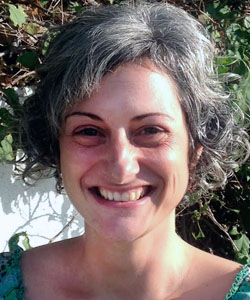
Denise Demetriou

Denise Demetriou

· Professor

University of California, San Diego · History

Active 2005–2025

h-index5
Citations295
Papers3712 last 5y
Funding
See your match with Denise Demetriou — sign in to PhdFit.Sign in

About

Professor Denise Demetriou is the Gerry and Jeannie Ranglas Chair in Ancient Greek History at UC San Diego. She received her Ph.D. in Classics from Johns Hopkins University in 2005 and taught for nine years at Michigan State University before joining the faculty at UC San Diego. Her research focuses on the history of the Mediterranean region, integrating the interconnected histories of Greeks, Phoenicians, Persians, and other peoples who inhabited the area. Her most recent book, 'Phoenicians Among Others: Why Migrants Mattered in the Ancient Mediterranean,' provides the first comprehensive history of Phoenician immigrants from the fourth to the first centuries BCE, highlighting how migrants influenced societal development, introduced new institutions, and affected regional histories through inscriptions and bilingual texts. She is also the author of 'Negotiating Identity in the Ancient Mediterranean,' which examines cross-cultural interactions among Mediterranean groups and their role in shaping shared and evolving identities through city-states, religious practices, and material culture. Professor Demetriou has co-edited a volume on ancient artifacts and has co-led summer seminars at the American School of Classical Studies in Athens. Currently, she is working on a book exploring ancient Greek authors' anxieties about technological development and the importance of humanistic values. At UC San Diego, she teaches courses on ancient Greek history, contributes to the Humanities Program at Revelle College, and is an affiliate faculty member in the Classical Studies Program. She served as director of the Center for Hellenic Studies from 2016 to 2020 and will serve as co-director from 2022 to 2026.

Research topics

  • Ancient history
  • History
  • Geography
  • Archaeology
  • Computer Science
  • Art

Selected publications

  • Transcultural Tokens of Identity

    2025-06-10

    book-chapter1st authorCorresponding

    ‘Who are you, stranger?’ ‘Where are you from?’ ‘Who are your parents?’ ‘What is your name?’ Such questions, fundamental to understanding the notion of personal identity in the ancient Mediterranean, are extremely common in the Homeric epics and subsequent ancient Greek literature. Cases of mistaken identity, ruses, and recognition scenes abound in Greek texts. Just to name a few: Odysseus hides his true identity but a physical attribute (his scar) gives him away to his slave Eurycleia and his knowledge (of the unmovable bed he had built) proves who he is to Penelope; Ion does not know who his mother or father are but tokens that he has carried with him as a child eventually help his mother, Creousa, recognize him and Ion finally realizes his own identity; Electra recognizes her brother Orestes, absent for a long time, by several tokens.1 This literary trope of trying to establish someone's identity – sometimes one's own identity – is also frequent in New Comedy, Roman Comedy, and even later novels, such as Heliodorus’ Aithiopika, whose plot centers around identity, anonymity, and travel just as much as Homer's Odyssey. Throughout Greek literature, there seems to be a pervasive anxiety surrounding who someone is and how to recognize them.

  • Parthenos through the Inscriptions

    Brepols Publishers eBooks · 2025-01-01

    book-chapter1st authorCorresponding

    This essay focuses on the three inscriptions on stone discovered in the sanctuary of the goddess Parthenos in ancient Neapolis and on two inscribed Attic decrees that mention the goddess and her role as a patron deity of Neapolis. These texts provide details about the administrative apparatus of this sanctuary and the sanctuary’s role as a political centre of Neapolis. They also reveal how this sanctuary, and probably others like it, located in frontier zones and serving diverse communities, brought together the various groups that frequented it. Individuals from different ethnic and civic backgrounds were able to tap into associations of divine powers, names and epithets of gods, and cultic iconographies to venerate deities, including Parthenos, in ways that made sense to them. In so doing, they created a toolkit that rendered religious practices in the Mediterranean more fluid and flexible than previously understood.

  • Phoenicians among Others

    2023-06-22 · 17 citations

    book1st authorCorresponding

    Abstract Phoenicians among Others provides the first history of Phoenician immigrants in the ancient Mediterranean from the fourth to the first centuries bce. Through an examination of inscriptions, many bilingual in Phoenician and Greek or Egyptian, Phoenicians among Others demonstrates how mobility and migration challenged migrants and states alike. Far from being excluded, and despite facing prejudices, immigrants mobilized adaptive strategies to mediate their experiences and encourage a sense of membership and belonging, constructed new identities, and transformed the societies they joined. By integrating the voices and histories of immigrants with those of the states in which they lived, the book demonstrates the diverse ways migrants influenced the development of societies, introduced new institutions, shaped the policies of their home and host states, made notions of citizenship more fluid, and changed the course of local, regional, and Mediterranean histories.

  • Copyright Page

    2023-06-24

    other1st authorCorresponding

    Extract Oxford University Press is a department of the University of Oxford. It furthers the University’s objective of excellence in research, scholarship, and education by publishing worldwide. Oxford is a registered trade mark of Oxford University Press in the UK and certain other countries. Published in the United States of America by Oxford University Press 198 Madison Avenue, New York, NY 10016, United States of America. © Oxford University Press 2023 All rights reserved. No part of this publication may be reproduced, stored in a retrieval system, or transmitted, in any form or by any means, without the prior permission in writing of Oxford University Press, or as expressly permitted by law, by license, or under terms agreed with the appropriate reproduction rights organization. Inquiries concerning reproduction outside the scope of the above should be sent to the Rights Department, Oxford University Press, at the address above. You must not circulate this work in any other form

  • Abbreviations

    2023-06-24

    other1st authorCorresponding

    Extract all translations are my own unless otherwise indicated. In general, I prefer to transliterate rather than anglicize Greek names and words, but I am not consistent and I often use the more familiar spellings in English. Abbreviations of journals follow the conventions set by L’année philologique. References to editions of papyri follow the conventions in Oates et al. 2001. In addition, I have used the following works:

  • The Adaptive Repertoires of Immigrants

    2023-06-24

    book-chapter1st authorCorresponding

    Abstract This chapter explores the lives of individual Phoenician immigrants in three Greek city-states over three centuries, through an examination of primarily bilingual inscriptions on tombstones from fourth-century bce Athens, third-century bce Demetrias in Thessaly, and second-century bce Rhodes. The evidence illustrates how these immigrants coped with migration and reveals similarities across time and space in the adaptive strategies that Phoenician immigrants adopted to facilitate their lives as immigrants and encourage a sense of belonging in their new homes. The chapter discusses three main strategies—name changing, the adoption and incorporation of local customs into immigrants’ cultural practices, and immigrants’ eventual participation in the civic life of their host city. These adaptations allowed Phoenician immigrants to become better integrated into their new societies, despite their persistent use of the Phoenician language and script on both private and public monuments. Such integration, the chapter argues, was a two-way process that involved both the migrants’ adaptive repertoires and the migration and membership regimes of the host states, eventually leading to the acceptance, inclusion, and incorporation of migrants into the civic bodies of their host states and a transformation of the migrants themselves.

  • Conclusion

    2023-06-24

    book-chapter1st authorCorresponding

    Abstract The conclusion shows how the movements of migrants resulted in changing both immigrants and their host societies. On the one hand, the adaptive practices of Phoenician immigrants created avenues though which they could facilitate their lives as immigrants, worship their own gods, and maintain their own language while also becoming socially and culturally integrated into their host societies. They also found ways to participate in the politics of their host states, though they were noncitizens, such as the semiautonomous trade associations. On the other hand, the adaptive strategies of Phoenician immigrants challenged their home and host societies, which responded in creative ways to deal with migration. The processes they developed to promote and regulate the specific status of individual foreigners led to the creation of a more fluid notion of citizenship. Ultimately, mobility and migration created polities comprising a diverse population with different religions, languages, and institutions that came together to form coherent bodies in which immigrants and citizens alike were integral and contributing members.

  • Introduction

    2023-06-24

    book-chapter1st authorCorresponding

    Abstract The introduction begins with the arrival in Athens of Zeno the Stoic, a Phoenician immigrant from Kition on Cyprus, and uses his story to illustrate how despite prejudice and discrimination, immigrants thrived in their host societies. Zeno’s story exemplifies the adaptive strategies that immigrants mobilized to mediate their experiences and encourage a sense of membership and belonging, the new identities they constructed, the policies that host and home states employed to promote or manage migration, and the multiple ways migrants changed both themselves and the societies they joined. The introduction shows that ancient Mediterranean polities were hosts to large percentages of immigrants and adopts a broad definition of migrants to reveal the presence and contributions of those migrants, especially Phoenician ones who left behind plenty of epigraphic texts that are often bilingual, and the responses of both their home and host states.

  • Phoenician Trade Associations

    2023-06-24

    book-chapter1st authorCorresponding

    Abstract Through an examination of a series of inscriptions and material remains, this chapter reveals that Phoenician immigrants in fourth-century bce Athens and second-century bce Delos established trade associations as an adaptive strategy. Such professional associations were structured around their members’ state of origin and developed as quasi-state, semiautonomous associations. By organizing into collectives, groups of immigrants were able to pool their resources and lobby their host states for awards or petition them for special grants. Such grants bypassed restrictions normally placed on immigrants, such as the right to own land, allowing immigrants to establish sanctuaries dedicated to deities of their homeland and thereby to maintain the religious and cultural ties to their home state. Trade associations both influenced their host state’s policies and facilitated the integration of immigrants as essential members of their host societies, helping them maintain a sense of their civic identity and retain their cultural traditions. As the chapter shows, over time, these Phoenician innovations of the fourth century bce changed the fortunes of their members and transformed their host states, which incorporated these foreign associations in their political apparatus.

  • Phoenicians beyond Greek Communities

    2023-06-24

    book-chapter1st authorCorresponding

    Abstract The final chapter uses epigraphic texts from the fourth century bce onward to investigate the presence and experiences of Phoenician immigrants in fourth- to second-century bce Carthage, fourth- to second-century bce Egypt, and the central Mediterranean islands of Sicily, Sardinia, and Malta in the second and first centuries bce. Phoenician immigrants in these areas employed adaptive repertoires like those used in Greek polities (name changing; religious syncretisms; hybrid customs) and they continued to construct their identities as immigrants through the persistent use of the Phoenician language and identification with their place of origin. Yet, as this chapter argues, immigrant communities behaved differently in different places at different times. In Egypt, Phoenician immigrants espoused a hybrid Phoenician-Egyptian identity, and while Phoenician remained central as a written language of that diaspora, Egyptian had dramatic effects on it. In Carthage, the epigraphic record of the tophet sanctuary reveals that Tyrian immigrant identities became particularly salient when Carthage used its ties to Tyre to claim kinship relations with other Punic states to create a hegemony in the region. In the islands of the central Mediterranean, new cosmopolitan communities emerged, in which civic or ethnic identities were less prominent and societies were more inclusive.

Frequent coauthors

  • Amalia Avramidou

    2 shared
  • Jürgen Ullrich Typosatz

    Deutsche Nationalbibliothek

    1 shared
  • H Alan

    1 shared

Awards & honors

  • Center for Hellenic Studies support for Phoenicians Among Ot…
  • Mary Isabel Fellowship for Greek Studies
  • Loeb Classical Library Foundation Fellowship
  • Resume-aware match score
  • Save to shortlist
  • AI-drafted outreach

See your match with Denise Demetriou

PhdFit ranks faculty by your research interests, methods, and publications — grounded in their actual work, not templates.

  • Free to start
  • No credit card
  • 30-second signup