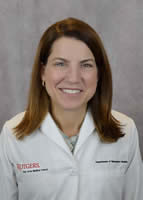
Diane Calello
· Professor of Emergency MedicineVerifiedRutgers University · Emergency Medicine
Active 2000–2026
About
Diane Calello, MD, is a Professor of Emergency Medicine and serves as the Executive & Medical Director of the New Jersey Poison Information and Education System at Rutgers New Jersey Medical School. She completed her medical education at Rutgers New Jersey Medical School in Newark, NJ, and her residency training at The Children's Hospital of Philadelphia. Dr. Calello further specialized through fellowship training in Pediatric Emergency Medicine and Medical Toxicology at The Children's Hospital of Philadelphia and the University of Pennsylvania, respectively. Her professional interests include pediatric poisoning fatalities, extracorporeal removal methods in toxicology, and novel antidotal therapies in toxicology.
Research topics
- Medicine
- Pharmacology
- Family medicine
- Emergency medicine
- Medical emergency
- Internal medicine
- Toxicology
- Demography
- Anesthesia
- Psychiatry
- Virology
- Environmental health
Selected publications
Pediatric Nicotine Exposures Reported to US Poison Centers
JAMA Network Open · 2026-03-04 · 1 citations
articleOpen accessSenior authorThis cross-sectional study investigates trends in pediatric nicotine exposures by product type and exposure route from 2016 to 2023 in the US.
Academic Emergency Medicine · 2026-02-01
articleOpen accessThe authors declare no conflicts of interest. The data that support the findings of this study are available from the corresponding author upon reasonable request. Data S1: acem70241-sup-0001-Supinfo.docx. Please note: The publisher is not responsible for the content or functionality of any supporting information supplied by the authors. Any queries (other than missing content) should be directed to the corresponding author for the article.
Clinical Toxicology · 2026-05-07
articleSenior authorINTRODUCTION: We will investigate the medical necessity of pediatric emergency department presentations, specifically for emergency department poison cases where a poison control center was not contacted prior to presenting. METHODS: A retrospective analysis of 348 poison control center cases involving patients aged < six, originating from a healthcare facility were evaluated. Toxicologists were presented with case summaries and were asked: "would you send this patient to the emergency department?" Evaluators answered on a 4-point Likert scale from "definitely would not send" to "definitely would send." Reviewers had the opportunity to write in additional information that would be beneficial to deciding their disposition. To simulate the need to make a yes or no decision on whether to send, Likert scores were manipulated into a binomial score of 0/1. Binomial regression analysis and qualitative thematic analysis were completed. RESULTS: = 25) were desired to better determine the need for an emergency department. DISCUSSIONS: About 65% of cases were evaluated as not requiring emergency department evaluation. The presence of clinical symptoms is a key factor related to clinician level of concern. Further work should include finding ways to prevent these emergency department presentations. CONCLUSIONS: Many emergency department evaluations for poison exposure amongst children less than six years old are not medically required. Further work should focus on improving parental knowledge of poison centers and poison safety, while continuing to promote poison centers as accessible resources to the public.
Figshare · 2026-05-07
datasetOpen accessSenior authorWe will investigate the medical necessity of pediatric emergency department presentations, specifically for emergency department poison cases where a poison control center was not contacted prior to presenting. A retrospective analysis of 348 poison control center cases involving patients aged < six, originating from a healthcare facility were evaluated. Toxicologists were presented with case summaries and were asked: “would you send this patient to the emergency department?” Evaluators answered on a 4-point Likert scale from “definitely would not send” to “definitely would send.” Reviewers had the opportunity to write in additional information that would be beneficial to deciding their disposition. To simulate the need to make a yes or no decision on whether to send, Likert scores were manipulated into a binomial score of 0/1. Binomial regression analysis and qualitative thematic analysis were completed. Toxicologists found that 38% of patients definitely did not require emergency department evaluation, and 27% were unlikely to require it. The presence of clinical symptoms were significantly associated with increased concern by toxicologists. Qualitative analysis from reviewer free text case comments, demonstrated that understanding the situation surrounding the exposure (certainty, past medical history, etc. <i>n</i> = 26) and presence of specific symptoms in each case (fever, vomiting, etc. <i>n</i> = 25) were desired to better determine the need for an emergency department. About 65% of cases were evaluated as not requiring emergency department evaluation. The presence of clinical symptoms is a key factor related to clinician level of concern. Further work should include finding ways to prevent these emergency department presentations. Many emergency department evaluations for poison exposure amongst children less than six years old are not medically required. Further work should focus on improving parental knowledge of poison centers and poison safety, while continuing to promote poison centers as accessible resources to the public.
Figshare · 2026-05-07
datasetOpen accessSenior authorWe will investigate the medical necessity of pediatric emergency department presentations, specifically for emergency department poison cases where a poison control center was not contacted prior to presenting. A retrospective analysis of 348 poison control center cases involving patients aged < six, originating from a healthcare facility were evaluated. Toxicologists were presented with case summaries and were asked: “would you send this patient to the emergency department?” Evaluators answered on a 4-point Likert scale from “definitely would not send” to “definitely would send.” Reviewers had the opportunity to write in additional information that would be beneficial to deciding their disposition. To simulate the need to make a yes or no decision on whether to send, Likert scores were manipulated into a binomial score of 0/1. Binomial regression analysis and qualitative thematic analysis were completed. Toxicologists found that 38% of patients definitely did not require emergency department evaluation, and 27% were unlikely to require it. The presence of clinical symptoms were significantly associated with increased concern by toxicologists. Qualitative analysis from reviewer free text case comments, demonstrated that understanding the situation surrounding the exposure (certainty, past medical history, etc. <i>n</i> = 26) and presence of specific symptoms in each case (fever, vomiting, etc. <i>n</i> = 25) were desired to better determine the need for an emergency department. About 65% of cases were evaluated as not requiring emergency department evaluation. The presence of clinical symptoms is a key factor related to clinician level of concern. Further work should include finding ways to prevent these emergency department presentations. Many emergency department evaluations for poison exposure amongst children less than six years old are not medically required. Further work should focus on improving parental knowledge of poison centers and poison safety, while continuing to promote poison centers as accessible resources to the public.
Illicit opioid adulterant trends in patients presenting with acute opioid overdose
Journal of Analytical Toxicology · 2026-02-18
articleBACKGROUND: Clandestine fentanyl manufacturing oftentimes introduces adulterants and contaminants. This paper aims to evaluate trends in adulterants from a cohort of patients presenting to the emergency department (ED) with illicit opioid overdose across the United States. METHODS: The Fentalog Study group is a multicenter toxicology study group which evaluated ED patients with suspected opioid overdose at 10 medical centers across the United States between September 21, 2020 through February 5, 2024. Comprehensive qualitative toxicology testing was performed on residual serum specimens. Study sites were divided into three geographic regions: West (California, Oregon, Colorado), Midwest (Missouri, Michigan), and East (New York, New Jersey, Pennsylvania, Georgia). Illicit opioids were defined as fentanyl and fentanyl analogs, heroin or its metabolites, and/or novel potent opioids such as nitazenes. RESULTS: 1295 patients with confirmed illicit opioid overdose were included. Males accounted for the majority (73.7%) of patients. The median age was 39 (IQR: 31-54) years. Adulterants were detected in 745 (57.5%) patients. Quinine was the most abundantly encountered adulterant (433; 33.4%). Antihistamines were the most frequently detected class of adulterants (19.6%). There were significant differences in adulterants detected across the three time periods, with notable decreases in adulterants from time-period 1 (79.5%) to time-period 3 (41.7%; p < 0.001). Adulterants were found in 84 (27.0%) of patients that presented to a hospital in the Western United States, compared with 181 (24.3%) in the Midwest, and 480 (64.4%) of patients in the East (p < 0.001). Patients with concurrent cocaine were more likely having an adulterant present than those without cocaine present (OR 1.23; 95% CI 1.15-1.31). In contrast, patients with illicit opioids and concurrent methamphetamine were less likely to have adulterants present (OR 0.89; 95% CI 0.84-0.95). CONCLUSIONS: Adulteration of illicit opioids was more likely in the Eastern United States and for those with concurrent cocaine and opioid exposures.
Disaster Medicine and Public Health Preparedness · 2025-01-01 · 2 citations
articleOpen accessOBJECTIVES: The Centers for Disease Control and Prevention (CDC) released an official health advisory after receiving reports of patients in New Mexico and Arizona who experienced serious adverse health effects after swallowing methanol-based hand sanitizer (MBHS). CDC and America's Poison Centers conducted enhanced surveillance using the National Poison Data System (NPDS) for all calls to poison centers (PCs) that reported exposure to MBHS. METHODS: We queried NPDS for human exposure cases to MBHS between June 22, 2020 and September 14, 2020. We conducted descriptive statistics to analyze by daily case volume, age group, sex, caller site, management site, exposure route, medical outcome, reason for exposure, clinical effects, and treatment. RESULTS: Forty-nine states, Washington, DC, and the US Virgin Islands reported at least 1 exposure, with a total of 2164 cases. Adults aged 20-59 represented the largest proportion of cases (44.8%). Most calls (94.2%) were from a non-health care facility and were managed on site (82.4%). The exposure route was primarily dermal (88.8%) followed by ingestion (12.0%). CONCLUSIONS: Quick response and action for exposures to MBHS containing products is essential to ensure public health safety. PCs remain a valuable resource for providing guidance and advice for toxic exposures.
The American College of Medical Toxicology Position Statements
Disease-a-Month · 2025-05-24
articleSubstance Use & Addiction Journal · 2025-08-03 · 1 citations
articleBACKGROUND: With increasing frequency, providers are encountering patients with opioid overdose who recrudesce after intermittent bolus dosing of naloxone. Some patients require a continuous infusion to maintain ventilation, which necessitates admission to a monitored setting. Buprenorphine could shorten the duration of a continuous naloxone infusion (CNI) or preclude the need altogether because its long-lasting partial agonist effects compete with and blunt the respiratory depressant effects of full agonist opioids. This case series describes the replacement by sublingual (SL) buprenorphine of a CNI in patients experiencing prolonged and recurrent respiratory depression from an opioid overdose. CASE SERIES: We describe 3 patients presenting to the emergency department at a large urban academic hospital after an opioid overdose. All 3 patients received intranasal naloxone by emergency medical services prior to arrival. These patients received multiple intermittent bolus doses of intravenous naloxone for recurrent respiratory depression. Because of continued recurrence, they were started on CNIs. After consultation with medical toxicology, they each received 16 mg of SL buprenorphine, which allowed the successful discontinuation of the CNI without the need for additional naloxone, as well as initiating the transition to medication for opioid use disorder (MOUD) using buprenorphine. DISCUSSION: SL buprenorphine may be an option to facilitate discontinuation of a CNI. This strategy may be useful in select patients to reverse an acute opioid overdose, reduce hospital resource utilization, and initiate patients on MOUD.
Academic Emergency Medicine · 2025-07-15 · 2 citations
articleOpen accessBACKGROUND: Simultaneous exposure to both benzodiazepines and opioids can lead to synergistic respiratory depression, complicating overdose management. Our objective was to report on the detection of prescription and novel benzodiazepine co-exposures among patients treated in emergency departments (EDs) with suspected opioid overdoses. We aimed to describe novel benzodiazepine exposures in this population and to compare the clinical severity of co-exposure to benzodiazepines and opioids versus opioids alone. METHODS: This study utilized data from the Toxicology Investigators Consortium (ToxIC) Fentalog Study, an observational study at 10 ED sites (Sept 2020-Dec 2023). Waste serum samples were analyzed using liquid chromatography quadrupole time-of-flight mass spectrometry (LC-QTOF-MS) for the presence of over 1200 novel psychoactive substances (NPS), drugs, therapeutics, and metabolites. Analyses included demographics, clinical severity, and outcomes among those with prescription benzodiazepines, novel benzodiazepines, or no benzodiazepines. RESULTS: Among the patients with opioids present (n = 1427), 29.0% of patients had detectable benzodiazepines. 20.5% of patients had detectable prescription benzodiazepines, and 8.5% of patients had detectable novel benzodiazepines. The most commonly detected prescription benzodiazepine was alprazolam (39.3%); the most common novel benzodiazepine was bromazolam (46.3% of novel benzodiazepines). The median age of those with novel benzodiazepines was 34, which was younger than those without benzodiazepines (40) and those with prescription benzodiazepines (41; p = 0.001). Patients without benzodiazepines received naloxone more frequently (p = 0.02), while novel benzodiazepine co-exposure was associated with higher naloxone nonresponse rates (p = 0.03). Patients with novel benzodiazepines (compared to the opioid-only group) had increased odds of requiring mechanical ventilation (aOR: 2.14; 95% CI: 1.07, 4.05) after adjusting for age, gender, race and ethnicity, and the presence of prescription benzodiazepines and/or fentanyl. CONCLUSIONS: Nearly a third of patients with confirmed opioid overdose presenting to the ED also had concomitant benzodiazepine exposures. Those with novel benzodiazepines had significantly higher odds of intubation, suggesting greater severity of overdose.
Frequent coauthors
- 1069 shared
Kathryn M. Beauchamp
Biomedical Research Institute
- 646 shared
Andrew M. Morris
- 628 shared
Jonathan R. Egan
- 587 shared
Marino S. Festa
Children's Hospital at Westmead
- 485 shared
Richard D. Shih
Florida Atlantic University
- 419 shared
Judd E. Hollander
Thomas Jefferson University
- 409 shared
Claudio Ronco
Ospedale San Bortolo
- 389 shared
Christopher H. Mody
University of Calgary
Labs
Rutgers New Jersey Medical School Emergency MedicinePI
Education
M.D.
Rutgers New Jersey Medical School
Other
The Children's Hospital of Philadelphia
Other, Pediatric EM
The Children's Hospital of Philadelphia
Other, Medical Toxicology
Univ. of Pennsylvania & The Children's Hospital of Philadelphia
- Resume-aware match score
- Save to shortlist
- AI-drafted outreach
See your match with Diane Calello
PhdFit ranks faculty by your research interests, methods, and publications — grounded in their actual work, not templates.
- Free to start
- No credit card
- 30-second signup