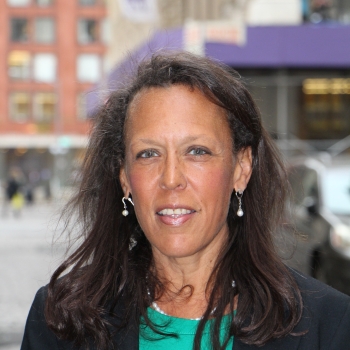
Diane Hughes
· Professor of Applied PsychologyVerifiedNew York University · Applied Psychology
Active 1980–2025
About
Diane Hughes is a Professor of Applied Psychology at the NYU Steinhardt School of Culture, Development, and Education. Her research focuses on understanding how racial and ethnic dynamics influence individuals' experiences across various settings such as workplaces, classrooms, neighborhoods, and families. She investigates ethnic and cultural differences in parents' socialization goals, beliefs, and practices, particularly as these influence children's learning. Dr. Hughes conducts school and community-based studies with adolescents and their parents using multiple methods including interviews, surveys, and focus groups. Her recent work involves analyzing data from longitudinal studies of adolescents and their caregivers to understand how stressors and supports impact academic and socio-emotional development over time.
Research topics
- Sociology
- Gender studies
- Developmental psychology
- Psychology
- Social psychology
- Social Science
- Demography
- Medicine
Selected publications
Journal of Applied Developmental Psychology · 2025-05-01
articleSenior authorSocial Development · 2025-09-02 · 1 citations
articleABSTRACT Children are highly attuned to race early in life, yet parents often underestimate their capacity to process race‐related information, delaying discussions about race. Research suggests that parents’ perceptions of their children's readiness to learn about race influence the timing of these conversations; however, few studies have explored how such perceptions shape ethnic‐racial socialization across different ethnic/racial groups. In this mixed‐analytic study, we interviewed African American, Mexican‐, Dominican‐, and Chinese‐heritage US mothers ( N = 271) of 4‐year‐olds and assessed their conceptions of children's capacities through two lenses: (1) the age parents believed children should learn about ethnicity/race, and (2) whether parents thought children knew their own ethnic/racial labels. We tested whether demographic factors and parents’ ethnic‐racial socialization practices were associated with these beliefs. Findings revealed that mothers commonly estimated ages 5–6 as appropriate for discussing race, with over half believing their children know their ethnic/racial identity. Mothers provided a varied range of justifications for speaking early on ethnicity/race, delaying conversations, not providing an age, or adjusting age estimates depending on the child and their context. Notably, mothers’ age estimates negatively predicted the frequency of ethnic‐racial socialization practices, while beliefs about children's awareness of their identity positively predicted cultural socialization and egalitarianism. Our study highlights how mothers’ conceptions of childhood can drive ethnic‐racial socialization practices, offering insights into the socialization processes among children from minoritized groups.
AERA Open · 2024-01-01
articleOpen accessSenior authorInterpersonal and systemic racism and discrimination persist in our educational system—from primary and secondary institutions through college, despite the forward strides of desegregation, the Civil Rights Movement, and the Black Lives Matter movement. This special topic collection identifies and applies empirically and theoretically grounded conceptualizations of racism to improve our understanding of the experience of racism, interventions to mitigate it, and protective factors. The papers in this collection reflect two themes: 1) racial and religious identities in classrooms, schools, and universities, focusing on how educators mitigate and perpetuate systemic racism, including how White teachers understand the impact of race, how inclusive and antiracism curricula are received and rejected by future educators and clinicians, and the impact of exclusionary social networks in the hiring of teachers of color and 2) school belonging and climate, including documenting that students of color feel less safe, are disproportionately exposed to harsh discipline, question their belonging, and question commitments to diversity. The negative sequelae are concurrent and last into adulthood. In addition, there are several advances in theory and measurement, including assessing gendered and racial biases in teachers’ attributions about students’ abilities, frameworks for mitigating colonial and racialized trauma, and domains of antiracist activism to bring racial justice and equity to schools.
AFRICAN AMERICAN FAMILY LIFE: REDISCOVERING OUR FOUNDATIONAL WORKS
Research in Human Development · 2023-10-02 · 6 citations
articleRace, ethnicity, and culture are central to human development and family life. However, early research pathologized these influences on African Americans. Pioneering scholars studying African American families challenged pathology-focused perspectives, laying the foundation for the strengths-focused culturally-anchored research that is now seen in the field. This article revisits this pioneering scholarship, rarely published in peer-reviewed journals, reintegrating them into the discourse on families so that their significance can be understood and recognized. Pioneering scholars offered nuanced theoretical frameworks, identified contextual and within-group variations, developed innovative methods to capture complexities and variation in African Americans’ functioning, and presciently recognized researchers’ positionality impacting research.
Research and Scholarship on Racial Socialization: Getting Here
National symposium on family issues · 2023-01-01 · 5 citations
book-chapter1st authorCorrespondingAnnual Review of Developmental Psychology · 2023-09-14 · 19 citations
articleOpen access1st authorCorrespondingIn the United States, race is a critical factor in determining how children experience and navigate their social worlds. Developmental scientists have examined the complexities and nuances of how children develop an understanding of what race means for them and others as well as their attitudes toward people of other racial groups. We provide an overview of the literature on two approaches to understanding children's racial learning—sociocognitive approaches, which focus on various aspects of children's understanding of, beliefs about, and attitudes toward race and racial groups, and socialization perspectives, which examine the messages that socialization agents transmit to children about race. Throughout, we highlight the ways in which the persistence of structural and interpersonal racism in the United States forms the background context for children's racial learning.
How Adults Can Promote Positive Racial and Ethnic Identities in the Context of Structural Racism
American Academy of PediatricsItasca, IL eBooks · 2023-10-10 · 1 citations
book-chapter1st authorCorrespondingThe 21st century has been marked by broad recognition of historical and contemporary racism against people of color in almost every aspect of American life, including where people live, how much they earn, their health status, which schools they attend, and what access they have to opportunities. As more individuals and institutions acknowledge structural racism and discrimination, adults who care for youth need information about how youth react to these phenomena and need strategies to help youth navigate and dismantle persistent racial injustice and inequality. Developmental science offers evidence-based knowledge in this realm. Parents and caregivers, pediatric health professionals, and others can look to racial socialization research to identify effective strategies to ground guidance for supporting youth as they navigate the challenges of racism in the United States. Keywords: racial and ethnic socialization, youth of color, racial learning
Journal of Research on Adolescence · 2022-06-16 · 21 citations
articleThough there is substantial research on racial socialization in families of color, there is less on such socialization in white families. To investigate racial socialization in white families, the current study analyzed mixed-methods data from 46 mother-adolescent dyads. Though white parents and their adolescent children largely claimed to not talk about race, they in fact communicated about and around race through various strategies that in effect, maintained white privilege and failed to challenge systems of racial oppression. Very few families in our sample discussed racial discrimination or white privilege, and fewer rooted both at the systems level. Our results highlight situations that prompt conversations about race as well as the ways white families talk about and around race and white privilege.
Lessons of Resistance from Black Mothers to their Black Sons
Journal of Research on Adolescence · 2022-03-01 · 21 citations
articleOpen accessIn negotiating the anti-Black oppression, Black mothers communicate lessons of resistance in their racial socialization messages to their Black adolescent boys. We investigate whether distinct strategies of resistance for survival, characterized by individual-focused immediate strategies of resistance, and resistance for liberation, strategies of resistance that disrupt systems of anti-Black oppression rooted in furthering collective Black empowerment, are employed in Black mothers' messages to their sons. In this manuscript, we use longitudinal data of Black mothers' of adolescent boys interviews (N = 31) across three time points (6th-11th grade). Our findings indicate the presence of various strategies of resistance for survival and resistance for liberation within Black mothers' preparation for bias socialization.
Journal of Research on Adolescence · 2022-04-24 · 10 citations
articleThe current study aims to examine the associations between neighborhood safety, racial-ethnic discrimination, and depressive symptoms, as well as explore social support as a protective factor using the Minority Stress Model for three different BIPOC groups (i.e. African American, Puerto Rican, and Dominican). African American and Latino youth living in urban environments often encounter multiple stressors at the same time, and it is critical to learn more about how these stressors influence well-being in tandem. The results showed that among African American youth safety concerns were associated with depressive symptoms while discrimination was associated with Latino youth's depressive symptoms.
Recent grants
IRADS: The Study of Culture, Social Settings, and Child Development across School Transitions
NSF · $2.5M · 2007–2013
Center for Research on Culture, Development and Education
NSF · $2.5M · 2002–2008
Frequent coauthors
- 33 shared
Niobe Way
New York University
- 11 shared
Juan Del Toro
Twin Cities Orthopedics
- 8 shared
Dawn P. Witherspoon
Pennsylvania State University
- 8 shared
Ellen Galinsky
Families USA
- 8 shared
Hirokazu Yoshikawa
- 7 shared
Carolin Hagelskamp
Berlin School of Economics and Law
- 7 shared
Erika Y. Niwa
Brooklyn College
- 6 shared
Rebecca Kang McGill
Institute of Education Sciences
Education
- 1988
PhD, Psychology
University of Michigan
- 1982
MA, Psychology
University of Michigan
- 1979
BA, Psychology, African Amerian studies
Williams College
Awards & honors
- John d. and Catherine T. MacArthur Foundation's sub-group on…
- co-chair of the 14 member cross-university Study Group on Ra…
- Carnegie Corporation of New York support
- William T. Grant Foundation support
- National Science Foundation support
- Resume-aware match score
- Save to shortlist
- AI-drafted outreach
See your match with Diane Hughes
PhdFit ranks faculty by your research interests, methods, and publications — grounded in their actual work, not templates.
- Free to start
- No credit card
- 30-second signup